Call: 212-877-7475 Text: 917-693-8269 Email: Zusindental@gmail.com
Have a Question?

Frequently Asked Questions

Answers to the questions we hear most from new and existing patients. Don't see yours here? Call us at 212-877-7475 — we're happy to help.
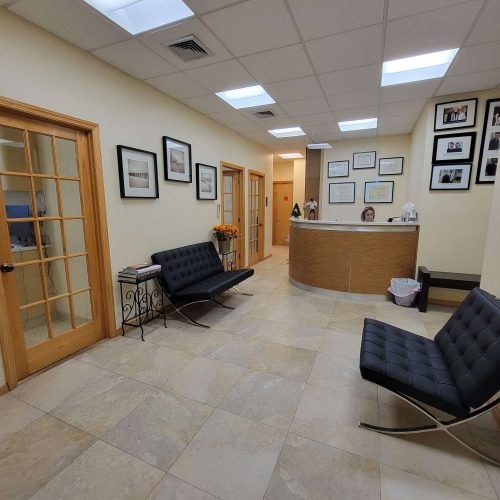
Zusin Dental office

Common Questions From Our Patients

Yes! We'd love to meet you and your family. You can fill out our new patient forms online ahead of your first visit.
Yes, Dr. Boris Zusin and Lena Zusin, RDH welcome patients of all ages and are happy to see your whole family at one practice. If you're wondering when to schedule your child's first visit, see our guide to baby teeth.
Absolutely. Dental anxiety is common, and we take extra time to explain every step, answer questions, and go at a pace that feels comfortable for you. Let us know about your concerns when you book so we can plan accordingly.
We accept a wide range of insurance plans and routinely file claims as a courtesy to our patients. Visit our Insurance & Payment page for the full list, or call us to confirm your specific plan.
We still welcome you as a patient. We accept Cash, Check, Mastercard, Visa, Discover, American Express, and offer interest-free payment plans up to 12 months through CareCredit.
Yes, we set aside time for same-day emergency visits whenever possible. Call us right away if you're in pain or have a dental emergency.
Please bring a photo ID, your insurance card if you have one, and your completed new patient forms if you filled them out ahead of time. If you're a current patient of another dentist, any recent x-rays are helpful too.
Most patients do well with a cleaning and exam every six months, though some benefit from more frequent visits depending on their gum health — we'll recommend a schedule that fits your needs.

Daily Oral Hygiene

Twice a day — once in the morning and once before bed.
A full two minutes, twice a day, is the standard recommendation.
Generally yes — studies show electric toothbrushes remove more plaque than manual brushing.
Yes. Brushing alone misses a significant portion of each tooth's surface, especially between teeth, which only flossing reaches.
Traditional string floss, a water flosser, or floss picks all work well — the best one is whichever you'll actually use consistently.
It can help, especially one with fluoride or other therapeutic ingredients — but it's a supplement to brushing and flossing, not a replacement.
Every three to four months, or sooner if the bristles start to fray.
Soft or extra-soft bristles — firmer bristles can wear down enamel and irritate gums over time.
It can lift some surface stains, but it's abrasive and can scratch enamel with regular use, so we don't generally recommend it.
Before is generally better — it protects your enamel, since brushing right after eating (especially acidic foods) can brush softened enamel away before it has a chance to re-harden.

Symptoms & Pain

This is usually from worn enamel or gum recession exposing the more sensitive layer of the tooth underneath.
Bleeding gums are typically an early sign of gingivitis, and usually improve with more consistent brushing and flossing — but it's worth mentioning at your next visit.
Most often bacteria on the tongue, gum disease, or dry mouth — persistent bad breath is worth having evaluated rather than just masked.
This can be a sign of a crack or a deep cavity, and is worth getting checked before it progresses.
It usually means a nerve inside the tooth is irritated or exposed, which needs evaluation.
A bump on the gums can be a sign of a dental abscess or infection and shouldn't be ignored.
Morning jaw pain is a common sign of clenching or grinding your teeth at night (bruxism) — see our guide to managing teeth grinding.
Sinus pressure from a cold or sinus infection can press on the roots of your upper back teeth and feel like a toothache.
See a dentist right away — a loose permanent tooth is a genuine dental emergency, not something to wait out.
Aging, genetics, smoking, and dark-colored foods and drinks like coffee, tea, and red wine are the most common causes of yellowing over time.

Routine & Preventive Care

X-rays let us see problems that aren't visible to the eye, like decay between teeth or bone loss below the gumline.
Yes — modern digital X-rays use very low levels of radiation, and we only take them when they're clinically useful.
A thin, protective plastic coating applied to the chewing surfaces of back teeth to seal out decay in the grooves that are hardest to keep clean.
Fluoride strengthens enamel and helps prevent cavities on exposed tooth roots, which become more common as gums recede with age.
A sticky film of bacteria that forms on your teeth constantly, which is why daily brushing and flossing matter even between cleanings.
Plaque that has hardened onto the tooth — once it hardens, only a dentist or hygienist can remove it.
Sugar and acidic foods feed the bacteria that cause decay, so how often you eat them matters as much as how much.
It's mildly acidic, so it's not entirely neutral, but it's a much safer choice than soda for your teeth.
Limit sugary and acidic foods, brush with fluoride toothpaste, floss daily, and keep up with regular cleanings.

Common Dental Procedures

A filling repairs a small area of decay, while a crown covers and protects a tooth that's too damaged for a filling alone to fix.
No — a root canal actually relieves the pain caused by an infected nerve, and is done comfortably under local anesthesia.
A deep cleaning (scaling and root planing) treats gum disease that has progressed below the gumline, which a regular cleaning can't reach.
A titanium post placed in the jawbone that permanently replaces a missing tooth's root, supporting a crown on top.
With proper care, dental implants can last a lifetime, making them one of the most durable tooth-replacement options available.
Thin, custom-made porcelain shells bonded to the front of your teeth to improve their color, shape, or alignment.
No — only if they're impacted, causing pain, or crowding nearby teeth. Some wisdom teeth come in just fine and can stay.
A bridge is anchored to the teeth on either side of the gap, while an implant stands on its own without relying on neighboring teeth.
Most fillings last five to fifteen years, depending on the material used and how they're cared for.
A custom, lab-made partial filling that fits precisely into or over a tooth — a step between a standard filling and a full crown.

Cosmetic, Kids & More

Yes, when it's done correctly and under professional guidance — that's also how you get the most even, predictable results.
No — whitening gels only lighten natural tooth enamel, so existing crowns or veneers on visible teeth won't change color along with the rest.
By their first birthday, or within six months of their first tooth coming in, whichever comes first — see our guide to preparing your child for their first visit.
Yes — they hold space for the permanent teeth underneath and guide them into the right position as they come in.
Keep the tooth in milk and get to a dentist within 30 minutes for the best chance of saving it — see our full knocked-out tooth guide.
It can, particularly if it continues past around age four, when it starts to affect how the teeth and jaw develop.
Yes, and it's genuinely recommended — untreated gum disease during pregnancy has been linked to preterm birth, so routine care matters more, not less.
A custom plastic appliance worn while sleeping that protects your teeth from the forces of grinding or clenching.
Yes — teeth can be moved at any age, and a large share of orthodontic patients today are adults.
Tell us beforehand, ask about sedation options, and agree on a simple stop signal — see our full guide to managing dental anxiety.
Real Patient Testimonials

Your Experience Matters To Us

5.0 out of 5 on Google (38 reviews) · 4.9 out of 5 on Zocdoc (220 reviews)

★★★★★

“Knowledge is an understatement when you talk about Dr. Zusin! My family and I have been patients of his for over 20 years. I always feel I am given the best advice and never pressured into any unnecessary treatment.”

Faina S.

★★★★★

“I tried a couple different dentists in NYC and Zusin Dental is the best. They are thorough, they don't try and upsell you services you don't need, and they offer appointments on Saturday. The best cleaning I ever had!”

Gordon T.

★★★★★

“Routinely SUPERB level of care, including Dr. Zusin having made himself available for emergent care when needed. The office is always spotlessly clean and there is no waiting at appointment time. Pain-free dentistry!”

Anil N.

★★★★★

“I have never experienced pain with Dr. Zusin. For a practice in busy Manhattan, their office has a small town feel, very relaxed and personable. Lena is always quick to respond to appointment requests or changes.”

Molly P.

★★★★★

“Dr. Zusin is the best dentist! I have been visiting his office for the majority of my life. He has expertly performed teeth whitening and Invisalign, and continued to save my teeth after I chipped my two front teeth.”

Sasha S.

★★★★★

“The West End office is state of the art and very relaxing. Dr. Zusin and Lena are a great team. No matter the dental problem you will get the best results. I highly recommend them.”

Domingo Q.

View All Testimonials

Still Have Questions?

We're happy to talk it through before you ever come in for a visit.

Schedule Your Visit Call 212-877-7475
Call 212-877-7475 Directions Schedule Visit