Tired of Teeth That Shift or Fall Out With Removable Options?
Crowns cover a tooth that's broken, cracked, or has severe decay. Bridges fill the space left by one or more missing teeth using crowns anchored to the surrounding teeth.
Medically reviewed by Dr. Boris Zusin, DDS, FAGD, MBA, MS, Diplomate, American Board of Dental Sleep Medicine (ABDSM) · Last reviewed August 21, 2026
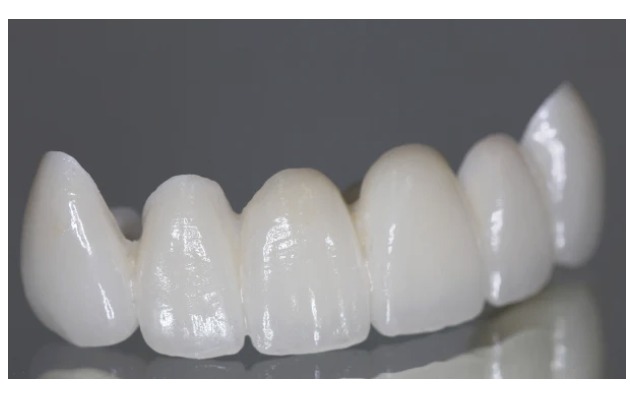
Function and Appearance of Natural, Healthy Teeth
A dental bridge replaces one or more missing teeth — upper or lower — by anchoring a custom-made artificial tooth to the healthy teeth (or implants) on either side of the gap. A bridge may be recommended any time missing teeth leave a gap that needs to be filled to restore your bite and prevent the surrounding teeth from shifting.
A crown is also the standard next step after root canal treatment — once the tooth's infection is resolved, a crown protects and restores it to full function.
Am I a Candidate?
You should have healthy gums and enough remaining healthy tooth structure to support a crown; a bridge is appropriate when there's a gap from one or more missing teeth between otherwise healthy teeth.
Crown or Bridge — Which Do You Need?
Both are well-established, predictable restorations — the right one depends on whether the tooth itself is still there.
When a Crown Makes Sense
A crown fully covers what's left of a tooth, rather than replacing a missing one. It's the standard recommendation once a tooth has lost roughly half or more of its structure to decay, fracture, or a large existing filling, and it's especially important after a root canal — a treated tooth is more brittle and prone to fracture, which is why crowning it afterward is the near-universal recommendation among dentists. In practice-based research surveying real dentists, about 94% recommended a crown for a posterior tooth after root canal treatment — close to consensus — though recommendations vary a lot more for other scenarios, like exactly how large an existing filling needs to be before it's time to crown the tooth instead of patching it again.
When a Bridge Makes Sense
A bridge replaces one or more missing teeth using the neighboring teeth (or implants) as anchors. A traditional bridge requires shaping the adjacent teeth down for full crowns; a Maryland (resin-bonded) bridge bonds thin wings to the back of the neighboring teeth instead, which is far more conservative but doesn't hold up quite as well long-term — more on that below. A cantilever bridge, anchored on only one side, is generally the least durable option and reserved for specific situations.
Why Dentists Actually Reach for a Crown
New crowns and replacement crowns tend to happen for different reasons — worth knowing which situation you're in.
Getting a Crown for the First Time
Tooth fracture is the single leading reason a tooth gets its first crown — accounting for roughly 45% of new crowns placed in general practice — followed by cracked teeth, a root-canal-treated back tooth needing protection, and existing fillings that have grown too large for the remaining tooth structure to reliably support on their own.
Replacing an Existing Crown
When an existing crown needs to be replaced, the drivers shift: recurrent decay underneath or at the edge of the old crown and cosmetic concerns (a crown that no longer matches or a metal margin showing at the gumline) are the most common reasons, rather than the crown itself simply wearing out from chewing forces.
Crowning a Tooth After Root Canal Treatment
Not every root-canal-treated tooth needs a crown right away — but for back teeth, the evidence is close to unanimous, and timing matters more than most patients realize.
Back Teeth: Crown It
Molars and premolars absorb the brunt of chewing force, and a root-canal-treated back tooth loses a meaningful amount of structural integrity along the way — the access opening alone removes tooth structure, and the tooth is drier and more brittle without its blood supply. In a study tracking outcomes over 10 years, crowned root-canal-treated teeth survived at a rate of about 81% (±12%), compared with 63% (±15%) for teeth restored without a crown — and uncrowned teeth were extracted at roughly six times the rate of crowned ones. That gap is the core reason a crown is close to the default recommendation for a back tooth after root canal treatment.
Front Teeth: It Depends on What's Left
Front teeth carry far less chewing load and often keep more of their original structure through root canal treatment, since the access opening is smaller and there's typically no old filling or decay to remove from a large surface. When enough sound tooth structure remains, a bonded composite filling or a veneer can be a reasonable, less invasive alternative to a full crown. The decision comes down to how much structure survived treatment and how much bite force the tooth will carry — not simply the fact that a root canal was done.
Why the Timing of the Crown Matters
Waiting too long to place the crown after root canal treatment carries a real cost. One 8-year retrospective study found that teeth crowned more than 4 months after root canal completion were extracted at over three times the rate of teeth crowned sooner (hazard ratio 3.38) — a reminder that a temporary filling isn't meant to be a long-term restoration, since it leaves the tooth vulnerable to fracture, leakage, and reinfection while you wait.
A large practice-based research study following 71,283 root-canal-treated teeth across 99 U.S. dental practices found a similar pattern from a different angle: teeth that received a filling and were later crowned had a median survival of 20.1 years, compared with 11.4 years for a crown alone, 11.2 years for a filling alone, and just 6.5 years for teeth that received neither restoration. The sequence and completeness of the final restoration were among the strongest predictors of how long the tooth ultimately lasted.
Do You Need a Post? Usually Not
A post — a rigid support placed into the root canal space before building up and crowning the tooth — is sometimes assumed to be a standard part of finishing a root canal, but the evidence doesn't support using one routinely. A systematic review comparing outcomes with and without a post found essentially identical success rates (about 93% either way). Separate research comparing indirect restorations like crowns against direct fillings found indirect restorations meaningfully reduced the risk of restoration failure — roughly 70–80% lower odds of failure at 5 and 10 years. Posts add a small risk of root fracture or perforation without a proven survival benefit for most teeth, so we reserve them for the specific cases where too little natural tooth structure remains to retain a build-up on its own.
How Long Crowns & Bridges Actually Last
These are dependable, well-studied restorations, but longevity varies by type — and it's driven mainly by material choice, the health of the supporting teeth, and how many teeth the restoration has to span.
| Restoration | Typical Survival | Notes |
|---|---|---|
| Single crown | ~94–95% at 5 years | Among the most predictable restorations in dentistry |
| Traditional (tooth-supported) bridge | ~89% at 10 years | Full-crown preparation on both anchor teeth |
| Maryland / resin-bonded bridge | ~88% at 5 years | More conservative prep, slightly lower long-term survival than a traditional bridge |
| Cantilever bridge | Lowest of the options above | Anchored on one side only; reserved for specific cases |
| Combined tooth-and-implant bridge | ~70% at 10 years | Higher complication rate; generally avoided when a simpler option exists |
One practical takeaway from the long-term data: single-unit restorations — an individual crown, whether on a natural tooth or an implant — consistently outperform multi-tooth bridges over decades of follow-up. That's part of why we'll walk you through a dental implant as an alternative when a missing tooth is involved, rather than defaulting to a bridge in every case. The core trade-off is straightforward even without a single trial settling it definitively — long-term head-to-head randomized trials directly pitting bridges against implants are genuinely lacking in the literature — an implant preserves the healthy teeth on either side of the gap, while a traditional bridge requires shaving those teeth down for crowns. We'll walk through cost, timeline, and your specific bone and gum health so the decision is based on your case, not a generic default.
Bridge vs. Implant: How Each One Tends to Fail
Survival rates alone can be misleading — a bridge and a single-tooth implant hold up comparably well over 5 and 10 years, but they tend to run into trouble in very different ways.
Reviews pooling data across many studies put single-implant crown success around 95% at 5 years, compared with roughly 84% for fixed bridges of all designs — though that gap narrows once you compare implants specifically against conventional, tooth-supported bridges rather than lumping in the less durable Maryland (resin-bonded) design. In practical terms, survival is comparable enough that it usually isn't the deciding factor.
What differs is the failure pattern. Bridges tend to run into biological trouble at the abutment teeth — new decay forming under a crown margin, loss of nerve vitality, or gum and bone problems around the teeth doing the supporting work. Implants are more prone to mechanical and technical issues instead — a loose retaining screw, a chipped porcelain layer, or peri-implantitis (a gum-and-bone infection around the implant, similar in principle to gum disease around a natural tooth). A long-term follow-up spanning up to 36 years found both restoration types held up reasonably well on their own terms, with these distinct failure mechanisms holding steady the entire time.
In practice, this is part of why we don't treat the decision as purely a survival-statistics question: an implant spares the two healthy teeth on either side of a gap from being cut down for crowns, but carries its own maintenance demands and a real, if generally modest, peri-implantitis risk — higher with smoking or inconsistent hygiene. A bridge avoids surgery and implant-specific risks, but places the long-term burden on the health of the abutment teeth. We'll walk through your bone, gum health, and the condition of the neighboring teeth so the recommendation fits your case.
Choosing the Right Material
Cast Gold / Metal
The oldest and, by some measures, still the most durable option — excellent resistance to wear and corrosion, and it requires removing the least amount of healthy tooth structure of any crown material. The tradeoff is purely cosmetic: it's metal-colored, which limits it to back teeth that don't show when you smile.
Porcelain-Fused-to-Metal (PFM)
A long-standing benchmark with a strong track record — survival estimates in the literature range from about 92% at 10 years to roughly 95% at 3 or more years, depending on the study. Its metal substructure can occasionally show as a faint gray line at the gumline or a slightly less translucent appearance than all-ceramic options, and it requires removing somewhat more tooth structure than metal-free options.
Lithium Disilicate
The most commonly chosen material for front teeth today, prized for how closely it mimics natural enamel's translucency. Well suited to crowns, premolars, and shorter bridges in the esthetic zone.
Zirconia
The most fracture-resistant of the all-ceramic options, making it a common choice for back teeth and molars that take the brunt of chewing force, including bridges replacing back teeth — while still being a metal-free, more esthetic option than PFM.
We'll recommend a material based on where the tooth sits in your mouth, how much bite force it needs to withstand, and how visible it is when you smile — not a one-size-fits-all default. Fabrication has shifted substantially toward CAD/CAM — digital scanning and milling — particularly for zirconia and glass-ceramic restorations, replacing the traditional lost-wax casting process for most of what we make today.
Dental Inlays & Onlays: A Middle Step Between a Filling and a Crown
When a cavity or old filling is too large for a standard filling but the tooth still has enough healthy structure left to avoid a full crown, an inlay or onlay is often the more conservative option.
An inlay fits within the cusps on the chewing surface; an onlay (or overlay) extends over one or more cusps — both preserve substantially more natural tooth structure than a full crown, which requires reducing the entire tooth down to a supportive core. We cover the full details — including how much tooth structure each option actually preserves and how we decide between them — on our dedicated Inlays & Onlays page.
Care From a Team That Knows You
Dr. Boris Zusin is an expert in general, cosmetic, implant, and dental sleep medicine, with 30+ years of clinical experience and ongoing continuing education. Lena Zusin, RDH works alongside him to make every visit as warm and comfortable as possible.
“Drawing upon our combined skills refined through years of experience and continued education, Lena and I will do everything possible to ensure that your entire dental experience at our office is as good as possible.” — Dr. Boris Zusin
- Uncompromising clinical excellence
- Meticulous attention to detail
- A gentle approach to dentistry

FAQ: Crown and Bridges at Zusin Dental, NYC
An inlay or onlay is a custom, lab-made or CAD/CAM-milled restoration that fits into or over a tooth — a middle step between a standard filling and a full crown. An inlay sits within the cusps on the chewing surface; an onlay extends over one or more cusps. Both preserve more natural tooth structure than a full crown, which requires reducing the entire tooth down to a supportive core.
A porcelain crown is a tooth-shaped cap that restores chewing function, protects the underlying tooth, and mimics the color, translucency, and texture of natural enamel. In New York City, porcelain crowns typically run about $1,200–$2,500 per tooth.
A well-placed porcelain crown lasts 10–15 years on average, sometimes up to 20 years with good oral hygiene, regular cleanings, and avoiding hard foods, ice-chewing, and nail-biting.
- Ceramic/porcelain crowns — natural look, most common today
- Porcelain-fused-to-metal — strong, with a metal substructure
- Gold alloy — durable and gentle on opposing teeth, mainly for back teeth
- Stainless steel — typically for children or temporary use
- Implant-supported crowns — supported by an implant instead of a natural tooth
For a back tooth (molar or premolar), yes — crowning is close to the standard of care, since crowned root-canal-treated teeth survive at meaningfully higher rates than teeth restored with a filling alone. Front teeth often keep more of their original structure and may do fine with a bonded filling or veneer instead, depending on how much tooth remains. We'll tell you plainly which applies to your tooth.
Sooner is better — ideally within about 4 months. Research tracking crown timing found that teeth crowned beyond that window were extracted at more than three times the rate of teeth crowned promptly, since a temporary filling isn't built to hold up long-term and leaves the tooth vulnerable to fracture or reinfection.
A bridge replaces one or more missing teeth by anchoring an artificial tooth (pontic) to the teeth on either side of the gap. Types include the traditional bridge (two crowns plus a pontic), the Maryland bonded bridge (metal or porcelain wings bonded to neighboring teeth, best for front teeth), the cantilever bridge (one crown, one pontic), and implant-supported bridges.
Implants act as a root replacement, preserve bone, and can last decades, but require adequate bone and good candidacy. Bridges are less expensive up front and restore your smile right away, but typically need replacement every 8–15 years and rely on the supporting teeth.
A traditional bridge in NYC generally costs about $2,500–$6,000. The process is usually two visits over 1–2 weeks: the first to prepare the teeth, scan, and fit a temporary; the second to cement the finished porcelain or zirconia bridge.
Mild tooth sensitivity or gum soreness for a few days is normal. Avoid chewing on a temporary restoration and steer clear of very sticky, chewy, or hard foods once your permanent crown or bridge is in place.
Real Solutions For Real Patients
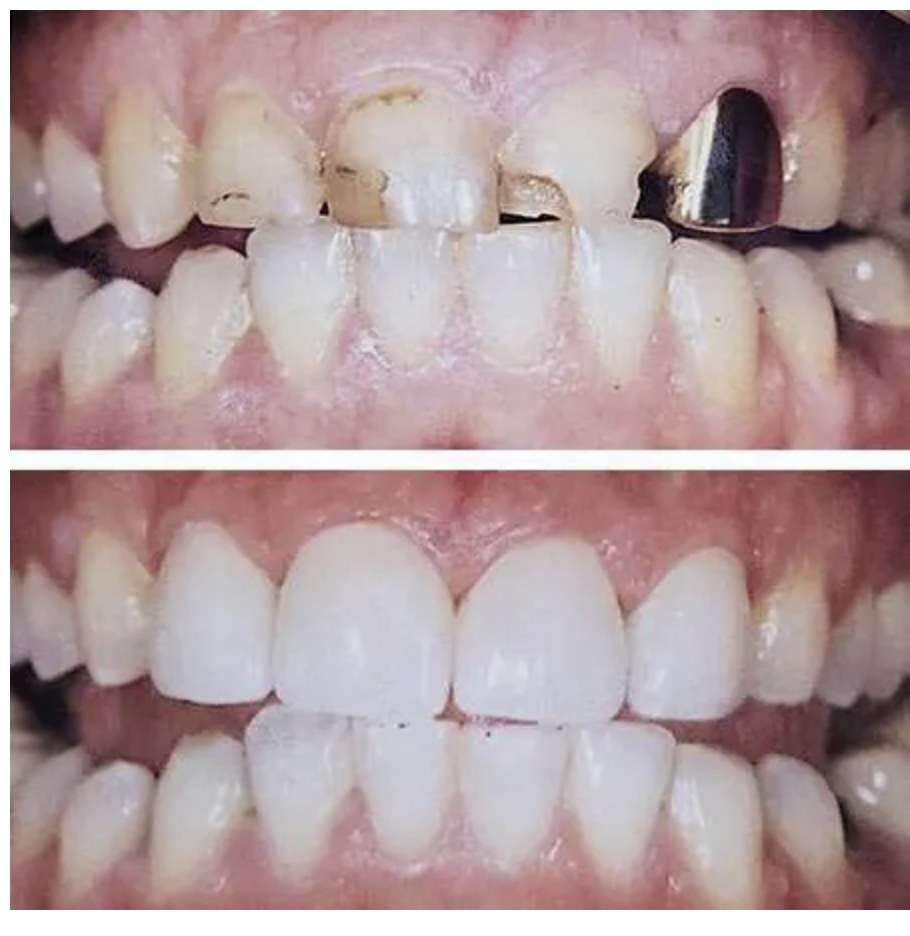
A real Zusin Dental crown case, before and after restoration.
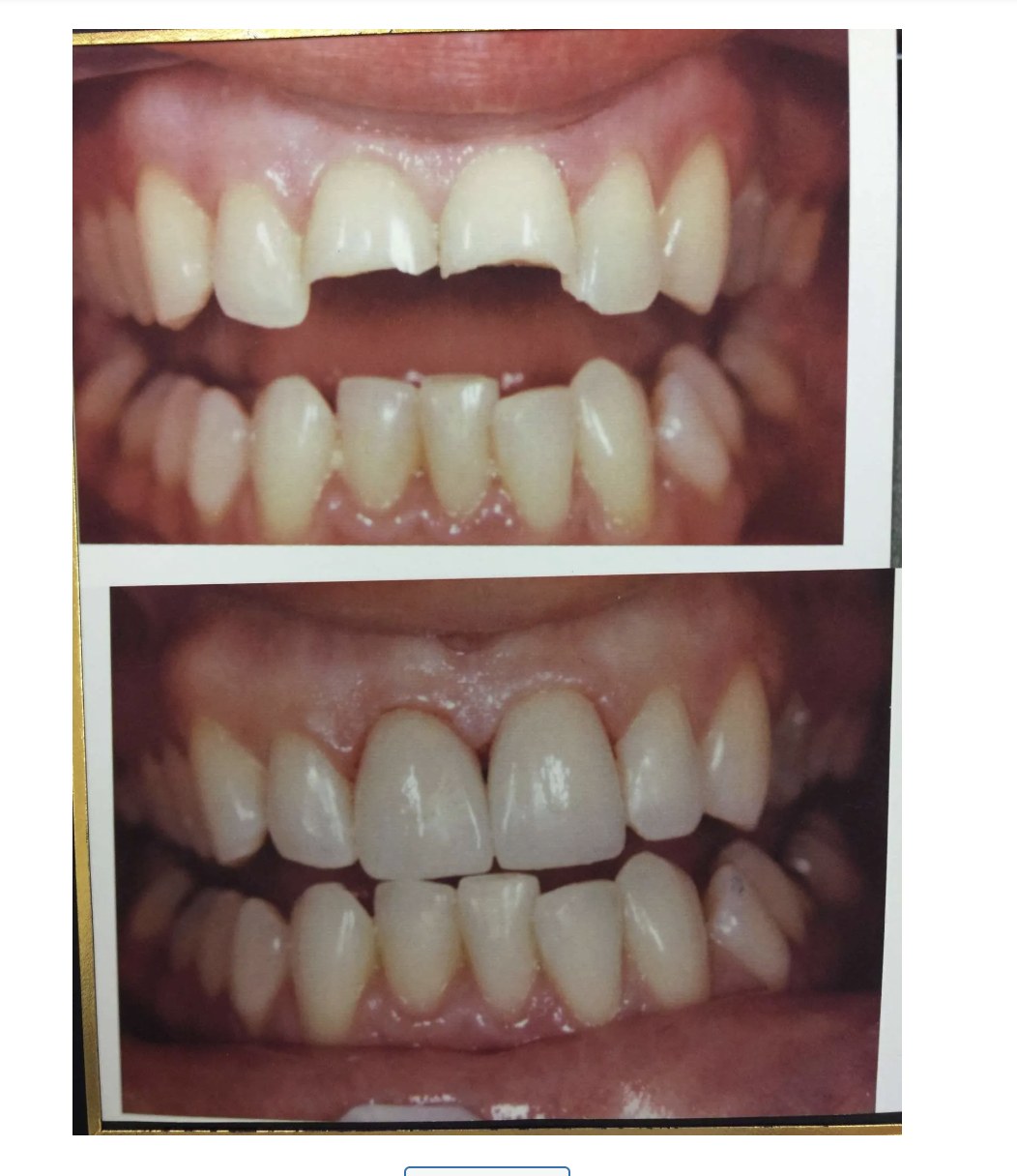
A real Zusin Dental crown case, before and after repair of a broken front tooth.
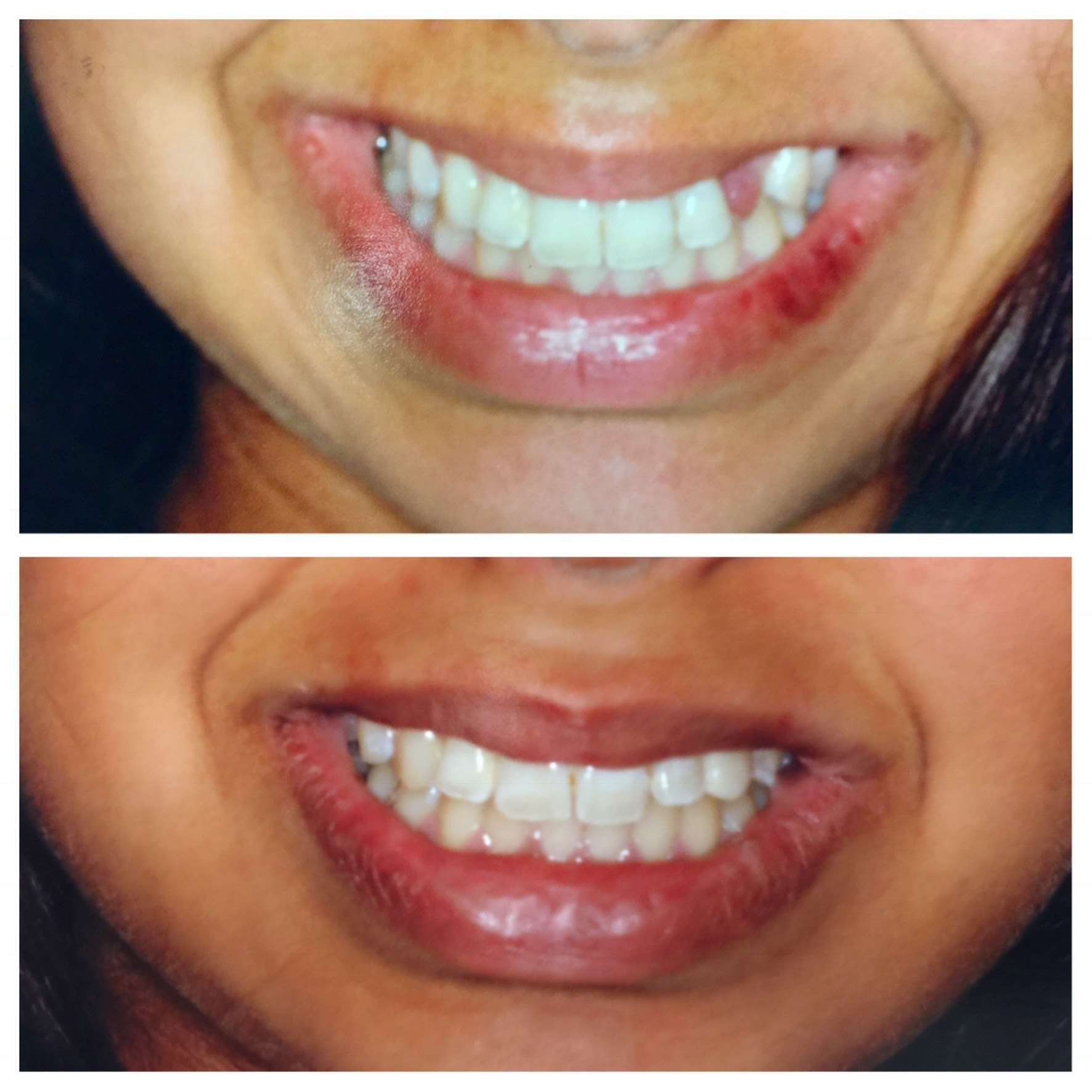
A real Zusin Dental bridge case, before and after restoring a missing tooth.
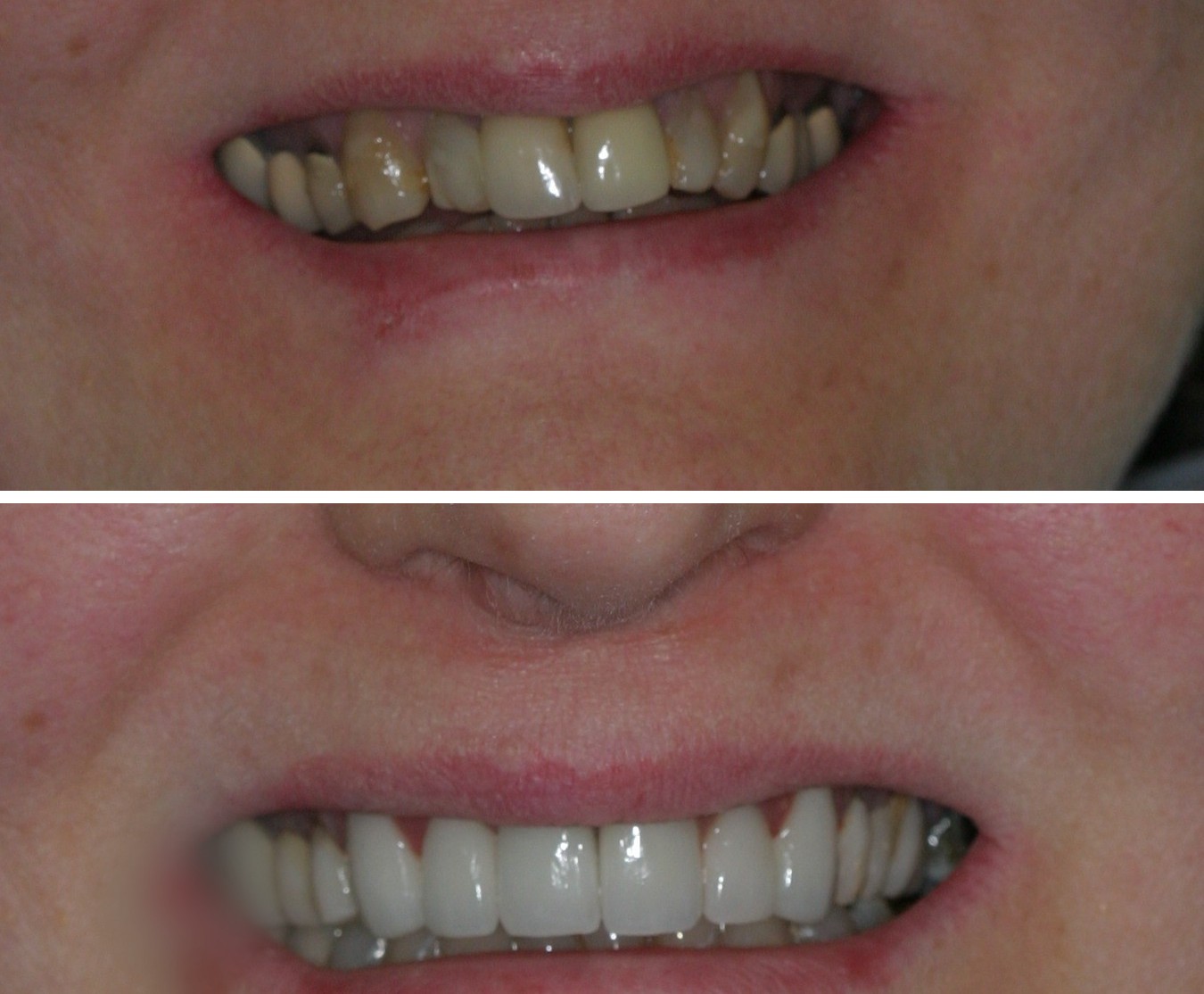
A real Zusin Dental full-arch crown case, before and after restoration.
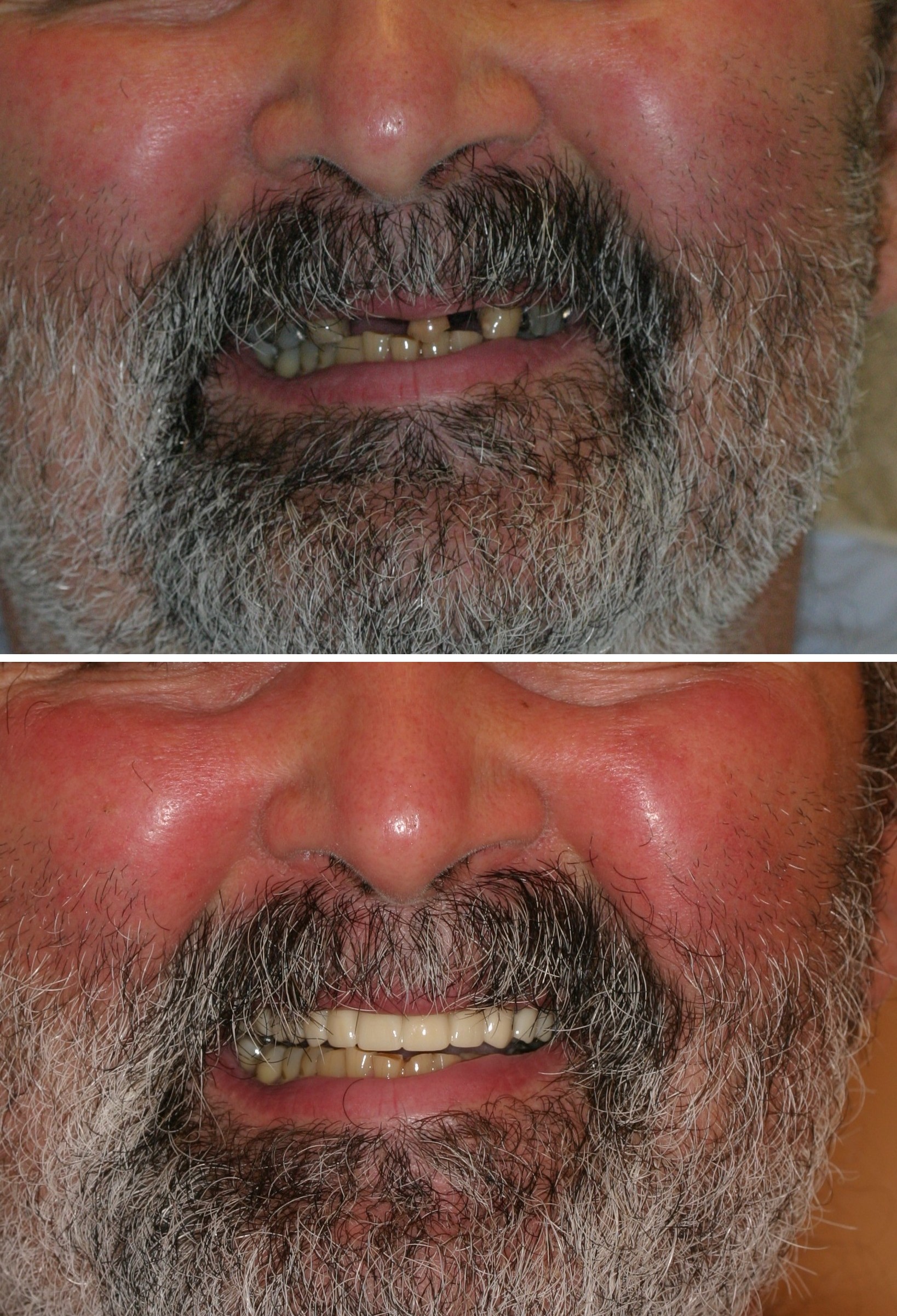
A real Zusin Dental crown case, before and after restoration.
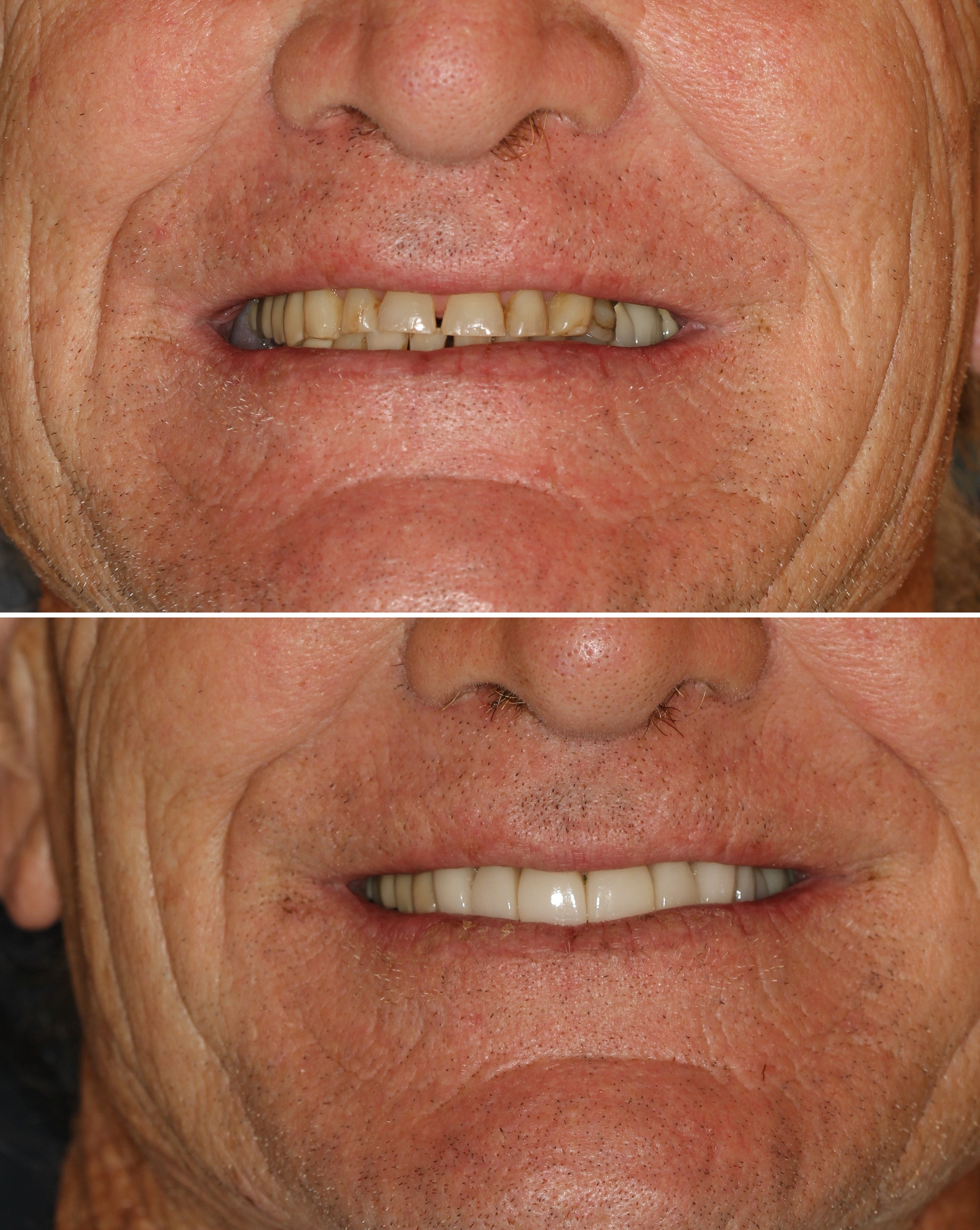
A real Zusin Dental full-arch crown case, before and after restoration.
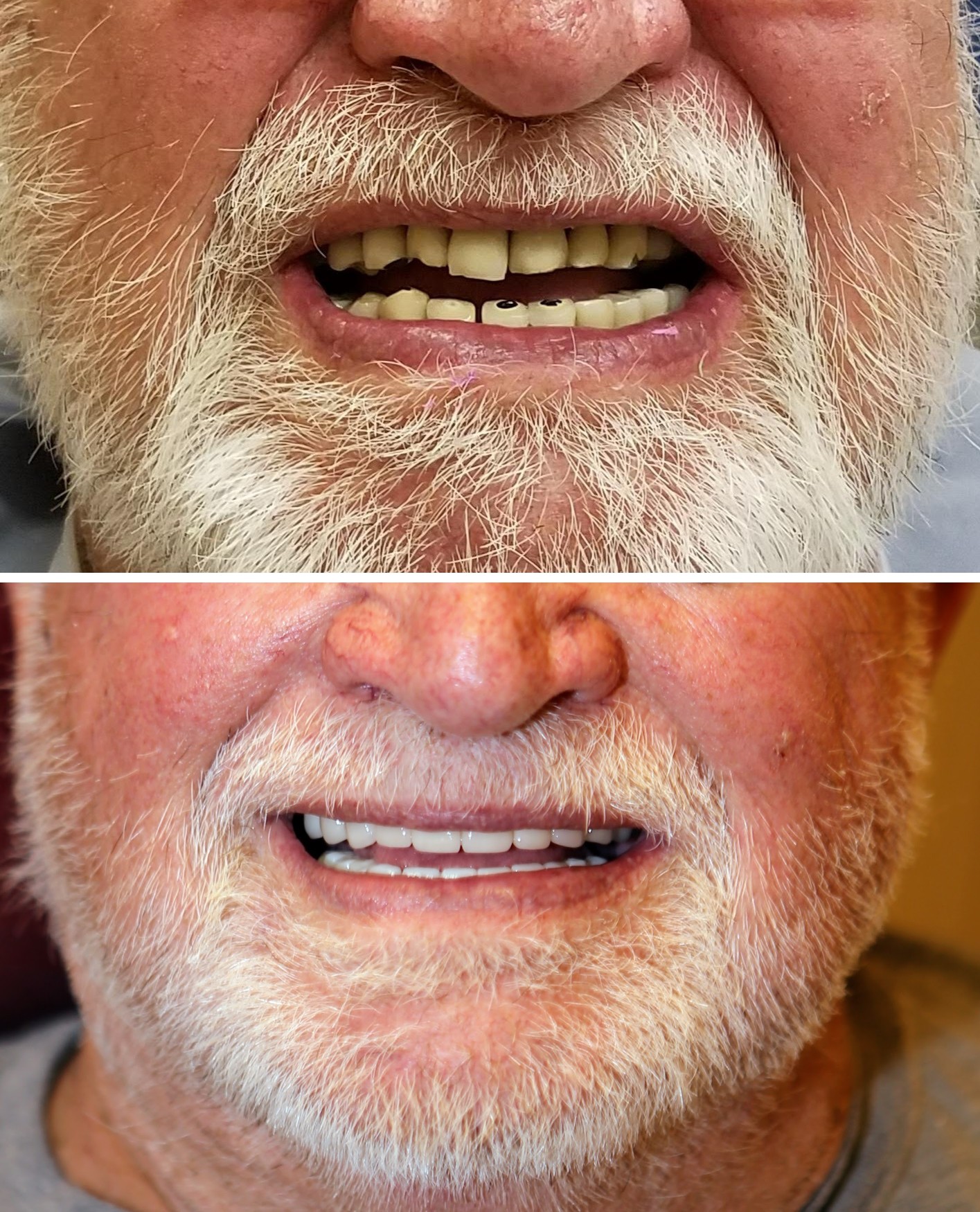
A real Zusin Dental crown case, before and after restoring broken and missing teeth.
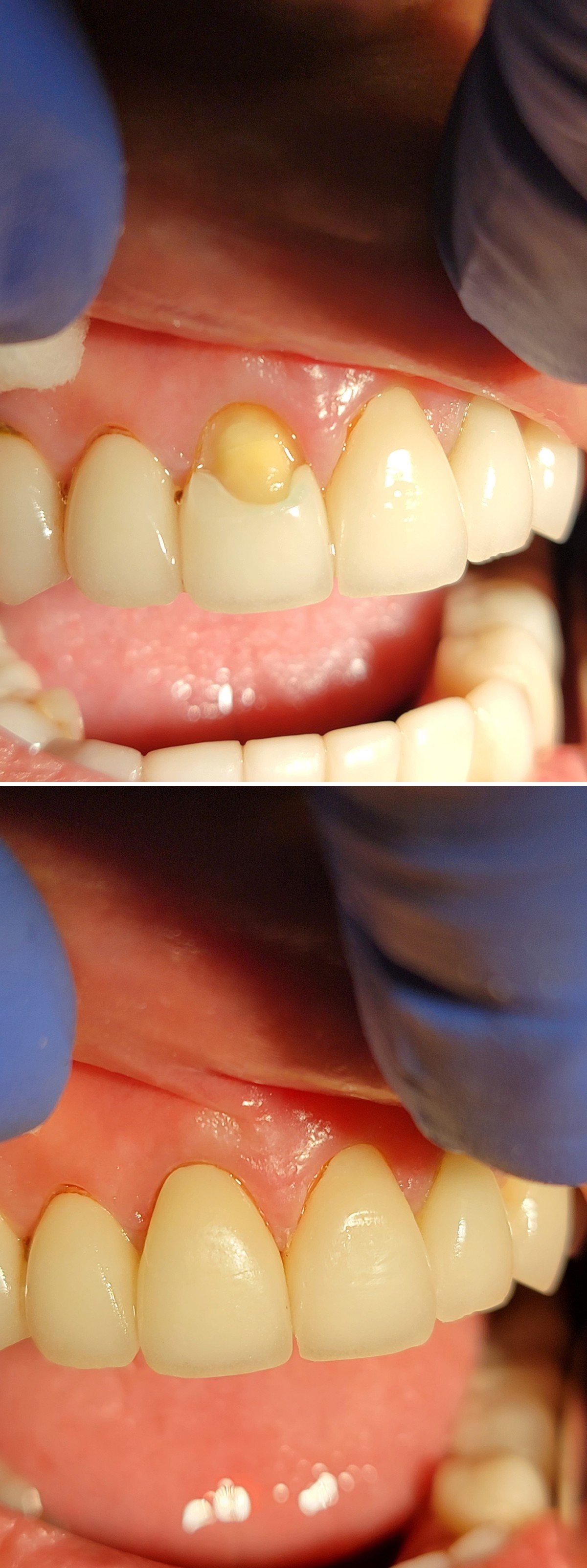
A real Zusin Dental patient, before and after repair of a broken front crown.
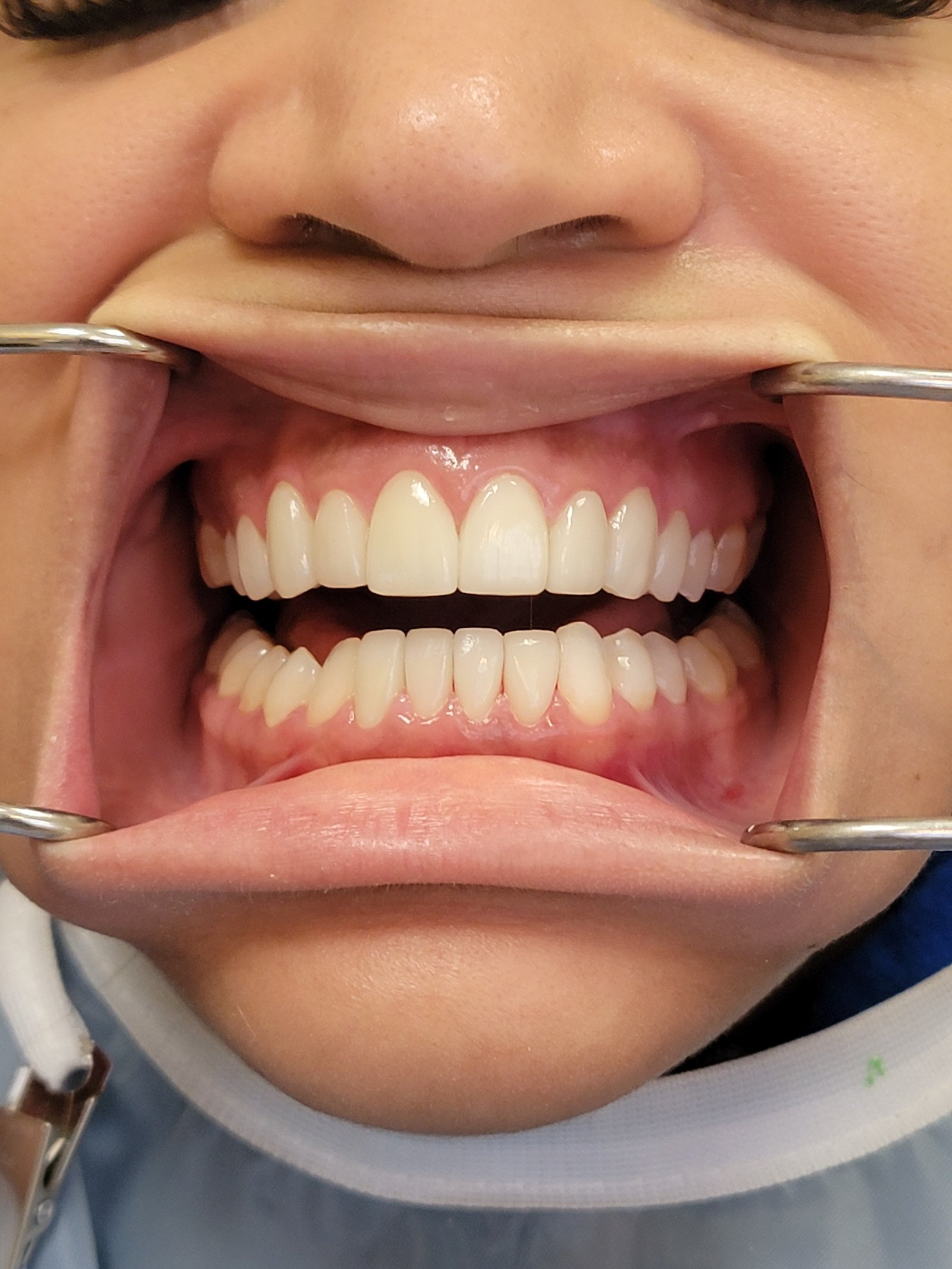
A real Zusin Dental case: a full set of anterior crowns restoring the smile.
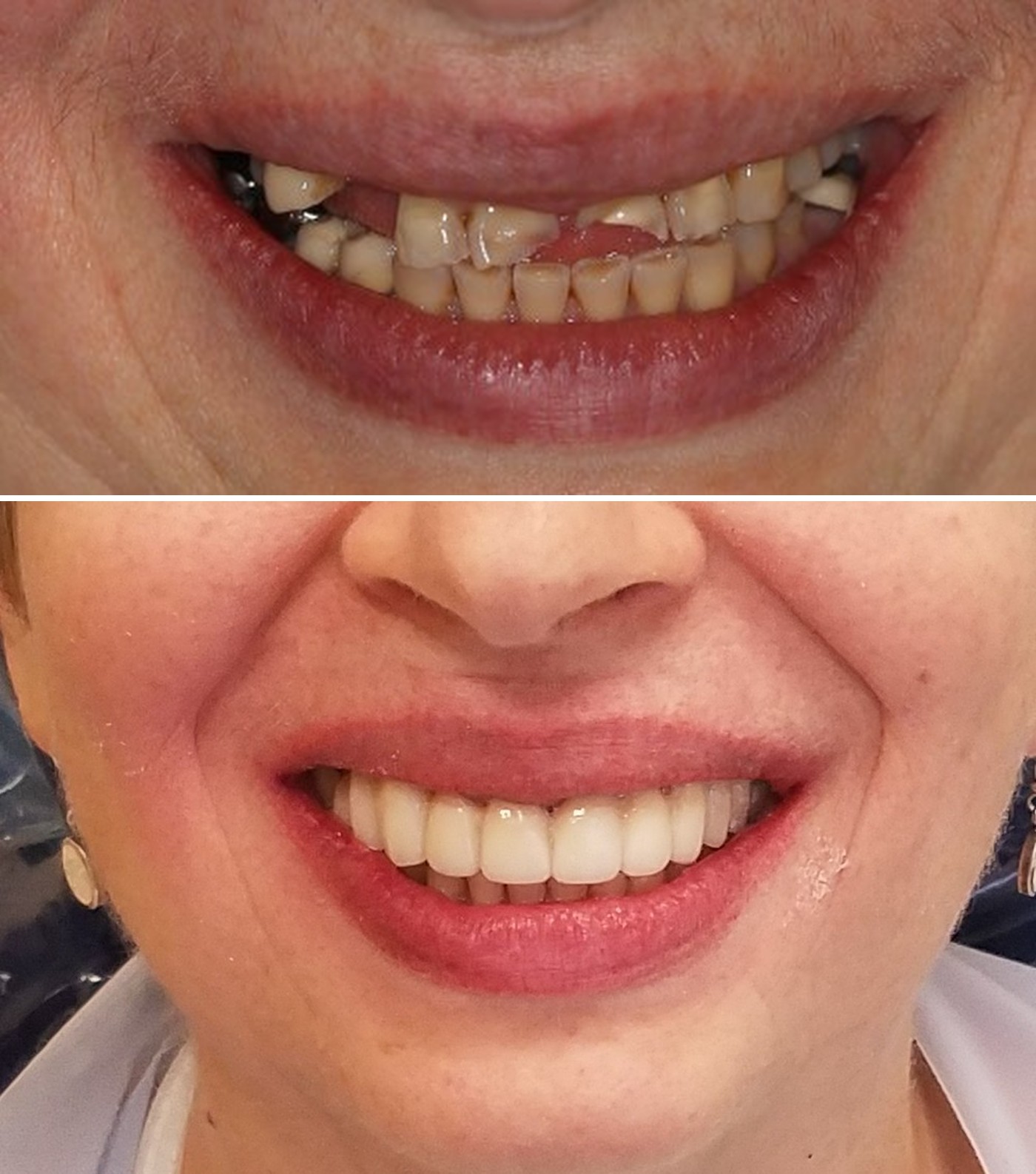
A real Zusin Dental patient with severe wear and broken teeth, before and after provisional crowns re-established her bite.
Sources
- Complications and Survival Rates of Inlays and Onlays vs Complete Coverage Restorations: A Systematic Review and Analysis of Studies — Vagropoulou GI, Klifopoulou GL, Vlahou SG, Hirayama H, Michalakis K, Journal of Oral Rehabilitation (2018)
- Metal-Free Materials for Fixed Prosthodontic Restorations — Poggio CE, Ercoli C, Rispoli L, Maiorana C, Esposito M, Cochrane Database of Systematic Reviews (2017)
- Comparison of Survival and Complication Rates of Tooth-Supported Fixed Dental Prostheses (FDPs) and Implant-Supported FDPs and Single Crowns (SCs) — Pjetursson BE, Brägger U, Lang NP, Zwahlen M, Clinical Oral Implants Research (2007)
- A Systematic Review of the Survival and Complication Rates of Resin-Bonded Fixed Dental Prostheses After a Mean Observation Period of at Least 5 Years — Thoma DS, Sailer I, Ioannidis A, et al., Clinical Oral Implants Research (2017)
- What Is the Prevalence of Various Types of Prosthetic Dental Restorations in Europe? — Zitzmann NU, Hagmann E, Weiger R, Clinical Oral Implants Research (2007)
- Treatment Recommendations for Single-Unit Crowns: Findings From the National Dental Practice-Based Research Network — McCracken MS, Louis DR, Litaker MS, et al., Journal of the American Dental Association (2016)
- Outcomes and Complication Rates of the Tooth-Implant-Supported Fixed Prosthesis: A Systematic Review and Meta-Analysis — Alsabeeha NH, Atieh MA, International Journal of Oral & Maxillofacial Implants (2020)
- A Systematic Review and Meta-Analysis of 3-Unit Fixed Dental Prostheses: Are the Results of 2 Abutment Implants Comparable to the Results of 2 Abutment Teeth? — Pol CWP, Raghoebar GM, Kerdijk W, et al., Journal of Oral Rehabilitation (2018)
- Survival and Complication Rates of Tooth- and Implant-Supported Restorations After an Observation Period up to 36 Years — Bischof FM, Mathey AA, Stähli A, Salvi GE, Brägger U, Clinical Oral Implants Research (2024)
- Interdisciplinary Interface Between Fixed Prosthodontics and Periodontics — Abduo J, Lyons KM, Periodontology 2000 (2017)
- Indirect Restorative Systems — A Narrative Review — Bonfante EA, Calamita M, Bergamo ETP, Journal of Esthetic and Restorative Dentistry (2023)
- Dentist Material Selection for Single-Unit Crowns: Findings From the National Dental Practice-Based Research Network — Makhija SK, Lawson NC, Gilbert GH, et al., Journal of Dentistry (2016)
- Rubber Dam Isolation for Restorative Treatment in Dental Patients — Miao C, Yang X, Wong MC, et al., Cochrane Database of Systematic Reviews (2021)
- Reasons for Placement and Replacement of Crowns in General Dental Practice — Lynch CD, Hale R, Chestnutt IG, Wilson NHF, British Dental Journal (2018)
- The Use of Adhesive Metal-Ceramic Restorations as an Alternative to Conventional Crown and Bridge Materials — Bishop K, Priestley D, Deans R, Joshi R, British Dental Journal (1997)
- Ceramics as Biomaterials for Dental Restoration — Höland W, Schweiger M, Watzke R, Peschke A, Kappert H, Expert Review of Medical Devices (2008)
- Evidence-Based Decision Making: Replacement of the Single Missing Tooth — Fugazzotto PA, Dental Clinics of North America (2009)
- CAD/CAM Versus Traditional Indirect Methods in the Fabrication of Inlays, Onlays, and Crowns — Oen KT, Veitz-Keenan A, Spivakovsky S, et al., Cochrane Database of Systematic Reviews (2014)
- CAD/CAM Systems Available for the Fabrication of Crown and Bridge Restorations — Miyazaki T, Hotta Y, Australian Dental Journal (2011)
- Cost-Effectiveness Modeling of Dental Implant vs. Bridge — Bouchard P, Renouard F, Bourgeois D, et al., Clinical Oral Implants Research (2009)
- Success Rates of Prosthetic Restorations on Endodontically Treated Teeth; a Systematic Review After 6 Years — Ploumaki A, Bilkhair A, Tuna T, Stampf S, Strub JR, Journal of Oral Rehabilitation (2013)
- Relationship Between Crown Placement and the Survival of Endodontically Treated Teeth — Aquilino SA, Caplan DJ, Journal of Prosthetic Dentistry (2002)
- Root Canal Treatment Survival Analysis in National Dental PBRN Practices — Thyvalikakath TP, LaPradd M, Siddiqui Z, et al., Journal of Dental Research (2022)
- Direct and Indirect Restorations for Endodontically Treated Teeth: A Systematic Review and Meta-analysis, IAAD 2017 Consensus Conference Paper — Shu X, Mai QQ, Blatz M, Price R, Wang XD, Zhao K, Journal of Adhesive Dentistry (2018)
- Eight-Year Retrospective Study of the Critical Time Lapse Between Root Canal Completion and Crown Placement — Pratt I, Aminoshariae A, Montagnese TA, Williams KA, Khalighinejad N, Mickel A, Journal of Endodontics (2016)
- In Patients Requiring Single-Tooth Replacement, What Are the Outcomes of Implant- as Compared to Tooth-Supported Restorations? — Salinas TJ, Eckert SE, International Journal of Oral & Maxillofacial Implants (2007)
- Survival Rates and Complication Behaviour of Tooth Implant-Supported, Fixed Dental Prostheses: A Systematic Review and Meta-Analysis — von Stein-Lausnitz M, Nickenig HJ, Wolfart S, et al., Journal of Dentistry (2019)
Your Experience Matters To Us
5.0 out of 5 on Google (54 reviews) · 4.99 out of 5 on Zocdoc (227 reviews)
“Knowledge is an understatement when you talk about Dr. Zusin! My family and I have been patients of his for over 20 years. I always feel I am given the best advice and never pressured into any unnecessary treatment.”
Faina S. · View on Google →
“I tried a couple different dentists in NYC and Zusin Dental is the best. They are thorough, they don't try and upsell you services you don't need, and they offer appointments on Saturday. The best cleaning I ever had!”
Gordon T. · View on Google →
“Routinely SUPERB level of care, including Dr. Zusin having made himself available for emergent care when needed. The office is always spotlessly clean and there is no waiting at appointment time. Pain-free dentistry!”
Anil N. · View on Google →
“I have never experienced pain with Dr. Zusin. For a practice in busy Manhattan, their office has a small town feel, very relaxed and personable. Lena is always quick to respond to appointment requests or changes.”
Molly P. · View on Google →
“Dr. Zusin is the best dentist! I have been visiting his office for the majority of my life. He has expertly performed teeth whitening and Invisalign, and continued to save my teeth after I chipped my two front teeth.”
Sasha S. · View on Google →
“The West End office is state of the art and very relaxing. Dr. Zusin and Lena are a great team. No matter the dental problem you will get the best results. I highly recommend them.”
Domingo Q. · View on Google →
Ready to Get Started?
You will never be treated like a statistic at Zusin Dental. Let's talk about what's right for you.
Schedule Your Visit Call 212-877-7475