
Dental Crown vs. Veneer: What's the Difference?
Crowns and veneers both restore or improve the look of a tooth, and patients mix them up constantly. The real difference comes down to how much of the tooth each one covers — and why that matters...
By Dr. Boris Zusin · Published July 30, 2026
Of all the questions patients ask before a cosmetic or restorative appointment, "do I need a crown or a veneer?" comes up more than almost any other. Both restore a tooth's appearance, both are typically made of porcelain, and both are custom-fabricated to match your smile. The difference comes down to how much of the tooth structure each one actually covers, and why that matters for your specific situation.
What a Veneer Covers
A veneer is a thin shell bonded only to the front (visible) surface of a tooth. It's designed for cosmetic correction — changing color, shape, or minor alignment — on a tooth that's still structurally sound. Because it only covers one surface, less of your natural tooth needs to be altered to place it.
What a Crown Covers
A crown is a cap that covers the entire visible tooth, from the gumline up, on every surface. It doesn't just change appearance — it restores strength and function to a tooth that's been significantly weakened by decay, a large filling, a root canal, or a fracture. Where a veneer improves a healthy tooth, a crown rebuilds a compromised one.
How to Tell Which One You Need
As a general rule: if the tooth is structurally healthy and the concern is purely cosmetic — discoloration, a chip, mild misalignment — a veneer is usually the more conservative choice, preserving more of your natural tooth. If the tooth has extensive decay, a large old filling, a crack, or has had a root canal, it typically doesn't have enough healthy structure left to support a veneer, and a crown becomes the appropriate option to protect it from further damage or breakage.
Cost and Longevity
In New York City, porcelain crowns typically run about $1,200–$2,500 per tooth and last 10–15 years, sometimes up to 20 with good care. Porcelain veneers typically run $1,500–$3,500 per tooth and last 8–10+ years. Veneers often cost somewhat more per tooth because of the smile-design and cosmetic customization involved, even though they cover less surface area — the pricing reflects the purpose of the restoration, not just the amount of material used.
What About a Bridge?
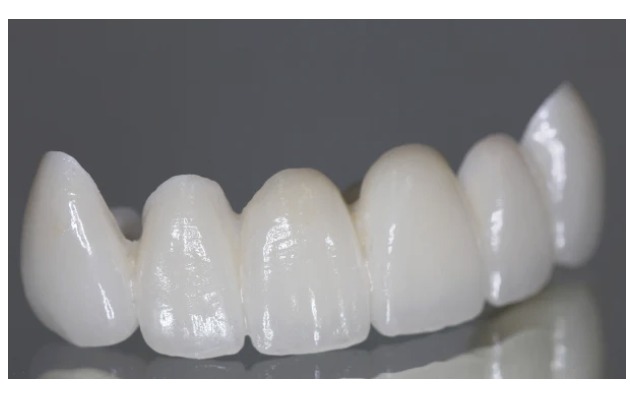
If you're missing a tooth entirely rather than repairing a damaged one, neither a crown nor a veneer applies on its own — a bridge (which uses crowns on the teeth next to the gap to support a replacement tooth) or a dental implant are the options worth discussing instead.
The Bottom Line
Veneers and crowns solve different problems: one is a cosmetic shell for a healthy tooth, the other is structural armor for a compromised one. The only reliable way to know which applies to your specific tooth is an exam — X-rays and a look at how much healthy structure remains will make the right answer clear.
Related to This Article
Have a Dental Question of Your Own?
Reach out and we'll help you find the right next step.
Schedule Your Visit Call 212-877-7475