
Invisalign vs. Traditional Braces: Which Is Right for You?
Both straighten teeth, but Invisalign and traditional braces differ a lot in cost, treatment time, comfort, and what kinds of cases each one can actually fix. Here's an honest comparison...
By Dr. Boris Zusin · Published July 30, 2026
Straightening your teeth as an adult (or a teen who'd rather skip the metal-mouth years) usually comes down to two options: Invisalign clear aligners or traditional metal braces. Both work by applying steady pressure to gradually move teeth into position, but the experience of getting there — and what each one can realistically fix — is quite different.
How Each Option Works
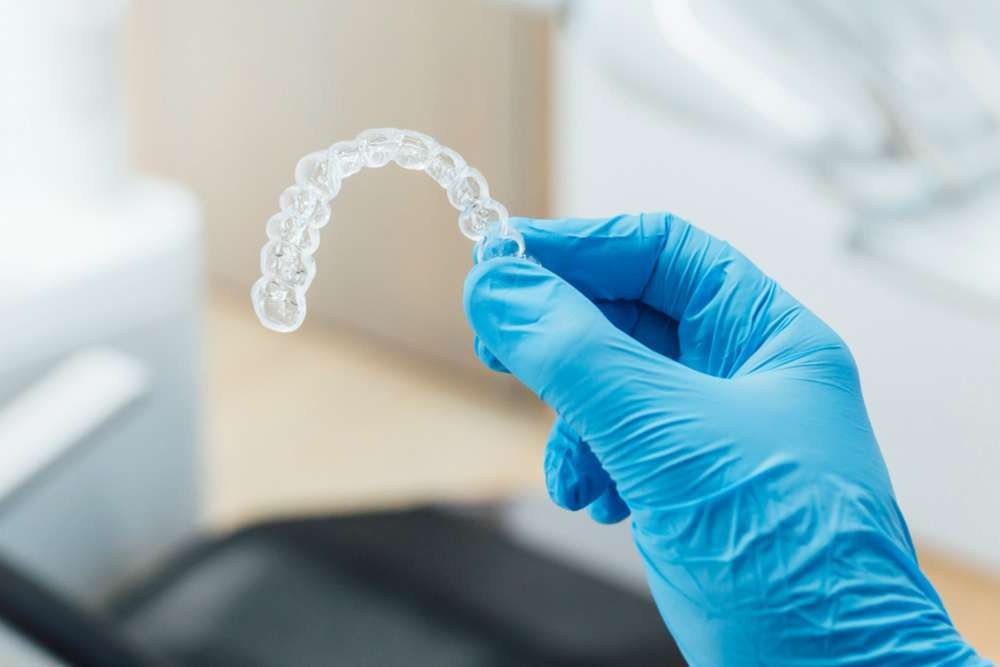
Traditional braces use metal or ceramic brackets bonded to each tooth, connected by a wire that's periodically tightened to guide teeth into place over time. Invisalign uses a series of custom, clear, removable aligners — typically switched out roughly every one to two weeks — each one making a small adjustment until your teeth reach their final position.
Cost
A full course of Invisalign treatment typically runs about $3,500–$8,000 in New York City, in a similar range to traditional braces, which usually fall somewhere around $3,000–$7,000 depending on the complexity of your case. Insurance with orthodontic benefits often covers a portion of either option, and both are commonly financed through payment plans.
Treatment Time
Simple to moderate cases with either option can wrap up in under a year, but on average, Invisalign treatment tends to run 12–18 months, while traditional braces often take 18–36 months for comparable results, particularly for more complex bite corrections. Braces work continuously without requiring patient cooperation to stay on track, which is part of why they can handle a wider range of complexity.
Comfort and Lifestyle
Invisalign aligners are smooth plastic with no brackets or wires to irritate your cheeks and lips, and because they're removable, there are no food restrictions — you take them out to eat and brush normally. That removability is also the tradeoff: aligners only work if you actually wear them (generally 20–22 hours a day), which requires more discipline than braces, which stay on regardless of what you do. Braces do come with some dietary restrictions (sticky and hard foods are generally off-limits) and require more careful brushing and flossing around the brackets.
What Each Option Treats Best
Invisalign works well for mild to moderate crowding, spacing, and many bite issues, and is a popular choice for adults who want a discreet option for work or social settings. Traditional braces remain the better tool for more severe misalignment, significant bite corrections, or cases involving tooth rotation or vertical movement that aligners handle less predictably. A consultation with digital scans is the most reliable way to know which option can actually achieve the result you're after.
Which Is Right for You?
If discretion, removability, and fewer office visits matter most to you, and your case falls in the mild-to-moderate range, Invisalign is usually the better fit. If your case is more complex, or you'd rather not rely on remembering to wear something 20+ hours a day, traditional braces may get you a more predictable result. Either way, the first step is the same: a consultation to find out what your specific teeth actually need.
Sources
- Clear Aligners in Orthodontic Treatment — Weir T, Australian Dental Journal (2017)
- Clinical Effectiveness of Clear Aligner Treatment Compared to Fixed Appliance Treatment: An Overview of Systematic Reviews — Yassir YA, Nabbat SA, McIntyre GT, Bearn DR, Clinical Oral Investigations (2022)
- Treatment Outcome With Orthodontic Aligners and Fixed Appliances: A Systematic Review With Meta-Analyses — Papageorgiou SN, Koletsi D, Iliadi A, Peltomaki T, Eliades T, European Journal of Orthodontics (2020)
Related to This Article
Have a Dental Question of Your Own?
Reach out and we'll help you find the right next step.
Schedule Your Visit Call 212-877-7475