Get the Natural-Looking, Beautiful Smile You've Always Wanted
Veneers are one of the most effective cosmetic dental procedures for changing the appearance of your teeth, and can correct a wide variety of cosmetic concerns.
Medically reviewed by Dr. Boris Zusin, DDS, FAGD, MBA, MS, Diplomate, American Board of Dental Sleep Medicine (ABDSM) · Last reviewed August 21, 2026

Reduce Sensitivity While Creating a Protective Barrier
Besides improving the look of your smile, veneers can reduce sensitivity in teeth with worn enamel, because the veneer acts as a protective shield over the tooth. Near Lincoln Center or elsewhere on the Upper West Side? See our Porcelain Veneers Near the Upper West Side page for what the visit sequence looks like locally.
Am I a Candidate?
You may be a candidate for veneers if you have:
- Stains or discoloration from foods, injury, or medication
- Gaps, chips, or cracks
- Worn-down enamel due to age
- Mismatched or multi-colored restorations
- Teeth that are too small, too large, or crooked/crowded
Veneers aren't the right fit for everyone, though — active decay, untreated gum disease, a significantly misaligned bite, or unmanaged teeth grinding all need to be addressed first, since any of these can undermine how well a veneer bonds and holds up. If you're a candidate for a simpler fix like whitening or bonding, we'll tell you that too, rather than recommending veneers by default.
How Long Do Veneers Actually Last?
Porcelain veneers are a well-studied, predictable restoration — here's what the long-term data actually shows.
~95% at 10 Years
Across a large body of clinical studies, porcelain veneers show roughly a 95% survival rate at 10 years overall — a genuinely durable, well-established restoration when placed and cared for properly.
Fracture Is the Most Common Issue
Chipping or fracture is the leading cause of veneer failure, followed by debonding (the veneer coming loose). Both are considerably more likely in the first few years after placement than later on — which is why we watch closely at your early follow-ups.
Grinding Is the Main Risk Factor
Most complications trace back to excess bite force — clenching or grinding puts far more stress on a thin porcelain shell than normal chewing does. A nightguard for patients who grind is one of the simplest ways to protect a veneer investment, which is why we recommend one when it's relevant to you.
Do You Grind Your Teeth? Here's How That Changes the Plan
Bruxism (clenching or grinding) is a well-documented risk factor for veneer failure — but with the right protocol, it's rarely a reason to rule veneers out.
The Numbers
The risk is real and well quantified. One long-term study found bruxers had a 7.7-times greater failure risk than non-bruxers, with ceramic fracture the leading cause. In a study of 323 veneers, nearly all of the fractures and most of the debondings occurred in patients with bruxism. And a splint makes a dramatic difference: in an 8-year study of feldspathic veneers, bruxers who wore an occlusal splint had 89.1% survival at 8 years, versus 63.9% for bruxers who didn't — bringing splint-protected bruxers close to the survival seen in non-bruxers.
What This Means in Practice
Bruxism changes the protocol, not necessarily the candidacy. If clenching or grinding is part of your picture, we build the plan around it: a rigid, hard-acrylic occlusal nightguard delivered after your veneers are placed (studies of splint materials against opposing teeth and restorations favor a hard splint designed to wear a bit faster than the material it's protecting), an enamel-preserving preparation with incisal coverage where appropriate, and a discussion of stronger materials (like lithium disilicate) when parafunction is significant. For the most severe grinding, a full-coverage restoration may hold up better than a thin veneer, and we'll say so rather than push a veneer that's unlikely to last. What actually matters most is consistency: the survival benefit of a nightguard depends entirely on wearing it every night, not just having one made — and diagnosing bruxism itself (from wear patterns, muscle tenderness, or your own report of grinding or clenching) is part of every veneer consultation here.
Hard Nightguard, Not a Soft Sports Mouthguard
The type of appliance matters as much as whether one is worn at all. A rigid acrylic (PMMA) occlusal splint is the right tool for nightly bruxism protection — it distributes clenching and grinding forces evenly across a full arch of teeth and holds its fit over years of nightly use. A soft EVA sports mouthguard is a different tool built for a different job: absorbing a single sharp impact, like a blow to the face during contact sports. Finite-element modeling of impact forces on veneered teeth has found that a soft guard with a rigid insert and a built-in air gap meaningfully outperforms an all-soft design at cushioning that kind of sudden trauma — but that's a one-time-impact scenario, not the repetitive, sustained loading pattern of nightly grinding. Wearing a soft sports guard instead of a hard nightguard for bruxism, or vice versa, means using the wrong appliance for the actual stress your veneers are under.
It's also worth being direct about what a nightguard can and can't do. Splints work by redistributing bite force and cushioning contact between opposing teeth, not by turning off the clenching reflex itself — in-vitro testing that measures how a splint physically deflects under bruxism-level forces, and 3D scans tracking how appliance surfaces wear down over months of real use, both point the same direction: a nightguard meaningfully lowers fracture and debonding risk, but it doesn't reduce it to zero, and it doesn't stop the underlying grinding. A recent systematic review of tooth-wear rehabilitation found the short-term evidence on splints is still mixed, even though the mid- and long-term picture — including the 89.1% vs. 63.9% survival gap above — consistently favors regular wear. That's exactly why we treat a nightguard as a critical layer of protection for veneers in a bruxism patient, not a guarantee, and why the honest answer to "will a nightguard make my veneers grinding-proof?" is no — but it meaningfully shifts the odds in your favor.
No-Prep, Minimal-Prep, or Traditional Veneers?
The amount of natural tooth enamel removed to place a veneer varies, and it matters more than it might seem — enamel bonds to porcelain far more strongly and predictably than the dentin layer underneath it does.
No-Prep & Minimal-Prep
When teeth are already reasonably well-positioned, of adequate size, and close to the desired shade, an ultra-thin veneer can often be bonded with little to no enamel removed. Because the entire bond stays within enamel, these can perform very well long-term and are, in some studies, associated with even fewer complications than traditionally prepared veneers — plus they're far more conservative and, in principle, more reversible.
Traditional Prep
When there's significant wear, a chip or crack, noticeably discolored teeth, or teeth that need real reshaping to look right, some enamel reduction is usually necessary to make room for a veneer that looks natural rather than bulky. We keep this reduction shallow and enamel-confined whenever possible — veneers that end up bonded partly to the underlying dentin layer (from deeper-than-necessary preparation) fail meaningfully more often than ones bonded entirely to enamel. This step is not reversible — once enamel is removed, the tooth will need some form of restoration (a veneer, or eventually a crown) going forward. We'll always tell you honestly which category your case falls into and why, rather than defaulting to one approach.
Choosing the Right Material
Feldspathic & Leucite-Reinforced Porcelain
The traditional choice for the most natural-looking result — these materials mimic the subtle translucency of real enamel better than anything else available, which is why they remain popular for front-tooth veneers where esthetics matter most. They perform very well long-term, though slightly less durably than newer materials.
Lithium Disilicate
A slightly stronger, more chip-resistant option with a modest edge in long-term complication rates over feldspathic porcelain, while still delivering excellent esthetics — often our default recommendation when durability and appearance both matter.
Zirconia
The most fracture-resistant ceramic available, but long-term veneer-specific outcome data is still more limited than for the other materials, and it can look slightly less lifelike in very thin sections. Used selectively rather than as a default for veneers.
“Am I a Candidate for Veneers?” Quiz
Answer all 5 questions, then click “See My Result” below.
This quiz is an educational screening tool, not a diagnosis. A consultation confirms whether veneers are right for you.
Care From a Team That Knows You
Dr. Boris Zusin is an expert in general, cosmetic, implant, and dental sleep medicine, with 30+ years of clinical experience and ongoing continuing education. Lena Zusin, RDH works alongside him to make every visit as warm and comfortable as possible.
“Drawing upon our combined skills refined through years of experience and continued education, Lena and I will do everything possible to ensure that your entire dental experience at our office is as good as possible.” — Dr. Boris Zusin
- Uncompromising clinical excellence
- Meticulous attention to detail
- A gentle approach to dentistry

FAQ: Porcelain Veneers at Zusin Dental, NYC
Thin, custom-made shells bonded to the front surface of teeth to enhance shape, color, and symmetry. They correct chipped teeth, discoloration, gaps, mild crowding, and worn enamel, and resist staining and fading.
Typically two to three visits: an initial consultation and digital impressions, a gentle preparation of the tooth surface with a temporary set placed, then bonding of your finished custom veneers about one to two weeks later.
Roughly $1,500–$3,500 per veneer, with pricing that can run slightly higher in New York City, covering consultation, smile design, tooth preparation, lab work, and final fitting.
Typically 8–10 years or longer with good care; a nightguard is recommended for patients who grind their teeth to prevent chipping.
They're highly stain-resistant compared to natural teeth, so coffee, wine, and pigmented foods are much less likely to discolor them; any surface buildup is usually polished away at cleanings.
Composite veneers are placed in a single visit and cost less, but stain more easily and typically last under 5 years. Porcelain veneers, made in a lab, are stronger, more stain-resistant, and typically last 8–10+ years — usually the better investment for a full smile transformation.
Veneers cover just the front of the tooth and are ideal for cosmetic changes like whitening, reshaping, and closing gaps, but aren't suited for weakened, cracked, or heavily filled teeth. Crowns cover the entire tooth and provide structural support as well as a cosmetic result.
Yes — mild cold sensitivity and gum tenderness near the margins for a few days to a few weeks is the expected norm, and it typically resolves on its own within about a month. See our What to Expect After Getting Veneers guide for the full timeline and the warning signs that need a follow-up instead.
Real Solutions For Real Patients
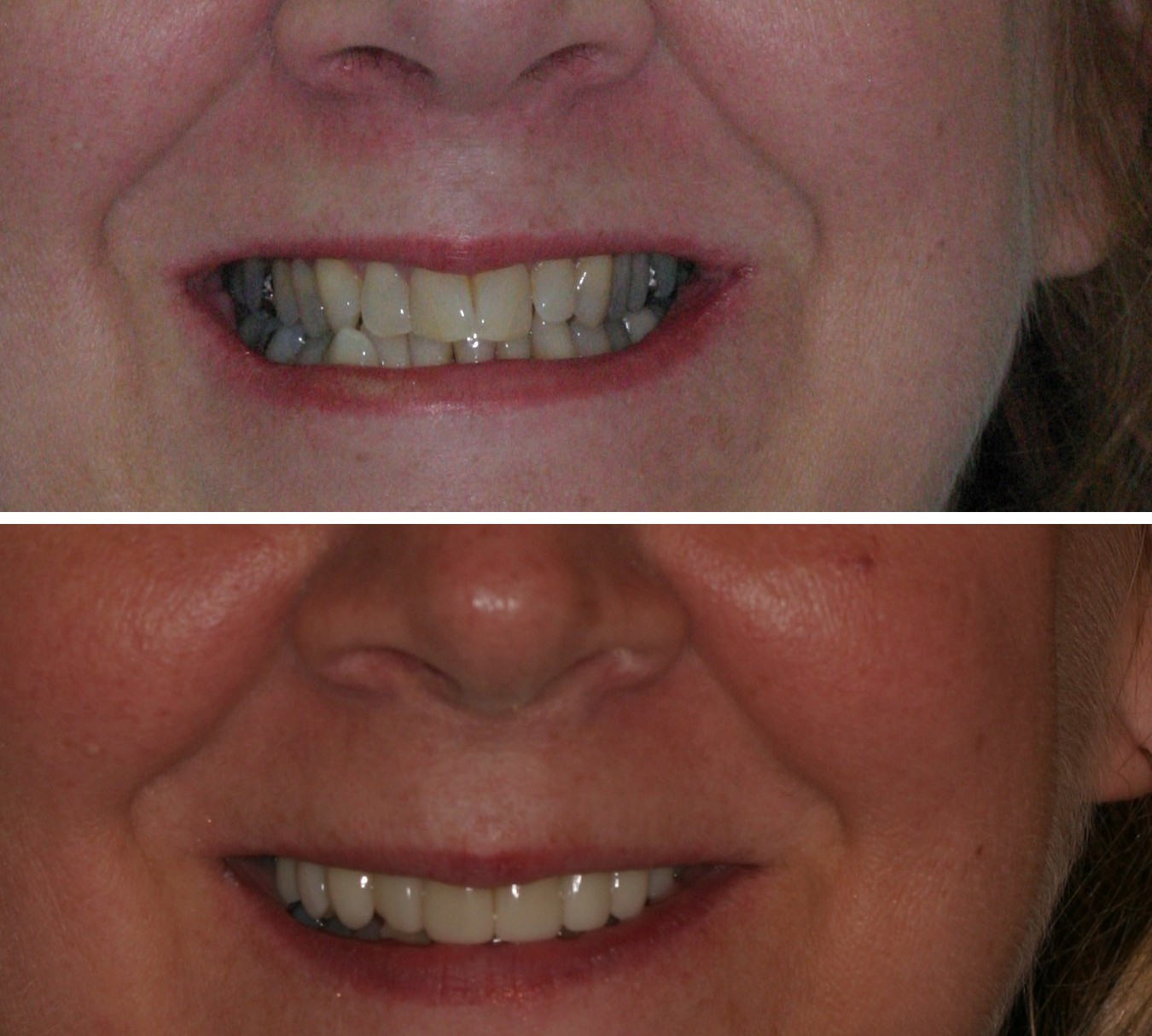
A real Zusin Dental veneers case, before and after cosmetic restoration.
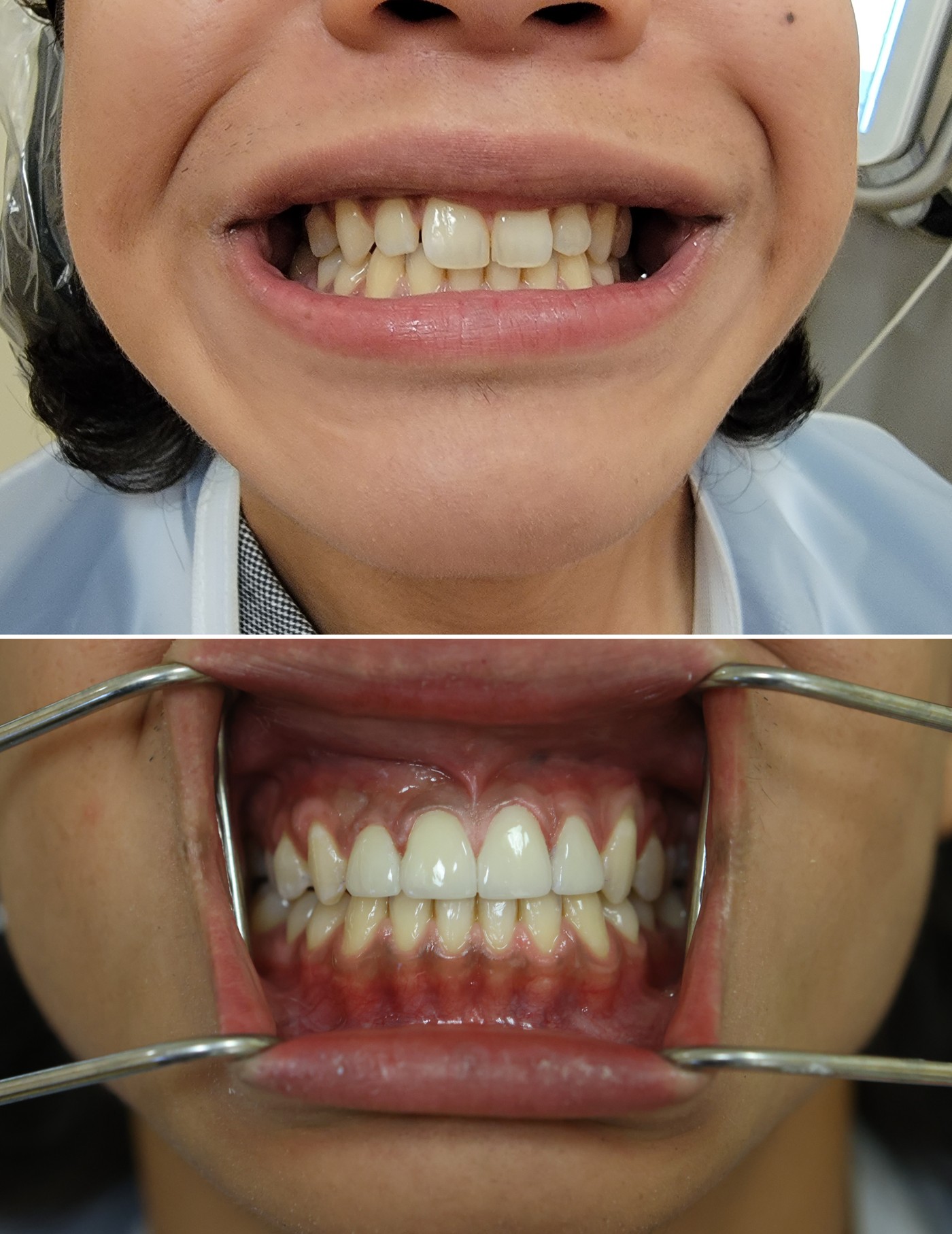
A real Zusin Dental veneers case, before and after four anterior porcelain veneers were placed.
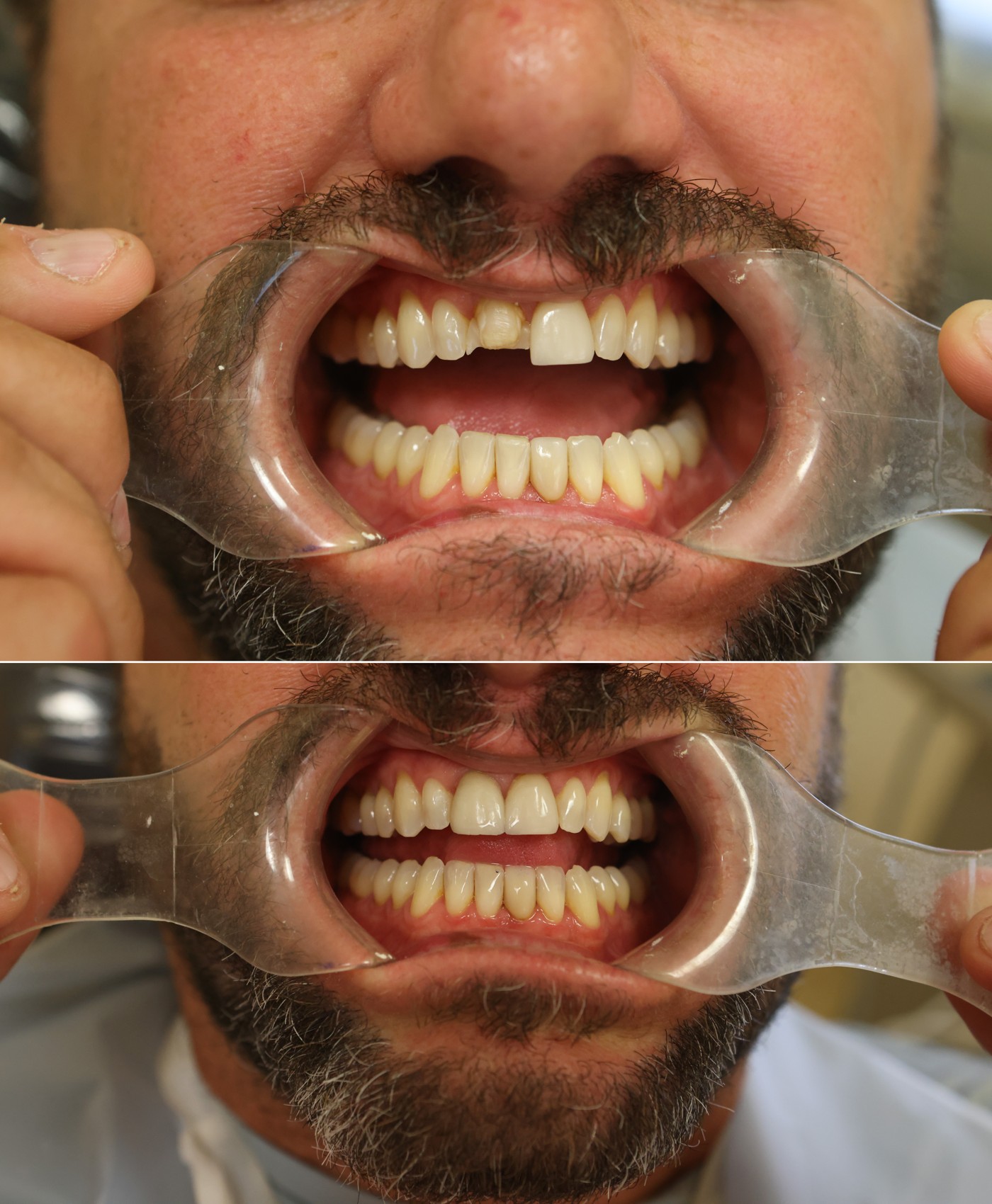
A real Zusin Dental veneers case, before and after a front tooth veneer was cemented.
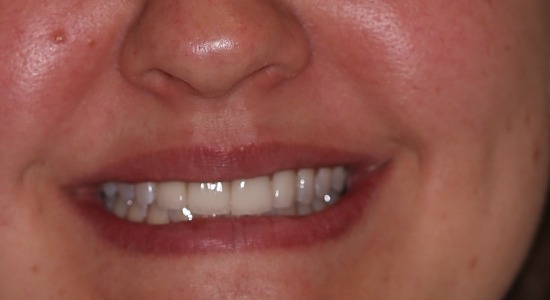
A real Zusin Dental veneers case: four anterior porcelain veneers.
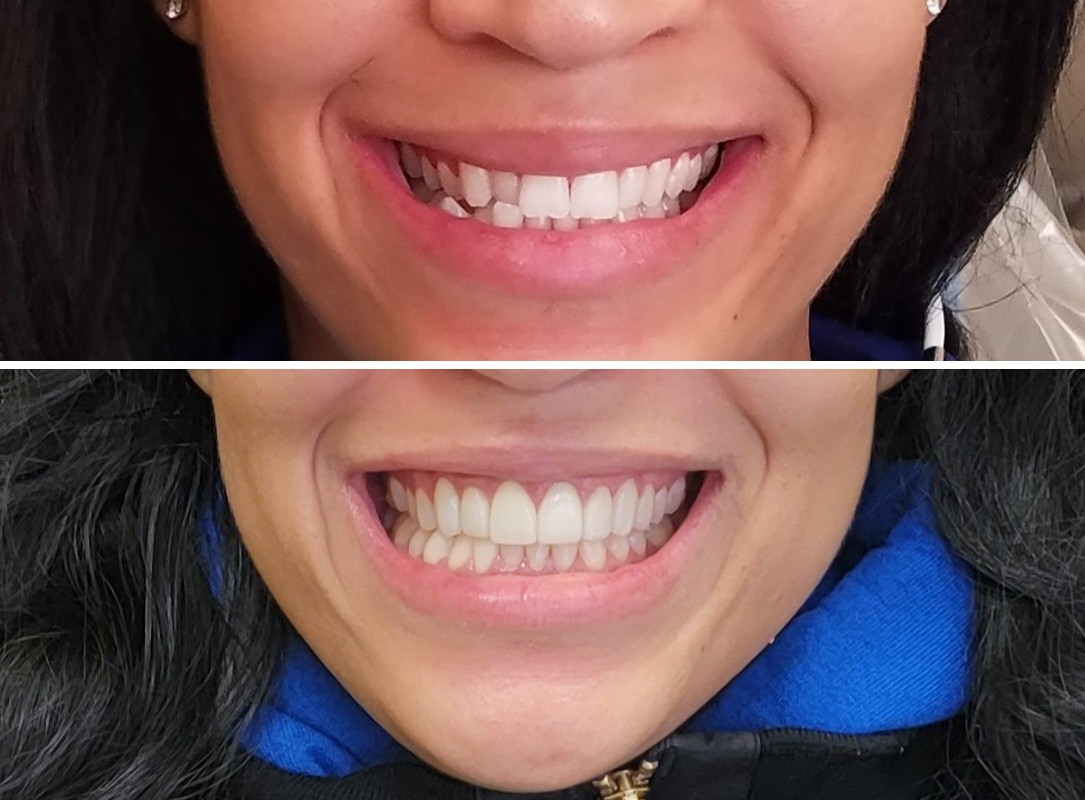
A real Zusin Dental veneers case: a natural, even smile after porcelain veneers.
Sources
- Long-Term Survival and Complication Rates of Porcelain Laminate Veneers in Clinical Studies: A Systematic Review — Alenezi A, Alsweed M, Alsidrani S, Chrcanovic BR, Journal of Clinical Medicine (2021)
- A Prospective Comparative Analysis of the Survival Rates of Conventional vs No-Prep/Minimally Invasive Veneers Over a Mean Period of 9 Years — Smielak B, Armata O, Bojar W, Clinical Oral Investigations (2022)
- Survival and Complication Rates of Feldspathic, Leucite-Reinforced, Lithium Disilicate and Zirconia Ceramic Laminate Veneers: A Systematic Review and Meta-Analysis — Klein et al., Journal of Esthetic and Restorative Dentistry (2025)
- Survival and Complication Rates of Feldspathic, Leucite-Reinforced, Lithium Disilicate and Zirconia Ceramic Laminate Veneers: A Systematic Review and Meta-Analysis — Klein P, Spitznagel FA, Zembic A, et al., Journal of Esthetic and Restorative Dentistry (2025)
- Influence of Bruxism on Survival of Porcelain Laminate Veneers — Granell-Ruíz M, Agustín-Panadero R, Fons-Font A, Román-Rodríguez JL, Solá-Ruíz MF, Medicina Oral, Patología Oral y Cirugía Bucal (2014)
- An 8-Year Prospective Clinical Investigation on the Survival Rate of Feldspathic Veneers: Influence of Occlusal Splint in Patients With Bruxism — Faus-Matoses V, Ruiz-Bell E, Faus-Matoses I, et al., Journal of Dentistry (2020)
- Clinical Performance of Porcelain Laminate Veneers for Up to 20 Years — Beier US, Kapferer I, Burtscher D, Dumfahrt H, The International Journal of Prosthodontics (2012)
- Relationship Between Bite Force, Bruxism, and Fractures of Teeth and Dental Restorations — Chrcanovic BR, Bergengren T, Stanisic N, et al., Scientific Reports (2025)
- Bruxism and Direct and Indirect Restorations Failure: A Scoping Review — Al-Talib T, Goodman X, Ziada H, Abubakr NH, Journal of Dentistry (2025)
- Effects of Occlusal Splint Therapy on Opposing Tooth Tissues, Filling Materials and Restorations — Osiewicz MA, Werner A, Roeters FJM, Kleverlaan CJ, Journal of Oral Rehabilitation (2021)
- Sleep Bruxism: An Overview for Clinicians — Beddis H, Pemberton M, Davies S, British Dental Journal (2018)
- Clinical Performance of Minimally Invasive Full-Mouth Rehabilitation Using Different Materials and Techniques for Patients With Moderate to Severe Tooth Wear: A Systematic Review and Meta-Analysis — Fan J, Wang B, Wang L, et al., Clinical Oral Investigations (2025)
- The Ability of Mouthguards to Protect Veneered Teeth: A 3D Finite Element Analysis — Dal Piva AMO, Tribst JPM, Borges ALS, Kleverlaan CJ, Feilzer AJ, Dental Traumatology (2023)
- Three-Dimensional Analysis Using a Dental Model Scanner: Morphological Changes of Occlusal Appliances Used for Sleep Bruxism Under Dry and Wet Conditions — Ozawa A, Suzuki Y, Okura K, et al., PLoS One (2024)
- Deflection of Occlusal Splints Under Bruxism-Like Conditions: An Exploratory In Vitro Investigation — Merle CL, Rauch A, Wulff J, Schmidt MB, Rosentritt M, Clinical Oral Investigations (2026)
- Biomechanical Effects of a Hard Insert and Air Space in Mouthguards on the Shock Absorption and Protection Against Fractures of Direct Resin Composite Veneers From Trauma — de Bragança GF, de Souza IF, Soares PBF, Soares CJ, Dental Traumatology (2023)
Your Experience Matters To Us
5.0 out of 5 on Google (54 reviews) · 4.99 out of 5 on Zocdoc (227 reviews)
“Knowledge is an understatement when you talk about Dr. Zusin! My family and I have been patients of his for over 20 years. I always feel I am given the best advice and never pressured into any unnecessary treatment.”
Faina S. · View on Google →
“I tried a couple different dentists in NYC and Zusin Dental is the best. They are thorough, they don't try and upsell you services you don't need, and they offer appointments on Saturday. The best cleaning I ever had!”
Gordon T. · View on Google →
“Routinely SUPERB level of care, including Dr. Zusin having made himself available for emergent care when needed. The office is always spotlessly clean and there is no waiting at appointment time. Pain-free dentistry!”
Anil N. · View on Google →
“I have never experienced pain with Dr. Zusin. For a practice in busy Manhattan, their office has a small town feel, very relaxed and personable. Lena is always quick to respond to appointment requests or changes.”
Molly P. · View on Google →
“Dr. Zusin is the best dentist! I have been visiting his office for the majority of my life. He has expertly performed teeth whitening and Invisalign, and continued to save my teeth after I chipped my two front teeth.”
Sasha S. · View on Google →
“The West End office is state of the art and very relaxing. Dr. Zusin and Lena are a great team. No matter the dental problem you will get the best results. I highly recommend them.”
Domingo Q. · View on Google →
Ready to Get Started?
You will never be treated like a statistic at Zusin Dental. Let's talk about what's right for you.
Schedule Your Visit Call 212-877-7475