Understanding Malocclusion: When Your Bite Doesn't Line Up
"Malocclusion" simply means the upper and lower teeth don't meet the way they should. It's extremely common — when every minor sign is counted, studies put the prevalence around 80–90% of people — but only a subset is significant enough to warrant treatment.
The Angle Classification: Class I, II, and III
Dentists and orthodontists describe the basic bite relationship using a system developed in 1899 by Edward Angle, based on how the upper and lower first molars meet. It's still the standard shorthand used today.
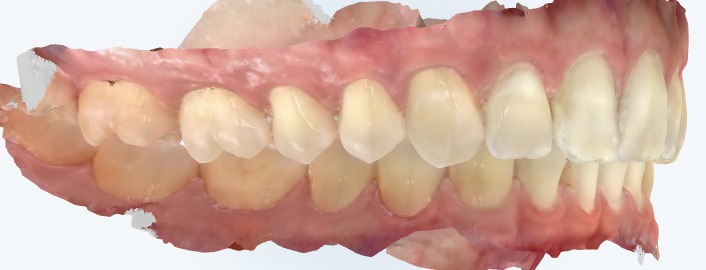
Class 1 (Class I) Bite — Neutroclusion (~50–55%)
A Class 1 bite (written "Class I" in the Angle system) is the most common of the three, making up roughly half of all bites. Two things to look for. At the molars: the upper first molar lines up normally with the lower first molar, cusp to groove. At the front (anterior) teeth: the upper front teeth overlap the lower front teeth just slightly, without excess protrusion in either direction. A Class 1 bite is considered balanced or "normal" in terms of molar and jaw relationship, though it can still come with its own issues, like crowding or rotated teeth — on its own, crowding is the single most common finding in malocclusion, affecting roughly 40% of upper arches and 60% of lower arches. Having a Class 1 bite doesn't automatically mean you don't need orthodontic treatment; it just means the underlying jaw relationship is the least likely of the three to need surgery.
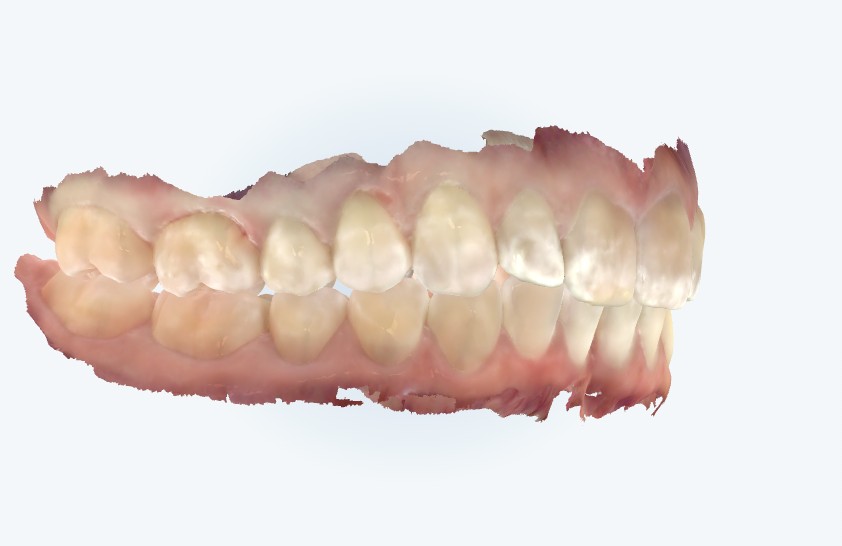
Class II — Mesoclusion (~15%)
Two things to look for. At the molars: the lower first molar sits a half-cusp-width or more behind the upper first molar, instead of lining up with it. At the front (anterior) teeth: the upper front teeth sit ahead of the lower front teeth, commonly called an "overbite" in everyday language. Both are visible in the scan above. Depending on how the upper front teeth are angled — flared outward (Division 1) or tipped backward with a deep vertical overlap (Division 2) — the appearance can vary, but the underlying molar and anterior relationship is the same.
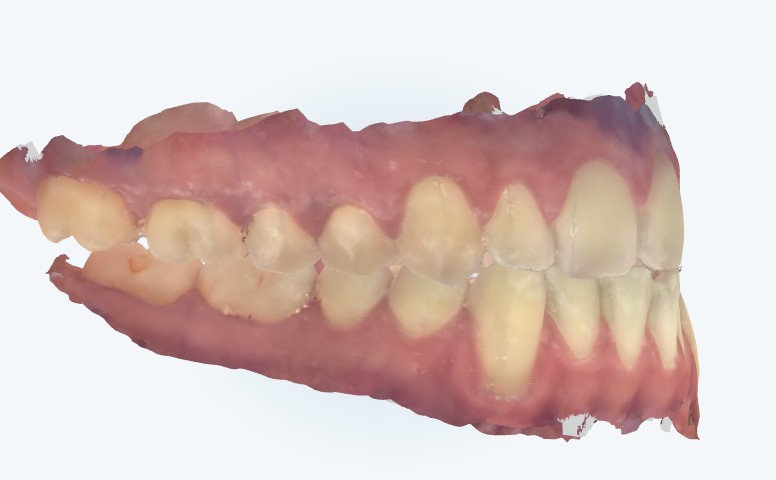
Class III — Distoclusion (~1%)
Two things to look for — the reverse of Class II. At the molars: the lower first molar sits ahead of the upper first molar, instead of lining up with it. At the front (anterior) teeth: the lower front teeth sit ahead of the upper front teeth, visible in the scan above. This is what's commonly called an "underbite." It's the least common of the three, but tends to be more noticeable and is more likely to need a combined orthodontic/surgical approach in significant cases.
Approximate US prevalence figures shown above; individual practices and populations vary.
What Is a Class 1 Bite (Class 1 Malocclusion)?
A Class 1 bite occurs when your upper and lower molars fit together properly in a normal jaw relationship, but individual teeth are misaligned, crowded, rotated, or spaced. In clinical terms (the Angle Classification above), the jaw structure itself is well-proportioned — your bite is skeletally balanced even if your smile looks visibly uneven. Because the underlying jaw alignment is healthy, a Class 1 bite is the most common form of malocclusion, and generally the most straightforward to correct without invasive jaw surgery.
Common Signs and Symptoms of a Class 1 Bite
- Crowding and overlapping — teeth competing for arch space, creating difficult-to-clean overlap that raises plaque buildup and cavity risk
- Unwanted spacing (diastema) — gaps between front or side teeth despite normal molar alignment
- Rotated or tilted teeth — individual incisors or premolars turned out of place along the arch
- Midline misalignment — the center line between your upper front teeth doesn't match the center of your lower front teeth
- Localized crossbite — one or two upper teeth sit inside the lower teeth while the rest of the bite pattern is normal
Treatment Options for Class 1 Malocclusion
- Clear aligner therapy — discreetly shifts individual teeth into alignment and resolves crowding, typically over several months to a year or more depending on complexity, without affecting overall jaw posture
- Direct composite bonding — closes minor gaps or reshapes a slightly rotated front tooth in a single visit, without moving roots
- Interproximal reduction (IPR) — minimal micro-slimming between teeth to create the exact clearance needed to relieve crowding, usually done alongside aligner treatment rather than on its own
- Enamel recontouring & porcelain veneers — provides uniform symmetry and aesthetic proportion for mild spacing and shape irregularities
Surgery is rarely part of the conversation for a true Class 1 case, since the jaws themselves already meet correctly — it's the individual teeth doing the misbehaving, and a real exam is what tells us which of the options above fits your specific case.
What Is Orthodontics? A Quick Definition
Orthodontics is the dental specialty focused on diagnosing, preventing, and correcting misaligned teeth and jaws (malocclusion) — historically through braces, and today more often through clear aligners like Invisalign as well. "Orthodontia" is simply an older, less commonly used term for the same field; the two words mean the same thing. An orthodontist is a dentist who has completed additional specialty training beyond dental school specifically in tooth and jaw alignment, while a general dentist like Dr. Boris Zusin diagnoses malocclusion, treats candidates with Invisalign directly, and refers cases needing traditional braces or jaw surgery to a trusted orthodontic specialist.
Common Bite Problems, By Name
Class I/II/III describes the jaw relationship; these are the specific bite patterns patients usually search for and notice day to day. They can occur on their own or alongside a Class II or III jaw relationship.
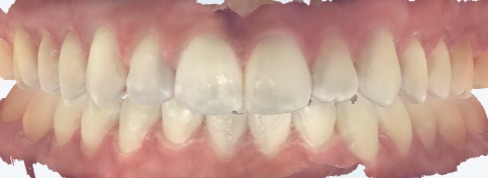
Normal Bite
The upper front teeth overlap the lower front teeth just slightly, both vertically and horizontally, as shown in the photo above. This is the baseline every other bite type in this section is compared against.
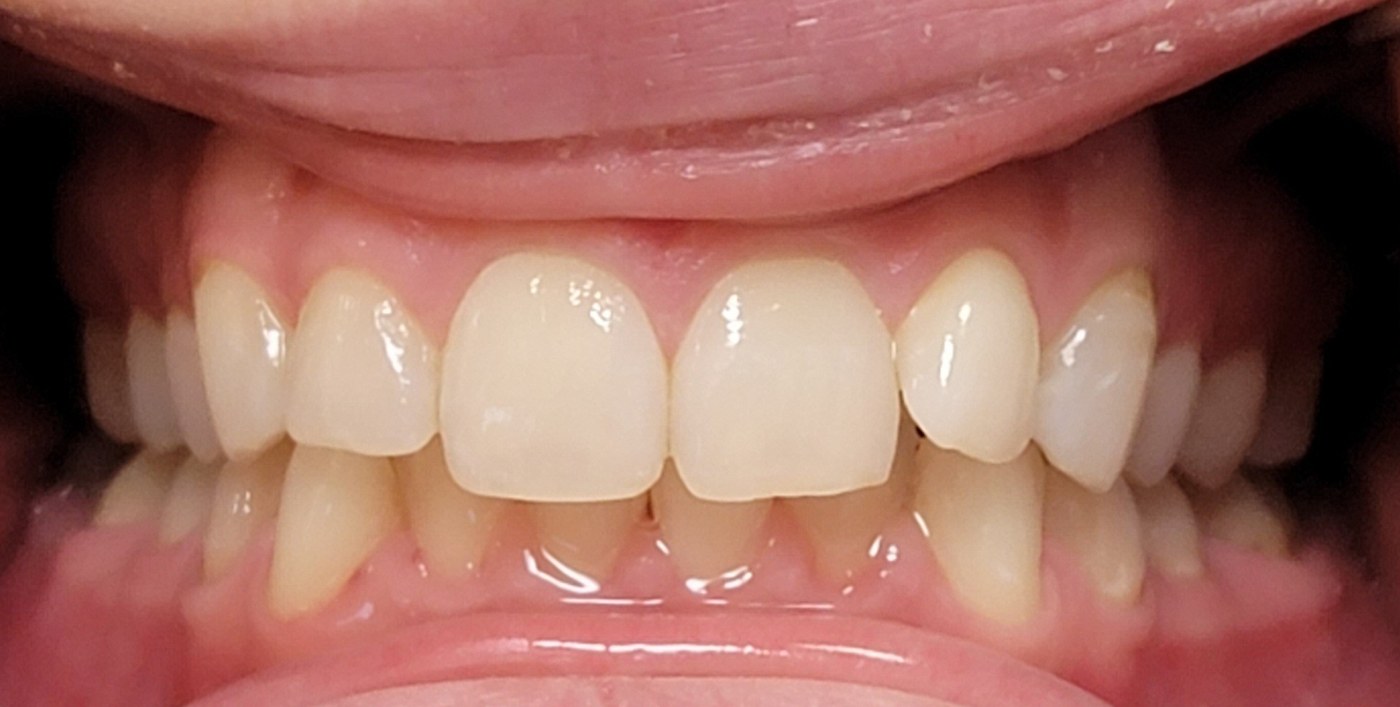
Deep Bite (Overbite)
The upper front teeth cover too much of the lower front teeth vertically, visible in the photo above. Some overlap is normal; a deep bite is when it's excessive, and in severe, longstanding cases the lower teeth can even contact the roof of the mouth or gum tissue, wearing the teeth down over time — see an example.
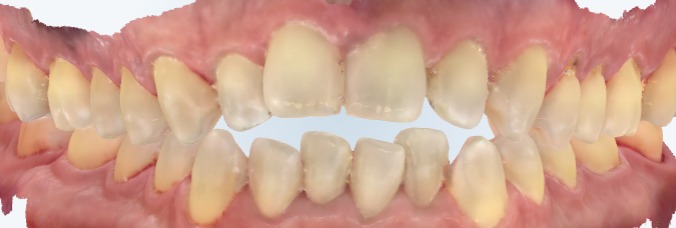
Open Bite
The front upper and lower teeth don't touch at all when the back teeth are together, leaving a visible gap, as shown above. Often linked to long-term thumb-sucking, pacifier use, or a tongue-thrusting swallow pattern in childhood.
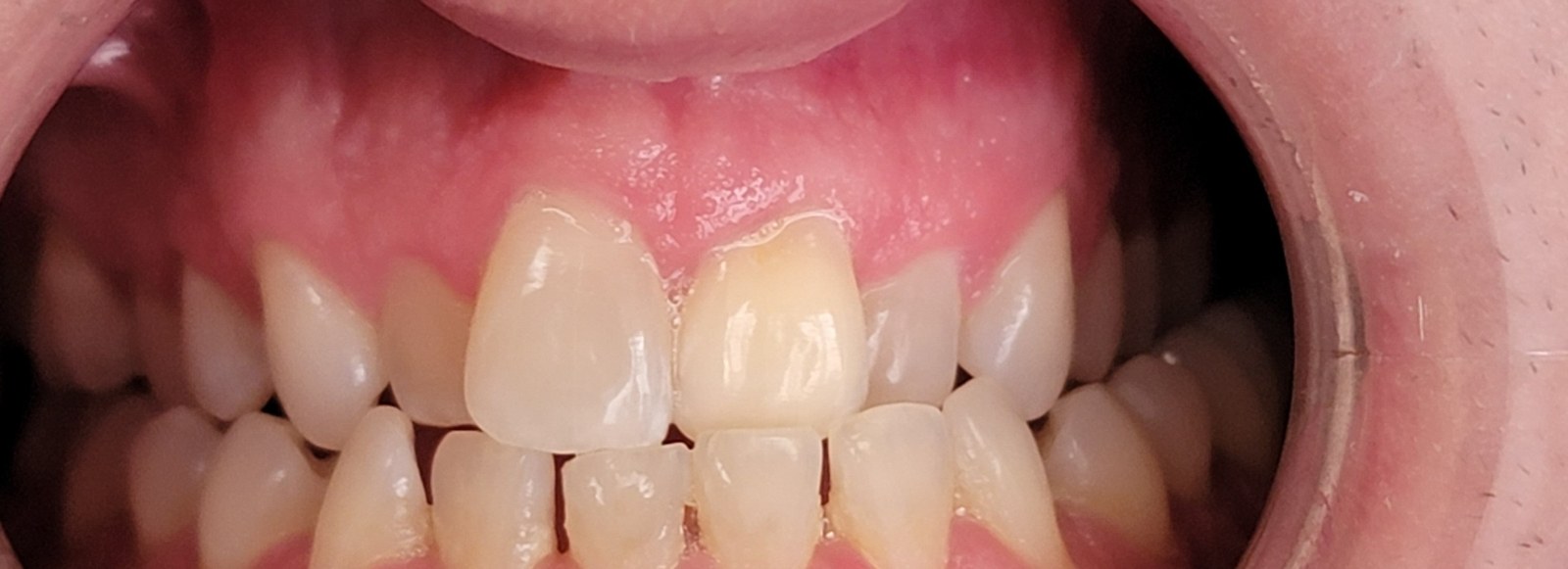
Crossbite
One or more upper teeth sit behind (lingual to) their lower counterparts instead of in front, as shown in the photo above — here, a single upper front tooth is crossed behind its neighbors. An anterior crossbite like this involves the front teeth; a posterior crossbite involves the back teeth and is often linked to a narrow upper arch. Left untreated, a crossbite can wear down the edges of the involved teeth and push the jaw into an off-center bite over time.
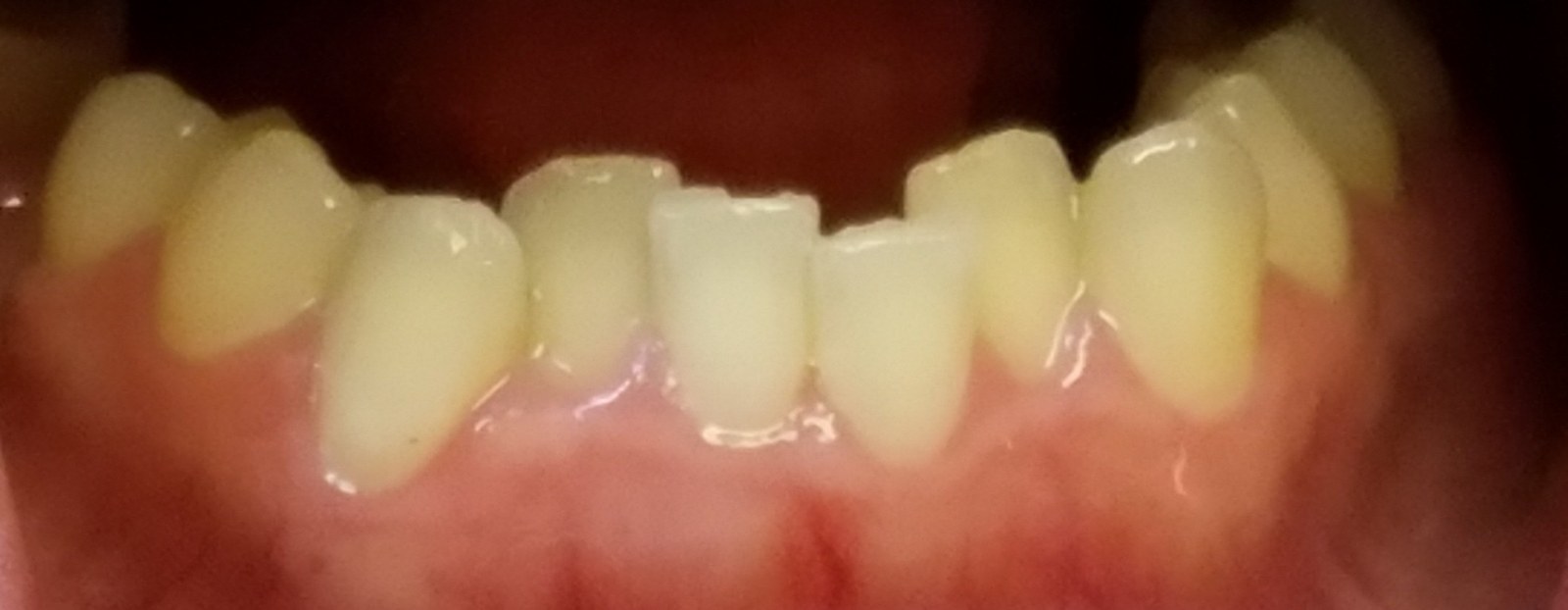
Crowding
Teeth rotate and overlap when there isn't enough room in the jaw for all of them to line up side by side, as shown in the photo above. It's the single most common finding in malocclusion and can happen with any Angle Class, including Class I. Beyond appearance, crowded teeth are harder to clean thoroughly, which raises the risk of cavities and gum disease between the overlapped surfaces.
What Causes Malocclusion?
Malocclusion generally comes from a mix of genetic and environmental factors that are hard to fully separate in any one person. Genetics is the biggest single contributor — inherited jaw size, tooth size, and jaw-to-tooth proportion largely determine whether teeth have enough room to line up, and different traits are inherited to different degrees (an overbite's vertical depth is roughly 53% heritable, while overjet — the horizontal projection of the upper teeth — is closer to 28%, meaning environment plays a comparatively bigger role there). Beyond genetics, several childhood habits are strongly associated with specific bite problems: prolonged thumb or pacifier sucking is linked to an open bite and a narrowed upper arch that can create a posterior crossbite, chronic mouth breathing can affect jaw growth, and a tongue-thrusting swallow pattern is associated with an open bite as well. Losing baby teeth early, or losing adult teeth later without replacing them, can also let neighboring teeth drift and disrupt the bite — part of why we watch for tooth shifting from gum disease and address missing teeth promptly. One less obvious factor: in children, prolonged use of a CPAP or BiPAP mask during the years the face and jaws are still growing has been associated with malocclusion from midface growth restriction — worth flagging to both your child's dentist and their prescribing physician so the fit and growth can be monitored, not a reason to avoid a medically necessary device on your own.
Because the jaws are still developing, an early evaluation — commonly recommended around age 7–8 — can catch a handful of problems, like a crossbite or a significant discrepancy between jaw sizes, while interceptive treatment is simpler than it would be after growth is complete. See our guide to signs your child's bite needs an evaluation for what we watch for.
Why It's Worth Correcting
Mild malocclusion is often just a cosmetic preference. More significant misalignment is a functional issue: uneven forces from a bad bite can accelerate tooth wear and fracture, contribute to TMJ pain, clicking, and headaches as the jaw muscles overwork to compensate, make teeth harder to clean thoroughly (raising cavity and gum disease risk), and in severe cases put lasting strain on the bone and gum tissue supporting the teeth. It can also affect speech and, in some cases, chewing or breathing. Protruding upper front teeth carry a specific, well-documented risk: incisors that stick out more than about 3–5mm face roughly two to three times the risk of dental trauma from a fall or impact compared with a normal bite, since they're the first thing to take the hit. Beyond the physical effects, a bite a person is self-conscious about can also affect confidence and is one of the more common reasons people seek orthodontic treatment in the first place. None of this means every bite needs treatment — but a bite causing wear, pain, trauma risk, or hygiene problems is worth addressing rather than working around indefinitely.
Severe, longstanding malocclusion illustrates this well — here's what years of an unaddressed bite problem, from excess overlap to a bite with no overlap at all, can look like in real patients:
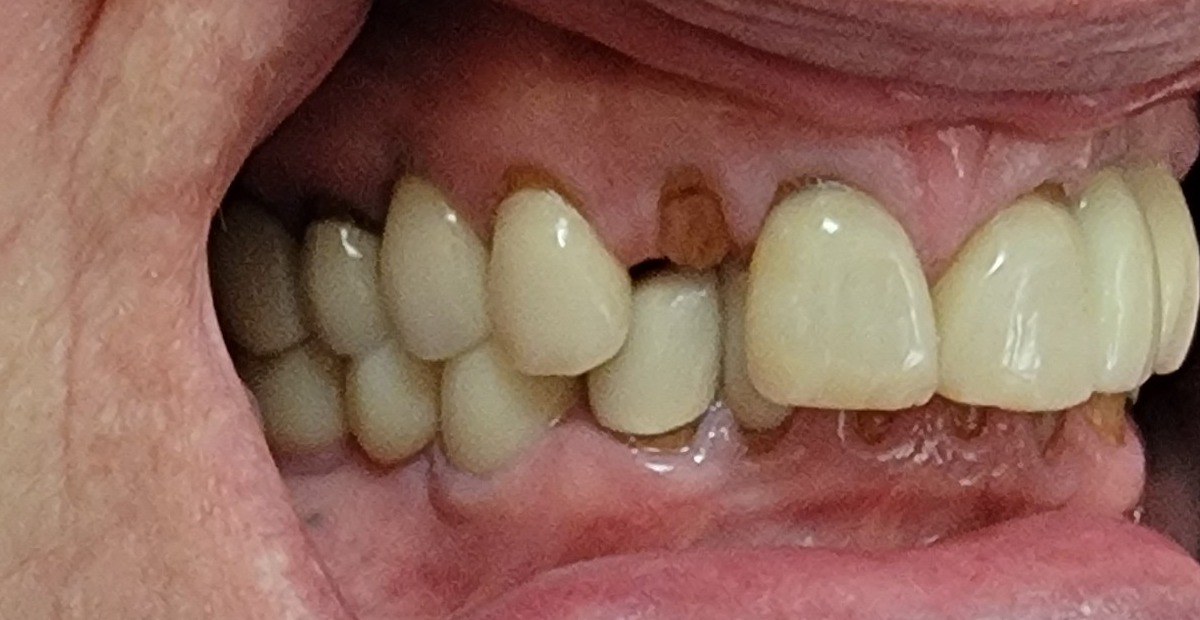
Tooth Breakdown and Loss
When a bite forces one tooth to absorb abnormal contact every time the jaw closes, that tooth can wear and fracture down to the gumline over years, as shown above — often requiring a root canal and crown, or extraction and replacement, to fix.
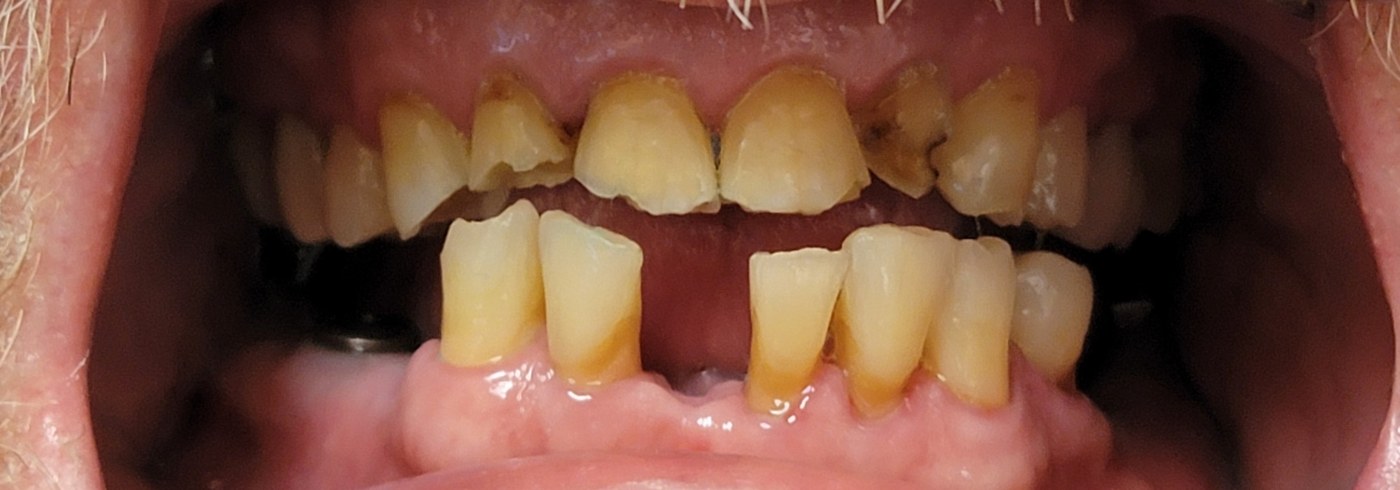
Flattened, Worn Edges
Excess overlap can force the front teeth into repeated abnormal contact with each bite, gradually flattening and shortening the biting edges, as shown above. Left alone, this pattern tends to progress rather than stay the same.
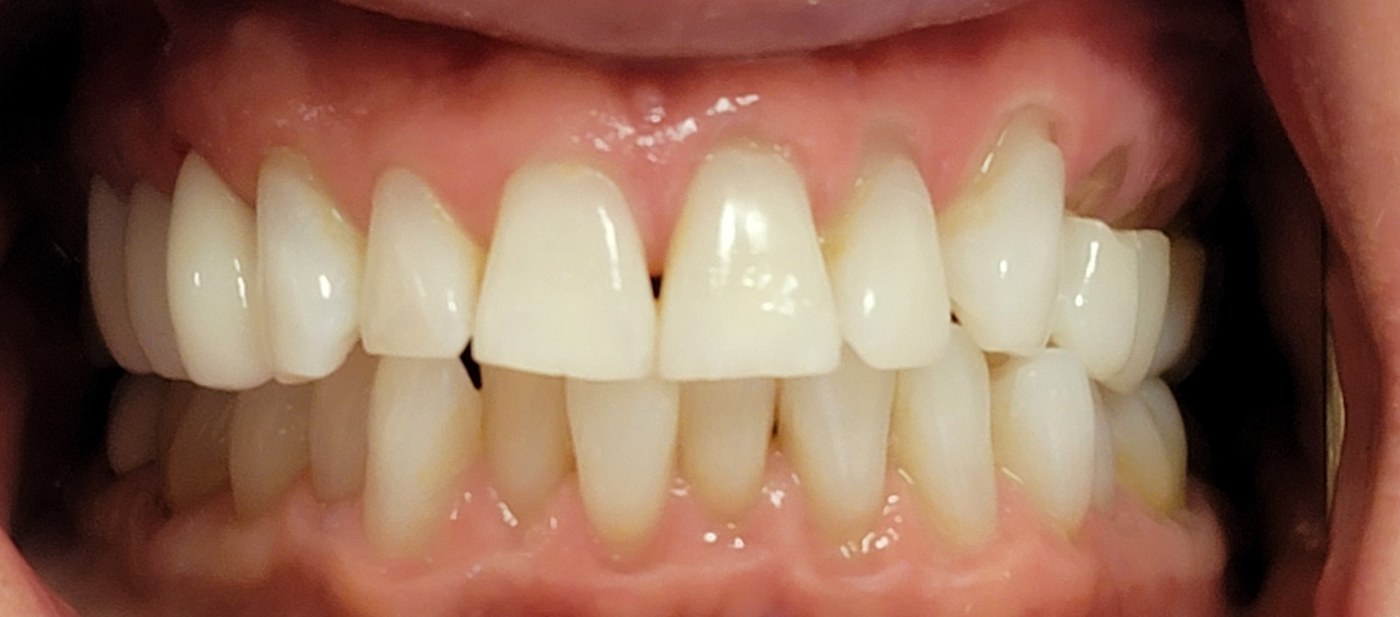
Abfractions
A misaligned bite can also concentrate flexing stress at the gumline of specific teeth every time they're loaded unevenly, chipping away small wedge-shaped notches in the enamel there called abfractions — visible on the upper left teeth in the photo above. Unlike a cavity, this damage comes from mechanical stress rather than decay, but it can still expose sensitive dentin and weaken the tooth over time.
Widespread Wear and Breakdown
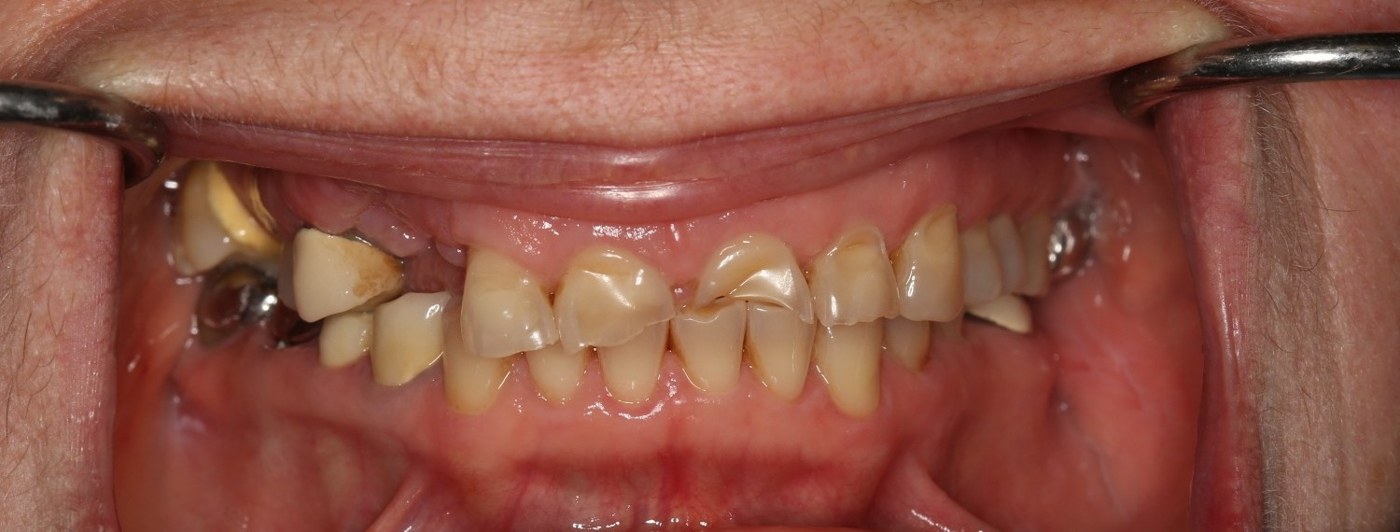
Left untreated for long enough, a misaligned bite doesn't just affect one or two teeth — the abnormal forces can add up across the whole arch, as shown above, leading to widespread flattening, chipping, and decay that's far more involved (and costly) to fix than addressing the underlying bite earlier would have been.
Edge-to-Edge Wear
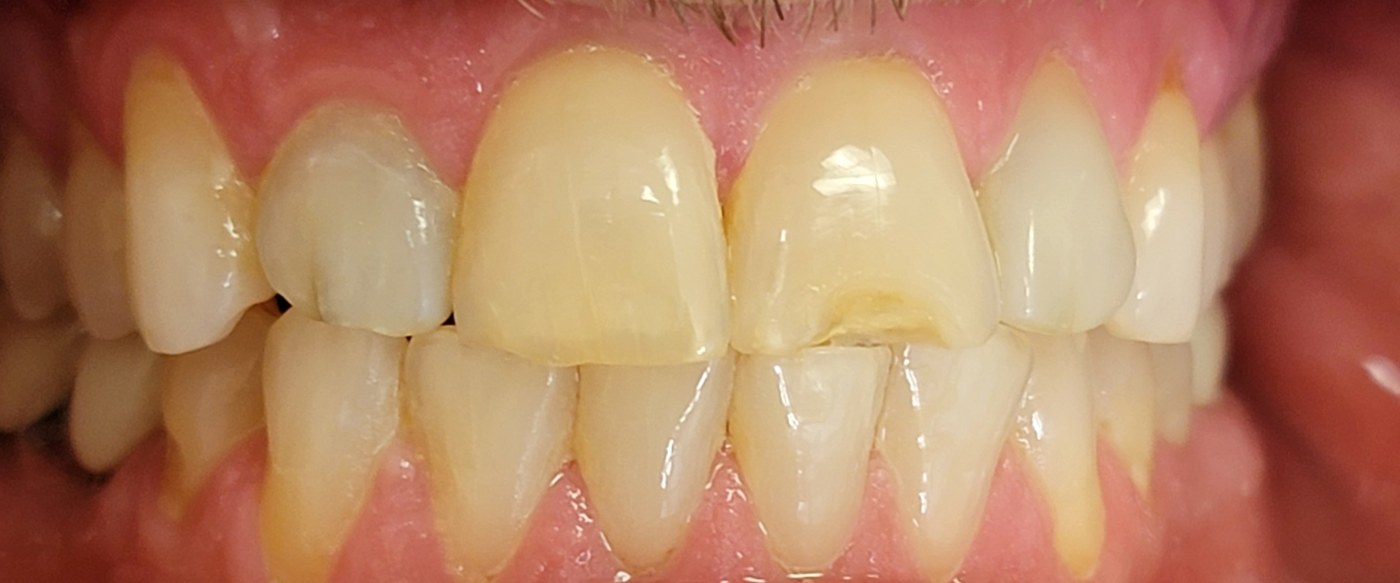
A tight bite with little or no horizontal or vertical overlap — the upper and lower front teeth meeting edge-to-edge instead of the upper slightly in front, as shown above — removes the normal cushioning effect of that overlap. Every bite lands the front teeth directly against each other's biting edges rather than gliding past them, which concentrates wear right at the edge and can lead to chipping and a darkened, translucent look as enamel thins.
Treatment Options
Most mild-to-moderate malocclusion in adults, including many Class II and Class I cases with crowding or spacing, can be corrected with Invisalign® clear aligners. More significant jaw discrepancies (pronounced Class II or III relationships) or complex bite corrections may call for traditional braces or, in some cases, a referral for orthognathic evaluation — something we'll discuss honestly with you rather than trying to stretch aligners to do more than they should. If jaw pain or clenching is part of the picture, a custom appliance can help manage symptoms alongside orthodontic correction.
Wondering If Yours Needs Fixing?
Not every overbite needs treatment as an adult — here's how to tell.
Read More →Sources
- Orthodontics, Malocclusion — StatPearls, NCBI Bookshelf
- Malocclusion (Misaligned Bite) — Cleveland Clinic
- 7 Common Types of Bite Problems and Their Orthodontic Solutions — American Association of Orthodontists
- Understanding Crossbites: What Are They and How Are They Treated? — American Association of Orthodontists
- Prevalence of Dental Malocclusions in Different Geographical Areas: Scoping Review — PMC (2021)
- Influence of Oral Habits on Pediatric Malocclusion: Etiology and Preventive Approaches — PMC, Cureus (2024)
- Patterns of Morphological Integration in the Dental Arches of Individuals With Malocclusion — Miller SF, Vela KC, Levy SM, et al., American Journal of Human Biology (2016)
- Health Relevance of Malocclusions and Their Treatment — Ruf S, Proff P, Lisson J, Bundesgesundheitsblatt (2021)
- Orthodontic Treatment for Prominent Upper Front Teeth (Class II Malocclusion) in Children and Adolescents — Batista KB, Thiruvenkatachari B, Harrison JE, O'Brien KD, Cochrane Database of Systematic Reviews (2018)
- Orthodontic Treatment for Prominent Lower Front Teeth (Class III Malocclusion) in Children — Owens D, Watkinson S, Harrison JE, Turner S, Worthington HV, Cochrane Database of Systematic Reviews (2024)
- Oral Health Care for Children and Youth With Developmental Disabilities: Clinical Report — Sarvas E, Webb J, Landrigan-Ossar M, Yin L, Pediatrics (2024)
Care From a Team That Knows You
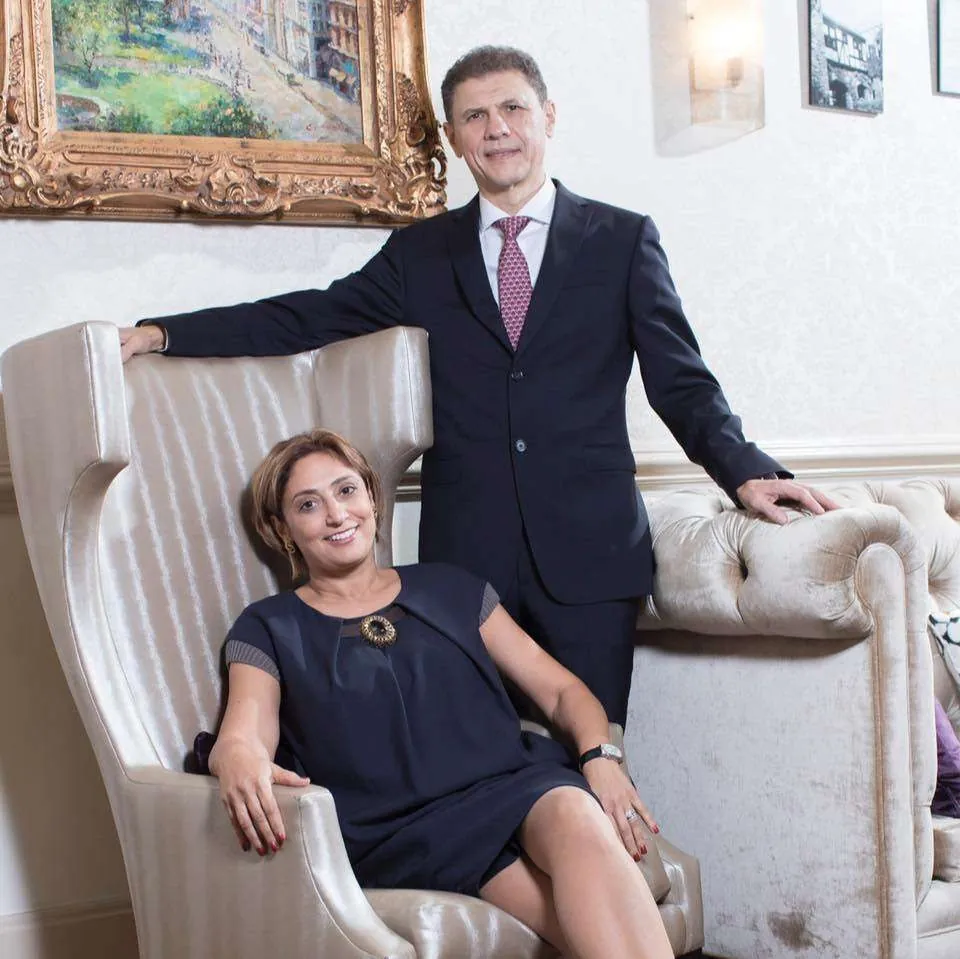
Dr. Boris Zusin is an expert in general, cosmetic, implant, and dental sleep medicine, with 30+ years of clinical experience and ongoing continuing education. Lena Zusin, RDH works alongside him to make every visit as warm and comfortable as possible.
“Drawing upon our combined skills refined through years of experience and continued education, Lena and I will do everything possible to ensure that your entire dental experience at our office is as good as possible.” — Dr. Boris Zusin
- Uncompromising clinical excellence
- Meticulous attention to detail
- A gentle approach to dentistry
Your Experience Matters To Us
5.0 out of 5 on Google (54 reviews) · 4.99 out of 5 on Zocdoc (227 reviews)
“Knowledge is an understatement when you talk about Dr. Zusin! My family and I have been patients of his for over 20 years. I always feel I am given the best advice and never pressured into any unnecessary treatment.”
Faina S. · View on Google →
“I tried a couple different dentists in NYC and Zusin Dental is the best. They are thorough, they don't try and upsell you services you don't need, and they offer appointments on Saturday. The best cleaning I ever had!”
Gordon T. · View on Google →
“Routinely SUPERB level of care, including Dr. Zusin having made himself available for emergent care when needed. The office is always spotlessly clean and there is no waiting at appointment time. Pain-free dentistry!”
Anil N. · View on Google →
“I have never experienced pain with Dr. Zusin. For a practice in busy Manhattan, their office has a small town feel, very relaxed and personable. Lena is always quick to respond to appointment requests or changes.”
Molly P. · View on Google →
“Dr. Zusin is the best dentist! I have been visiting his office for the majority of my life. He has expertly performed teeth whitening and Invisalign, and continued to save my teeth after I chipped my two front teeth.”
Sasha S. · View on Google →
“The West End office is state of the art and very relaxing. Dr. Zusin and Lena are a great team. No matter the dental problem you will get the best results. I highly recommend them.”
Domingo Q. · View on Google →
Wondering About Your Own Bite?
A quick exam can tell you whether what you're noticing is worth correcting, and what the options look like.
Schedule Your Visit Call 212-877-7475