Early Signs of Gum Disease You Shouldn't Ignore
Bleeding gums are easy to write off as "brushing too hard." Often, they're actually the earliest and most reversible stage of gum disease — here's what to watch for before it progresses...
By Dr. Boris Zusin · Published July 30, 2026
Gum disease is one of the few dental conditions that's completely reversible in its earliest stage — and almost impossible to fully undo once it progresses. The tricky part is that the early warning signs are easy to dismiss as minor irritation rather than a developing infection. Here's what actually warrants a closer look.
Bleeding When You Brush or Floss
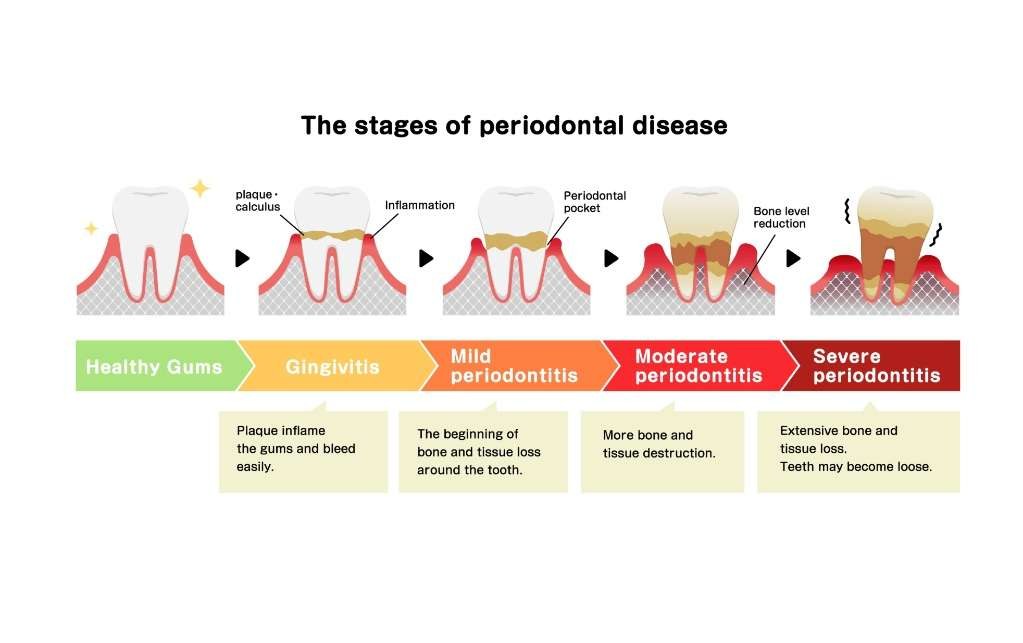
This is the single most common early sign, and the one most people write off as "brushing too hard." Healthy gums don't bleed during normal brushing or flossing — bleeding usually means plaque buildup along the gumline has caused inflammation, which is the definition of gingivitis, the earliest stage of gum disease.
Red, Swollen, or Tender Gums
Healthy gum tissue is firm and pale pink. Gums that look red, puffy, or feel tender to the touch are inflamed — another hallmark of gingivitis, and one that's fully reversible with professional cleaning and improved home care at this stage.
Persistent Bad Breath
Occasional bad breath after a garlicky meal is normal. Bad breath that doesn't resolve with brushing, and comes back consistently, can be a sign that bacteria are accumulating below the gumline where a toothbrush can't reach.
Gums That Look Like They're Receding
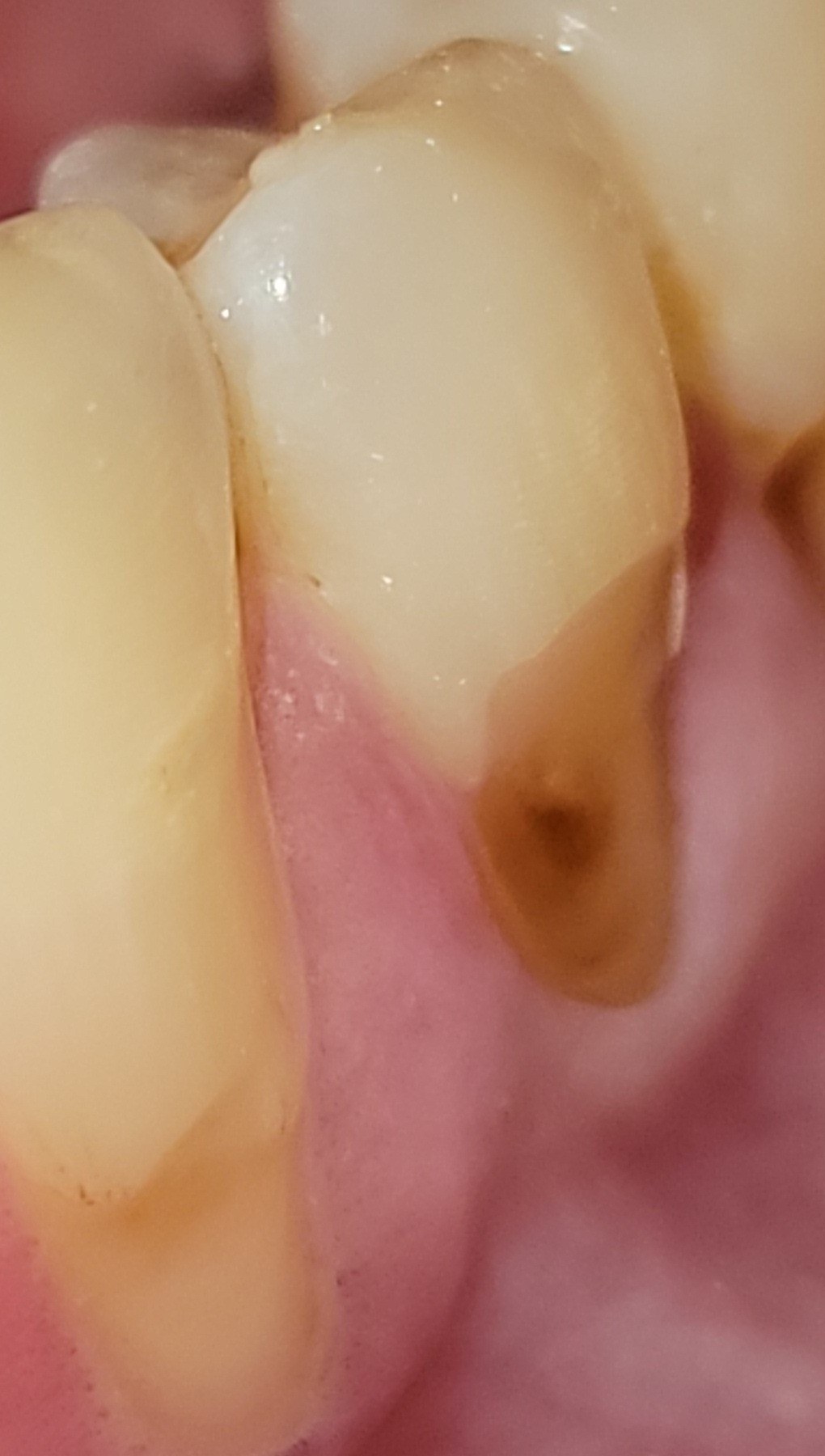
If your teeth seem to be looking "longer" than they used to, or you notice more of the tooth root visible near the gumline, that's often gum recession — a sign the disease has started to affect the tissue and bone that support your teeth, not just the surface gum.
Loose or Shifting Teeth
This is a later sign, but an important one: teeth that feel loose or seem to be shifting position indicate the bone supporting them is being affected, which is the hallmark of periodontitis rather than gingivitis. Shifting is more common than people realize once gum disease reaches this stage — studies of patients with moderate to advanced periodontitis have found that roughly a third to over half develop some degree of tooth movement, most often front teeth flaring outward or drifting apart and creating new gaps. It happens because the bone and ligament that normally anchor a tooth firmly in place have been weakened, so everyday forces from chewing, speech, and the tongue and lips are enough to gradually push teeth out of position. In the most advanced stage of the disease, this kind of drifting is considered one of the defining signs, alongside the bone loss itself.
The good news is that this is treatable, not just something to manage: once the underlying gum disease is brought under control, shifted teeth can often be corrected with orthodontic treatment. That said, sequencing matters — periodontal therapy needs to stabilize the gums and bone first, before any orthodontic movement, so the teeth are being moved into a healthy foundation rather than one that's still actively losing support.
When Shifting Isn't Gum Disease Alone: The Role of Grinding and Bite Forces
Not every case of shifting teeth traces back to gum disease. Teeth that drift are also a recognized sign of occlusal trauma — damage from forces on a tooth that exceed what its support can handle — and grinding is one of the more common sources of that excess force. On x-rays, occlusal trauma shows up as a widened space around the root (the periodontal ligament space) and, in some cases, root resorption; clinically, it's flagged by fremitus (a tooth you can feel vibrate when the patient bites and grinds), increasing looseness, and visible wear facets alongside the drifting itself. None of these signs are unique to occlusal trauma on their own, though, which is why we work through the full picture rather than assuming grinding is automatically the cause.
Here's the key nuance: grinding by itself, on a tooth with fully healthy gum and bone support, rarely causes teeth to actually drift — that's called primary occlusal trauma, and a healthy attachment is generally resilient enough to absorb it. Drifting becomes far more likely, and more progressive, when heavy grinding forces are combined with something that has already weakened the tooth's foundation: existing gum disease with attachment loss (secondary occlusal trauma), or a pre-existing bite misalignment that concentrates force unevenly. Research bears this pattern out — grinding has been associated with more advanced periodontitis, and while it doesn't appear to cause gum disease outright, the two conditions clearly compound each other once both are present. A related mechanism, where grinding-related wear causes a tooth to erupt further out of the gum rather than tip or drift sideways, is covered in more detail on our teeth grinding page.
A few other explanations are worth ruling out before assuming gum disease or classic nighttime grinding is the cause. Daytime parafunction — clenching, bracing, or thrusting the jaw rather than rhythmic grinding — produces similar excess loading and is common in patients with an underlying TMJ disorder. Slow, steady mesial drift and cumulative wear are also a normal part of aging and can be mistaken for new shifting when it's really a longstanding, gradual process. And if you had orthodontic treatment in the past, relapse — teeth slowly moving back toward their original position, especially without consistent retainer wear — can look identical to drift from grinding or gum disease. Sorting out which of these is actually driving a given case matters, because the management is different for each.
Working out which combination is driving a given case of shifting — pure periodontal attachment loss, grinding force on top of reduced support, an underlying bite misalignment providing the anatomic setup, or one of the less common causes above — is exactly what a thorough exam is for. That typically means a history covering when the shifting started, how fast it's progressing, any bed-partner reports of grinding, morning jaw soreness, and prior orthodontic treatment; a focused clinical exam with full periodontal charting, mobility grading, a fremitus check, mapping of wear facets, and an occlusal analysis for interferences; and x-rays to look for a widened periodontal ligament space, bone loss patterns, and root resorption, sometimes alongside a pulp vitality test and mounted models or a scan to track movement over time. Two findings warrant prompt referral rather than routine monitoring: progressive mobility or a rapidly widening PDL space on x-rays (periodontics), and root resorption or a significant bite misalignment driving the problem (periodontics or orthodontics, depending on the finding). Management follows the driver: periodontal therapy for attachment loss, a custom occlusal splint or nightguard to control the force from grinding or clenching, and orthodontic evaluation where a bite misalignment or relapse needs correcting — often several of these together.
Why Catching It Early Matters
Gingivitis — the earliest stage — is fully reversible with a professional cleaning and better home care, with no lasting damage. Once it progresses to periodontitis, the bone loss involved cannot be fully reversed; treatment at that stage focuses on stopping further damage and preserving what remains, typically through a deeper cleaning (scaling and root planing) and sometimes ongoing medicated treatment. The gap between "fully fixable" and "manageable but permanent" is really just a matter of catching it in time.
If any of these signs sound familiar, it's worth getting evaluated rather than waiting for it to resolve on its own — especially since gum disease has been linked to broader health issues, including heart disease and diabetes complications, beyond just your teeth.
Sources
- Pathologic Tooth Migration — Brunsvold MA, Journal of Periodontology (2005)
- Pathologic Migration of Anterior Teeth in Patients With Moderate to Severe Periodontitis — Towfighi PP, Brunsvold MA, Storey AT, et al., Journal of Periodontology (1997)
- Regenerative Periodontal Surgery and Orthodontic Therapy in the Treatment of Patients With Stage IV Periodontitis and Pathologic Tooth Migration — Jepsen K, Tietmann C, Proff P, Jepsen S, Periodontology 2000 (2026)
- Occlusal Trauma and Excessive Occlusal Forces: Narrative Review, Case Definitions, and Diagnostic Considerations — Fan J, Caton JG, Journal of Clinical Periodontology (2018)
- Periodontal Manifestations of Systemic Diseases and Developmental and Acquired Conditions: Consensus Report of Workgroup 3 of the 2017 World Workshop on the Classification of Periodontal and Peri-Implant Diseases and Conditions — Jepsen S, Caton JG, Albandar JM, et al., Journal of Clinical Periodontology (2018)
- Role of Occlusion in Periodontal Disease — Passanezi E, Sant'Ana ACP, Periodontology 2000 (2019)
- Association of Probable Bruxism With Periodontal Status: A Cross-Sectional Study in Patients Seeking Periodontal Care — Bilgin Çetin M, Sezgin Y, Maraş E, Cebeci ÏA, Journal of Periodontal Research (2021)
- Impact of Bruxism on Outcome of Subgingival Instrumentation for Management of Stage II/III Periodontitis — Chandela P, Sharma RK, Tewari S, Arora R, Singh H, Oral Diseases (2025)
- Is There Association Between Dental Malocclusion and Bruxism? A Systematic Review and Meta-Analysis — Ribeiro-Lages MB, Martins ML, Magno MB, et al., Journal of Oral Rehabilitation (2020)
- Awake Bruxism in Temporomandibular Disorders Patients Referred to Tertiary Care: A Retrospective Study on Its Assessment and TMD Management — Nykänen L, Lobbezoo F, Kämppi A, Manfredini D, Ahlberg J, Journal of Oral Rehabilitation (2024)
- Jaw Exercise Versus Jaw & Posture Exercise Therapies in Comparison to Occlusal Splint Effectiveness in Probable Sleep Bruxism: A Randomised Controlled Study — Karabicak GO, Alkan Demetoĝlu G, Ozkan G, et al., Journal of Oral Rehabilitation (2025)
- Assessment of Bruxism in the Clinic — Koyano K, Tsukiyama Y, Ichiki R, Kuwata T, Journal of Oral Rehabilitation (2008)
- Are Bruxism and the Bite Causally Related? — Lobbezoo F, Ahlberg J, Manfredini D, Winocur E, Journal of Oral Rehabilitation (2012)
- Sleep Bruxism: An Overview for Clinicians — Beddis H, Pemberton M, Davies S, British Dental Journal (2018)
- Principles for the Management of Bruxism — Lobbezoo F, van der Zaag J, van Selms MK, Hamburger HL, Naeije M, Journal of Oral Rehabilitation (2008)
- Bruxism Treatment Outcomes: A Systematic Review and Meta-Analysis — Assiri HA, Almuawi LF, Asiri BA, et al., Medicine (2025)
- OnabotulinumtoxinA Injections for Sleep Bruxism: A Double-Blind, Placebo-Controlled Study — Ondo WG, Simmons JH, Shahid MH, et al., Neurology (2018)
Related to This Article
Have a Dental Question of Your Own?
Reach out and we'll help you find the right next step.
Schedule Your Visit Call 212-877-7475