Icon Resin Infiltration: A No-Drill Treatment for White Spots on Teeth
A newer option for early white spots on teeth arrests the lesion and improves how it looks, in one visit, without drilling or anesthesia — here's how it compares to the alternatives...
By Dr. Boris Zusin · Published August 7, 2026
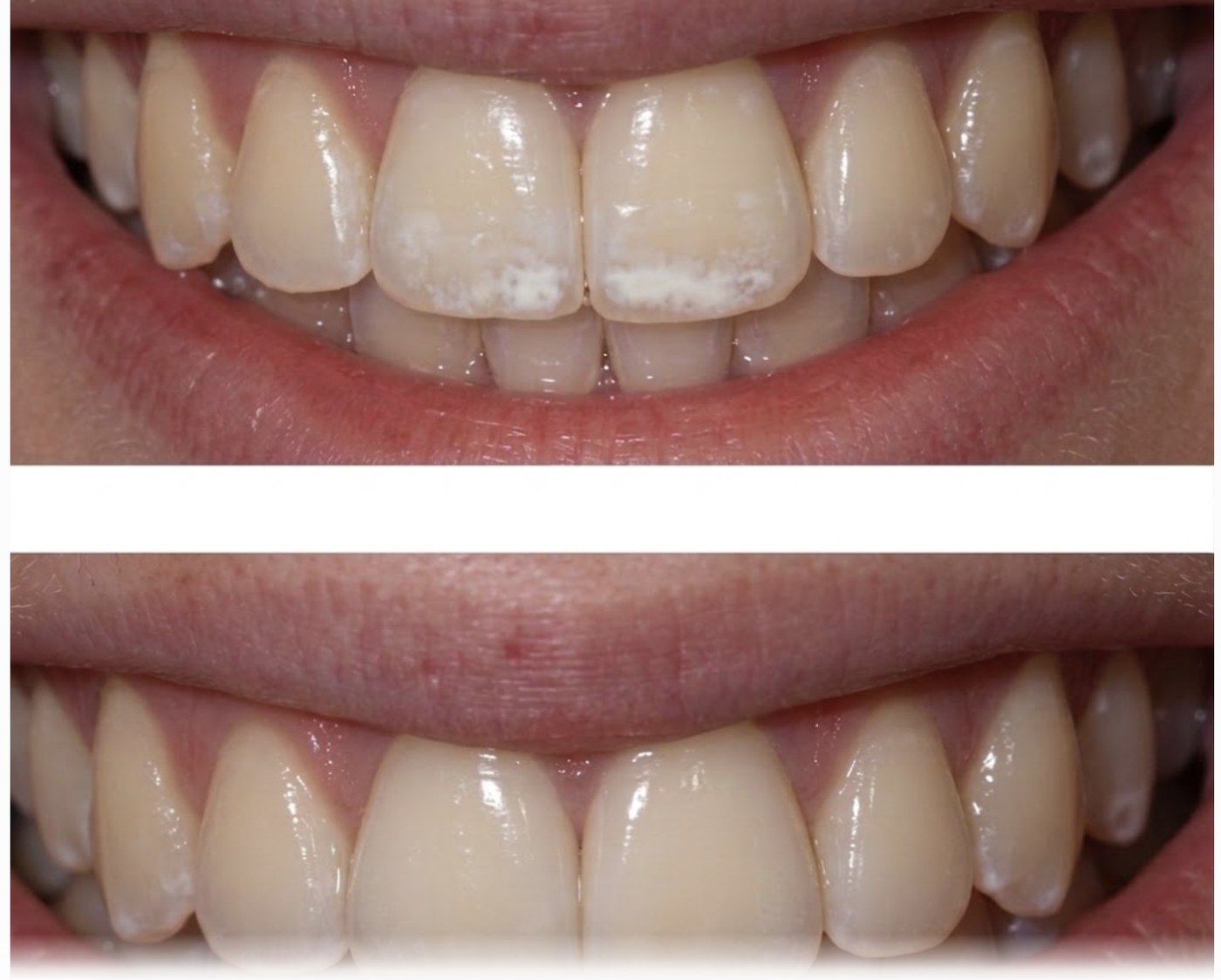
For a long time, a white spot on a tooth meant one of two things: leave it alone and hope fluoride helps, or wait until it turned into an actual cavity and needed a filling. A newer option called resin infiltration — sold in the U.S. under the brand name Icon, made by DMG America — fills that gap. It's a single-visit, no-drill treatment that both stops the lesion from progressing and improves how it looks.
What Counts as a "White Spot"
Clinically, these are called non-cavitated lesions — the enamel surface is still intact, but it's become porous and demineralized underneath, which is what scatters light differently and creates that chalky white appearance. This is different from an actual cavity, where the surface has broken down into a hole. The distinction matters, because it determines which treatments are even an option.
How Resin Infiltration Works
The treatment is done in three steps, all in one appointment. First, a mild etching gel opens up the porous surface layer of the lesion. Second, a drying solution dehydrates the area — which also gives Dr. Boris Zusin a preview of roughly what the final result will look like. Third, a low-viscosity resin is applied and allowed to soak into the lesion by capillary action, filling the porous structure from within, then hardened with a curing light. That resin-filled structure is what stops the lesion from progressing and evens out its appearance — not just a surface coating, but an infiltration into the lesion itself.
How It Compares to the Alternatives
Fluoride and remineralization work from the outside in and can help extremely early, very shallow lesions, but have limited ability to reverse anything more established, and don't do much for appearance. Clinical trials comparing resin infiltration directly to fluoride varnish have found infiltration produces a significantly better and faster esthetic result.
Microabrasion mechanically removes a thin layer of the discolored enamel using a mild acid-and-pumice paste. It can improve the look of shallow surface staining, but it doesn't address decay progression at all, and it does remove some tooth structure in the process — usually a very small amount, but not zero.
Traditional drilling and a filling is still the right answer once a lesion has cavitated into an actual hole, or decay has reached into the dentin. At that point, resin infiltration is no longer appropriate — the tooth needs the decayed structure removed and rebuilt. Resin infiltration is specifically for the earlier, non-cavitated stage, before a filling is the only option.
What the Research Shows
Multiple systematic reviews have found that resin infiltration is effective at arresting the progression of non-cavitated caries lesions, with results holding up in longer-term follow-up. It's not a treatment for every white spot — deep lesions and anything already cavitated still need conventional restorative care — but for the right lesion, it offers a genuinely less invasive option than what was available before.
Wondering whether your white spot is a candidate? Learn more about Icon treatment at Zusin Dental, or schedule an exam to find out.
Sources
- Resin Infiltration of Non-Cavitated Caries Lesions: A Systematic Review — Medical Principles and Practice (2015)
- Resin Infiltration of Non-Cavitated Proximal Caries Lesions in Primary and Permanent Teeth: A Systematic Review and Scenario Analysis of Randomized Controlled Trials — Journal of Clinical Medicine, MDPI (2023)
- Resin Infiltration Versus Fluoride Varnish for Visual Improvement of White Spot Lesions During Multibracket Treatment: A Randomized-Controlled Clinical Trial — Clinical Oral Investigations (2024)
- The Hydrochloric Acid-Pumice Microabrasion Technique in the Treatment of Post-Orthodontic Decalcification — Welbury RR, Carter NE, British Journal of Orthodontics (1993)
Related to This Article
Have a Dental Question of Your Own?
Reach out and we'll help you find the right next step.
Schedule Your Visit Call 212-877-7475