Missing Tooth: What Are My Options?
This is an interesting case of a teenager who has a congenitally missing canine. The best replacement option for this teenager is an implant...

By Dr. Boris Zusin · Published September 2, 2021 · Updated August 10, 2026
Example 1: A Congenitally Missing Tooth
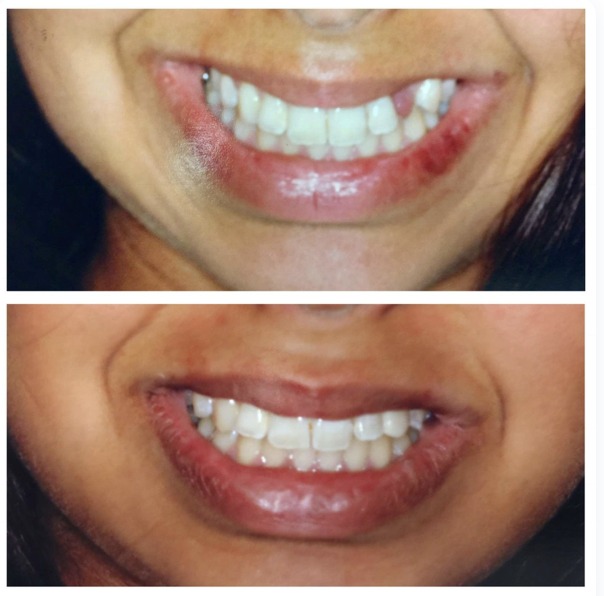
This is an interesting case of a teenager who has a congenitally missing canine. The best replacement option for this teenager is an implant. Unfortunately, this teenager is not old enough to get an implant. As a temporary solution, we decided to replace a missing canine by a “Maryland” bridge: a very esthetic restoration which is held in place by an adhesive which attaches it from the back to two adjacent teeth. No drilling is required.
Example 2: What Happens When a Missing Tooth Isn't Replaced
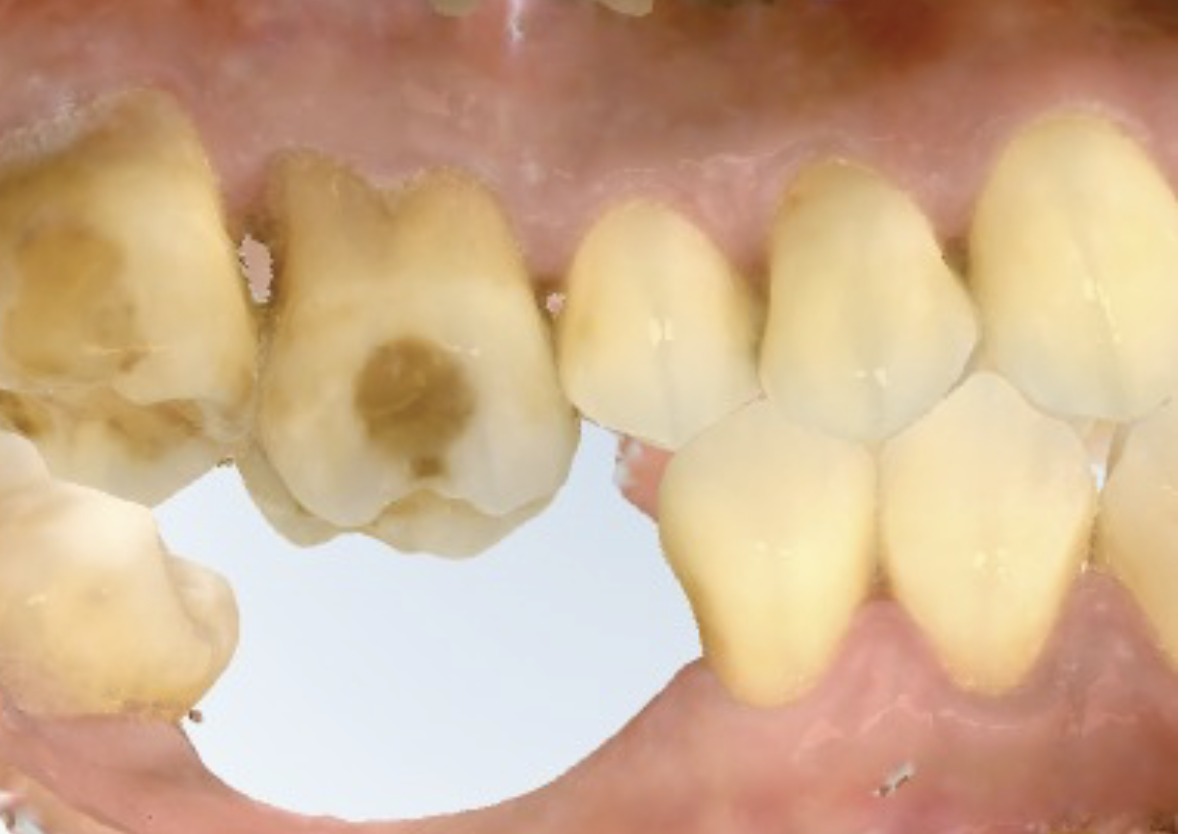
Teeth aren't held in place by their neighbors alone — they're also held at the correct height by the tooth they bite against. When a tooth is lost and nothing is put in its place, the tooth on the opposite arch loses that resistance and gradually keeps erupting into the empty space, a process called over-eruption (or supraeruption). Studies of unopposed back teeth have found that the large majority show measurable over-eruption over time, so this isn't a rare outcome — it's the expected one when a missing tooth is left unreplaced.
As the tooth drifts out of the gum, more of it becomes exposed above the gumline, including the root surface, which isn't designed to handle that exposure and wears and decays more easily than enamel — visible here as the dark staining in the tooth's grooves. The shifted tooth also throws off the bite, which can concentrate abnormal chewing forces, trap food against neighboring teeth, and make the eventual replacement of the original missing tooth more complicated, since there's no longer enough space between the arches for a properly fitted crown, bridge, or implant.
This is exactly why we recommend replacing a missing tooth with a bridge or an implant sooner rather than later: it holds the opposing tooth in its normal position and keeps the bite intact. If a tooth has already over-erupted significantly by the time it's addressed, the fix is more involved — often requiring root canal treatment followed by a crown to shorten and reshape the tooth back down to a level, functional height, rather than the simpler option of just filling the original gap.
Sources
- A Study of the Incidence of Overeruption and Occlusal Interferences in Unopposed Posterior Teeth — Craddock HL, Youngson CC, British Dental Journal (2004)
- Techniques for Management of Supraerupted Teeth Prior to Prosthetic Treatment: Updated Review — Al Ahmari NM, Aldhalail MA, Abidi NH, et al., Bioscience Biotechnology Research Communications (2020)
Related to This Article
Have a Dental Question of Your Own?
Reach out and we'll help you find the right next step.
Schedule Your Visit Call 212-877-7475