Dental Implant Process Step-by-Step: A Complete Guide
Dental implants are the most reliable way to replace missing teeth, offering stability, aesthetics, and long-term health benefits. Understanding the process helps patients prepare...
By Dr. Boris Zusin · Published December 10, 2025
Dental implants are the most reliable way to replace missing teeth, offering stability, aesthetics, and long-term health benefits. While the final result looks simple — a natural-looking, functional tooth — the process involves several important steps.
Step 1: Consultation & Planning
Your dentist reviews your medical history, examines your gums, bite, and existing teeth, and assesses your oral hygiene. Digital X-rays and CBCT (3D cone-beam) scans map your bone structure and nerve locations and reveal whether bone grafting or a sinus lift is needed. From there, your dentist builds a personalized plan covering the number of implants, type of restoration, timeline, and cost.
Step 2: Extraction (If Needed)
Damaged or decayed teeth may need a simple or surgical extraction before implant placement. In some cases the implant can be placed immediately after extraction, preserving bone and shortening overall treatment time.
Step 3: Bone Grafting (If Necessary)
When the jawbone is too thin to support an implant, a graft — socket preservation, ridge augmentation, or a sinus lift — builds up the site. Graft material can be an autograft (your own bone, the “gold standard” for fastest healing but requiring a second surgical site), an allograft (processed human donor bone), a xenograft (processed bovine or porcine bone used as a scaffold), or an alloplast (a synthetic, lab-made material with zero disease-transmission risk). Healing after grafting typically takes 3–6 months.
Step 4: Implant Placement Surgery
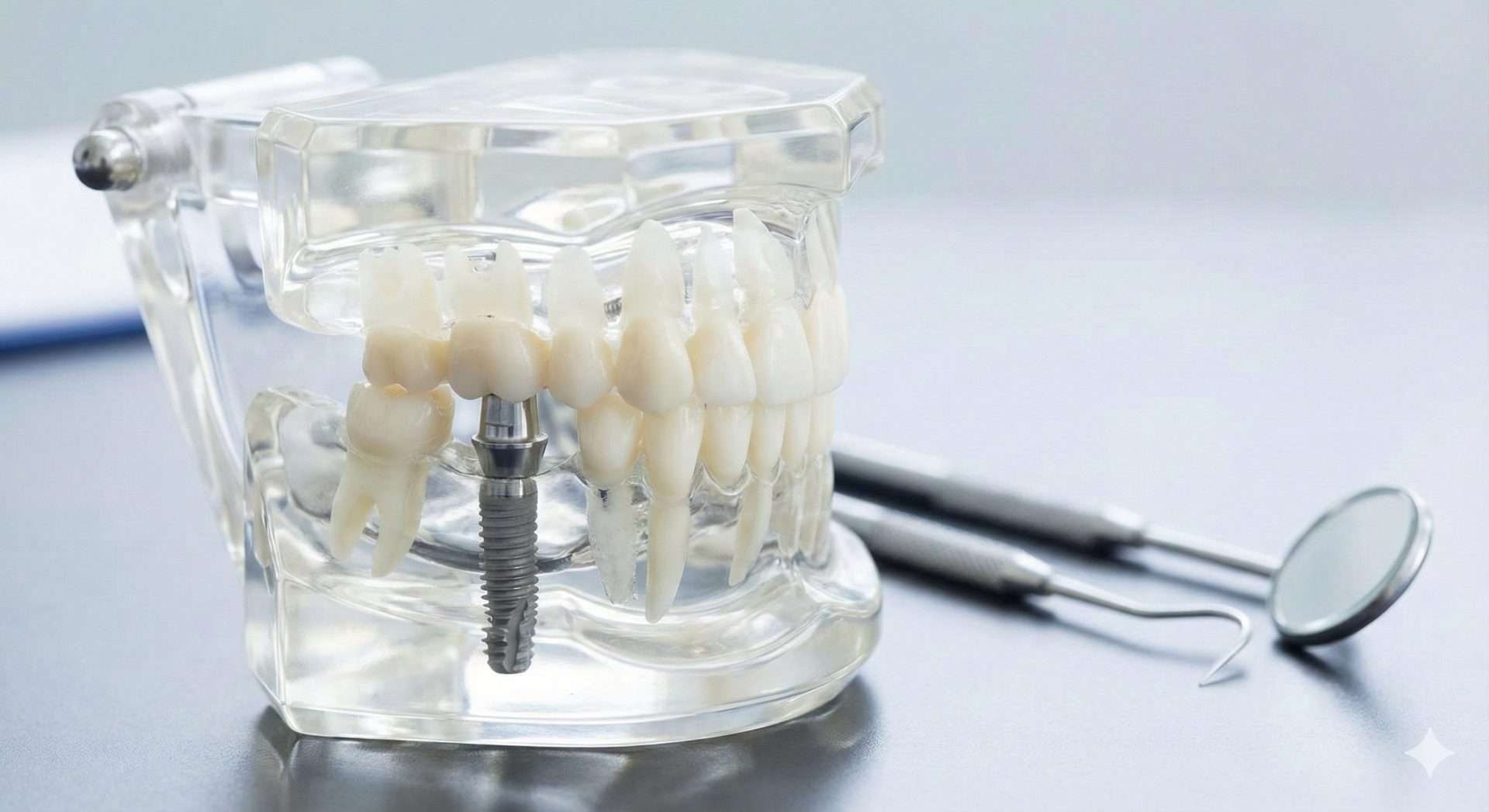
Performed under local anesthesia (with oral or IV sedation available for anxious patients), the gum is numbed and opened, the bone is prepared with precision drills, the titanium or zirconia post is placed, a healing cap is installed, and the gum is sutured closed. Mild swelling and discomfort for 48–72 hours is normal and usually managed with over-the-counter medication and a soft diet.
Step 5: Osseointegration (Healing)
Over the following months, bone fuses naturally to the implant post, building the stability needed for chewing. Healing typically takes 2–3 months in the lower jaw and 3–6 months in the upper jaw, with a temporary crown or denture often worn in the meantime.
Step 6: Abutment Placement
Once healing is confirmed, the gum is opened slightly to remove the healing cap and the abutment is secured to the implant post; gum tissue then heals around it for 1–2 weeks.
Steps 7 & 8: Crown Impressions and Final Placement
A digital scan or traditional mold captures the exact shape of the abutment and surrounding teeth so the crown fits and matches perfectly. The final restoration — screw-retained (easy to remove for maintenance) or cemented (a more seamless look) — is then attached, and your dentist checks bite alignment and function.
Typical Timeline
Consultation and planning takes 1–2 weeks; extraction (if needed) is a single day; bone grafting, if necessary, takes 3–6 months to heal; implant placement itself takes 45–60 minutes per implant; osseointegration takes 2–6 months; and abutment and crown placement takes another 2–4 weeks.
Common Questions
Most patients report minimal discomfort, similar to a tooth extraction. Soft foods are recommended initially, with full chewing resuming after the crown is placed. Success rates run 95–98% with proper care, and while smoking increases the risk of failure, quitting during healing improves outcomes.
The process may seem long, but each step is designed for predictability, safety, and a lasting result — from consultation to final crown, understanding what’s ahead makes the journey to a restored smile far less daunting.
Related to This Article
Have a Dental Question of Your Own?
Reach out and we'll help you find the right next step.
Schedule Your Visit Call 212-877-7475