Custom Night Guards for Teeth Grinding: Are They Worth It?
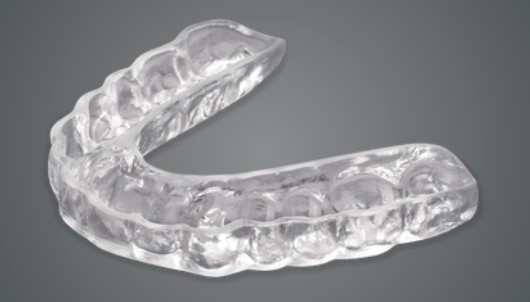
A store-bought night guard is better than nothing, but a custom-fitted one solves problems the boil-and-bite version genuinely can't...
By Dr. Boris Zusin · Published August 1, 2026 · Updated August 30, 2026
If you grind or clench your teeth at night, a night guard is one of the most effective ways to protect your teeth from the wear — but store-bought and custom versions aren't really the same product wearing different price tags.
Store-Bought (Boil-and-Bite) Guards
These are inexpensive and available without a dental visit, which makes them an understandably tempting first option. The tradeoff is fit: a boil-and-bite guard is molded by you, at home, which means it's rarely as precise as a professionally made one. A loose or bulky fit can be uncomfortable enough that people stop wearing it, which defeats the purpose entirely.
Custom-Fitted Guards
A custom guard is made from an actual impression or digital scan of your teeth, giving it a precise fit that's more comfortable to wear consistently and distributes grinding forces more evenly across your teeth. It's also made from more durable material designed to hold up to nightly grinding over years, not months.
Which One Is Worth It
For occasional, mild grinding, a store-bought guard may be a reasonable starting point. For grinding significant enough to cause jaw pain, headaches, or visible wear on your teeth, a custom guard is the more reliable long-term solution — both because it's more likely to actually get worn every night, and because it holds up better over time.
Splint Design Matters: Full-Coverage vs. Anterior-Only
Building a full-coverage stabilization splint starts with recording a specific jaw position as the reference — not your everyday bite. If you're curious what that reference position actually is and why it's different from your natural bite, see Centric Relation vs. Centric Occlusion.
Not every custom guard is built the same way, and the design does affect how it works. The standard, most widely used design is a hard, full-coverage stabilization splint — it contacts all of your teeth evenly and provides canine guidance, and it's the best-documented option for protecting the full dentition during ongoing nighttime clenching or grinding.
A different design — an anterior-only bite plate (sometimes called an NTI-type or deprogrammer splint) — contacts just the front teeth and is thought to trigger a protective reflex that quiets clenching intensity. A biomechanical study using MRI and EMG found that clenching on an anterior-only splint produced roughly half the muscle activation of a full-coverage or posterior splint, along with the greatest change in jaw joint position — the strongest acute muscle-relaxing effect among the designs tested.
That stronger effect comes with a real tradeoff. Because an anterior-only appliance deliberately leaves the back teeth without contact, unsupervised or long-term wear can allow the posterior teeth to shift or over-erupt, leading to an unwanted bite change — a risk that full-coverage splints don't carry. For that reason, an anterior bite plate is a short-term tool used under our direct supervision with scheduled follow-up, not something meant for open-ended nightly wear on your own. If we determine one is appropriate for your specific case, it comes with a defined re-evaluation timeline; the full-coverage custom guard remains the more conservative, better-documented default for long-term nightly use.
It's also worth setting realistic expectations either way: research on occlusal splints for bruxism overall is still limited and lower-quality across study designs, and no splint — of any design — has been shown to actually stop the clenching or grinding itself. The clear, well-supported benefit is protecting your teeth and reducing the load on your jaw joint and muscles, not curing the underlying habit.
Hard vs. Soft Material, and a Few Other Design Variables
Beyond how much of the arch a splint covers, the material it's made from is its own separate design choice. A hard acrylic splint is the more durable, longer-lasting option and is what we typically recommend for moderate-to-severe nighttime grinding, since it resists wear and holds its shape over years of use. A soft or dual-laminate splint is more comfortable for some patients initially and can be reasonable for milder, short-term cases, but a randomized trial comparing the two found that a hard splint produced measurably better bite-force outcomes and subjective sleep quality than a soft one over the study period — so “softer feels nicer” doesn't necessarily translate to better protection or better sleep. Splints can also be milled, 3D-printed, or conventionally fabricated from an impression; a preliminary comparison of these three techniques found no clinically meaningful difference in fit or performance between methods, so the fabrication technique itself is more a matter of turnaround time and cost than clinical outcome.
A less common third design — a posterior or “pivot” splint that contacts only the back teeth — is occasionally used for specific bite situations, but it isn't a mainstream option for routine grinding protection and doesn't have the evidence base that full-coverage or anterior-only designs do; we would only consider one for a narrow, specific clinical indication rather than as a default nightguard choice.
When the Problem Isn't Just Clenching: Anterior Repositioning Splints
Everything above assumes the goal is protecting teeth from a stabilization or muscle-relaxing appliance. A different splint category — an anterior repositioning splint (ARS) — is designed for a different problem entirely: a jaw joint disc that has slipped out of its normal position and clicks or catches when you open (disc displacement with reduction). Rather than sitting passively, an ARS is built to guide the lower jaw forward into a position that recaptures the disc, which is a distinct therapeutic goal from grinding protection and is something we'd diagnose and prescribe specifically, not something a generic night guard accomplishes as a side effect.
Within ARS designs, a randomized trial comparing a mono-block splint (one solid piece that locks the jaw in the forward position) against a twin-block splint (two separate pieces that allow more natural jaw movement) found the twin-block design more effective for this indication. Imaging research has also looked at predicting which patients respond best to an ARS using MRI texture analysis of the joint tissues, suggesting that response to this specific therapy may be more predictable from imaging than previously assumed — though this is still an emerging, research-stage tool rather than routine chairside practice.
Coming Off an Anterior Repositioning Splint
Because an ARS works by holding the jaw in a forward position to keep a displaced disc recaptured, stopping it isn't as simple as just not wearing it one night. The joint tissues need time to adapt and stabilize in that new position, and published protocols describe a gradual, staged process — typically over roughly three to six months — rather than an abrupt stop. Weaning generally isn't started at all until you've had a confirmed symptom-free stretch on the splint, sometimes supported by MRI evidence that the tissue behind the disc has adapted well; starting too early raises the odds the joint won't hold the improvement.
The general sequence is similar across published approaches: daytime wear is reduced first (shifting to nighttime-only), then the splint itself is very gradually thinned from the back — often around a millimeter every four to six weeks — which lets your back teeth slowly re-erupt into contact as the bite resettles. Treatment is generally considered complete only once your back teeth are meeting evenly again and that stable bite holds up over a defined splint-free interval, not just on day one after stopping. One published protocol lets natural settling do the work over a shorter timeline, while others use controlled, incremental grinding of the appliance over several months, and a more structured MRI-guided approach adjusts the pace of tapering to how well each individual joint has adapted — underscoring that the right timeline is individualized, not fixed.
The reason for this caution is mechanical: the jaw sits in a forward-and-down position on an ARS specifically because that's where it's holding the disc, and that position doesn't have the same natural stability as your original bite. Removing the splint abruptly, before the tissues have remodeled, can let the jaw drop back toward its old position unevenly — producing a "dual bite" (feeling like your teeth meet in two different places) or letting the disc slip out of position again. The most common lasting change from ARS therapy is a posterior open bite (the back teeth not quite meeting once the splint comes out), which is why we discuss upfront that some patients need a period of bite equilibration, a soft splint bridge, or in some cases orthodontic or restorative treatment to fully close that gap afterward. Even with a properly paced wean, some relapse of symptoms is reported in follow-up studies, which is why we don't consider ARS therapy something to set and forget — it comes with scheduled follow-up during the taper and after the splint is out, precisely to catch and manage a relapse or bite change early rather than after the fact.
Matching Splint Type to the Kind of TMD Pain
A 2020 network meta-analysis pooling randomized trials across occlusal splint designs found that the best-performing option actually depends on what type of temporomandibular disorder (TMD) is being treated. For myogenous TMD — pain that's primarily muscular, the kind most associated with clenching and grinding — mini-anterior or deprogrammer-type splints ranked highest for pain reduction, consistent with the muscle-relaxing mechanism described above. For arthrogenous TMD — pain originating from the joint itself, such as disc displacement — anterior repositioning splints ranked highest, which lines up with their joint-specific design purpose. Across both pain types, a stabilization splint combined with patient counseling performed among the best overall, reinforcing that a full-coverage hard splint paired with realistic guidance about the habit remains a sound, evidence-backed default when the specific TMD subtype hasn't been pinned down. A related Cochrane review and more recent systematic reviews of splint therapy for TMD broadly reach a similar conclusion: splints can meaningfully help with pain and function for many patients, but the evidence quality across the field is still moderate at best, and no single design is a universal answer — which is exactly why we tailor the splint type to your specific diagnosis rather than defaulting to one design for every patient.
Rule Out Sleep Apnea Before You Guard the Grinding
Grinding and obstructive sleep apnea (OSA) overlap in a meaningful share of adults — though research hasn't established that one directly causes the other, both appear tied to the brief arousals that happen during disrupted sleep. That matters practically: a standard upper night guard can, in some patients, reduce space in the airway. If you also snore heavily, have been told you stop breathing or gasp at night, or feel unusually tired during the day, it's worth getting screened for sleep apnea before committing to a guard — if OSA is present, an airway-focused appliance is usually the safer, more effective starting point, and it often reduces the grinding as a side benefit. See our Sleep Apnea Treatment page to learn more.
Think you might be grinding at night? Learn more about our TMJ appliance options, or read more about teeth grinding in general.
Sources
- Sleep Bruxism and Obstructive Sleep Apnea: Association, Causality or Spurious Finding? A Scoping Review — Pauletto P, Polmann H, Conti Réus J, et al., Sleep (2022)
- Sleep Bruxism in Respiratory Medicine Practice — Mayer P, Heinzer R, Lavigne G, Chest (2016)
- Behavioural Changes and Occlusal Splints Are Effective in the Management of Masticatory Myofascial Pain: A Short-Term Evaluation — Conti PC, de Alencar EN, da Mota Corrêa AS, et al., Journal of Oral Rehabilitation (2012)
- Temporomandibular Joint Space Variation and Masticatory Muscle Activation During Clenching With Full Versus Partial Covering Occlusal Splints — Seiler A, Lukic N, Özcan M, et al., Clinical Oral Investigations (2024)
- The Efficacy of Occlusal Splints in the Treatment of Bruxism: A Systematic Review — Hardy RS, Bonsor SJ, Journal of Dentistry (2021)
- Oral Splints for Patients With Temporomandibular Disorders or Bruxism: A Systematic Review and Economic Evaluation — Riley P, Glenny AM, Worthington HV, et al., Health Technology Assessment (2020)
- Preliminary Clinical Evaluation of Traditional and a New Digital PEEK Occlusal Splints for the Management of Sleep Bruxism — Wang S, Li Z, Ye H, et al., Journal of Oral Rehabilitation (2020)
- Factors Influencing Adherence to Therapy With Occlusal Splints — A Multicentre Questionnaire Based Study — Beck CC, Reissmann DR, Brinkmann L, Schierz O, Journal of Oral Rehabilitation (2025)
- Bruxism Treatment Outcomes: A Systematic Review and Meta-Analysis — Assiri HA, Almuawi LF, Asiri BA, et al., Medicine (2025)
- Occlusal Interventions for Managing Temporomandibular Disorders — Singh BP, Singh N, Jayaraman S, et al., Cochrane Database of Systematic Reviews (2024)
- Pilot Clinical Comparison of Three Occlusal Splint Fabrication Techniques: A Preliminary Study — Torné-Durán S, Marco-Martínez L, Serrano-Belmonte I, Scientific Reports (2025)
- Occlusal Splint Therapy in the Management of Temporomandibular Disorders — Evidence From Systematic Reviews — Sorbo DD, Bijelic T, Häggman-Henrikson B, et al., Journal of Oral Rehabilitation (2026)
- Evaluation of Different Occlusal Splints and Counselling in the Management of Myofascial Pain Dysfunction — Alencar F, Becker A, Journal of Oral Rehabilitation (2009)
- Accurate Diagnosis and Treatment of Painful Temporomandibular Disorders: A Literature Review Supplemented by Own Clinical Experience — Garstka AA, Kozowska L, Kijak K, et al., Pain Research & Management (2022)
- Effectiveness of Occlusal Splint Therapy in the Management of Temporomandibular Disorders: Network Meta-Analysis of Randomized Controlled Trials — Al-Moraissi EA, Farea R, Qasem KA, et al., International Journal of Oral and Maxillofacial Surgery (2020)
- Predicting Anterior Repositioning Splint Efficacy in Disc Displacement With Reduction Using MRI-Based Texture and Quantitative Analysis: A Retrospective Study — Gao B, Dong Y, Shan Y, et al., Clinical Oral Investigations (2025)
- Effectiveness of a Novel Mono-Block Splint Versus a Twin-Block Splint for Anterior Disc Displacement With Reduction: A Randomised Controlled Trial — Liu Z, Wu A, Cai W, et al., Journal of Oral Rehabilitation (2026)
- Physiological Effects of Anterior Repositioning Splint on Temporomandibular Joint Disc Displacement: A Quantitative Analysis — Chen HM, Liu MQ, Yap AU, Fu KY, Journal of Oral Rehabilitation (2017)
- Step-Back Anterior Repositioning Splint Retraction for Temporomandibular Joint Disc Displacement With Reduction in Adult Patients — Li H, Shen D, Chen Z, Li J, Journal of Oral Rehabilitation (2023)
- Can Anterior Repositioning Splint Effectively Treat Temporomandibular Joint Disc Displacement? — Ma Z, Xie Q, Yang C, et al., Scientific Reports (2019)
- Internal Derangement of the TMJ: Changes Associated With Mandibular Repositioning and Orthodontic Therapy — Keeling SD, Gibbs C, Hall MB, Lupkiewicz S, American Journal of Orthodontics and Dentofacial Orthopedics (1989)
- A Novel Combination of Treatments for Acute Anterior Disc Displacement Without Reduction of Temporomandibular Joint — Song ZQ, Li CX, Gong ZC, Scientific Reports (2025)
Related to This Article
Have a Dental Question of Your Own?
Reach out and we'll help you find the right next step.
Schedule Your Visit Call 212-877-7475