
Understanding Sleep Stages: What Happens to Your Brain and Body Each Night (and Why It Matters for Sleep Apnea)
Sleep isn't one uniform state. Across a night, your brain cycles through distinct stages — light sleep, deep sleep, and REM — each with its own job. Here's what's happening, and why it matters if you have sleep apnea.
By Dr. Boris Zusin · Published September 24, 2026
Sleep isn’t a single, uniform state — it’s a structured cycle your brain moves through several times a night, alternating between non-REM (NREM) sleep, which is further divided into three stages (N1, N2, N3), and REM sleep. A typical cycle runs about 90–120 minutes and repeats 4–6 times before morning, with deep (N3) sleep concentrated early in the night and REM periods lengthening toward wake-up.[1] This overall pattern — how much time you spend in each stage and how they're sequenced — is called sleep architecture, and it's a meaningful marker of health that changes with age and can be disrupted by conditions like obstructive sleep apnea (OSA).[2,3]
The Stages of Sleep, One by One
| Stage | What's Happening | Approx. Share of Adult Sleep | Main Role |
|---|---|---|---|
| N1 (light) | The transition from wake to sleep; brain waves slow, muscles relax, easy to wake up | ~5% | Sleep onset |
| N2 (light) | Bursts of brain activity called sleep spindles; heart rate and body temperature drop | ~50% | Defines true sleep onset; helps lock in motor-skill memory |
| N3 (deep / slow-wave) | Large, slow brain waves; hardest stage to wake someone from | ~20% in young adults | “Restorative” sleep — memory consolidation, hormone release, immune support, brain waste clearance |
| REM | Brain activity resembles wakefulness; rapid eye movements; the body's large muscles go temporarily limp | ~20–25% | Most vivid dreaming; emotional and procedural memory processing |
Each stage has a distinct signature on a sleep study (polysomnography), and increasingly sophisticated tools — including deep-learning models trained on EEG data — are being used to score these stages automatically and even help diagnose conditions like narcolepsy from the pattern itself.[6,7]
Why the Timing Matters
Deep sleep isn’t evenly spread through the night — it's front-loaded, concentrated in the first third to half of your sleep period, and it increases after a night of sleep deprivation, which is your brain's way of "catching up" on the sleep pressure that built up while you were awake. REM sleep does the opposite: it's relatively brief early in the night and lengthens with each cycle, so the REM sleep right before you wake up tends to be the longest of the night.[10,11] During NREM sleep, slow brain waves, bursts of activity called spindles, and signals from deeper memory-storage structures line up in a tightly coordinated rhythm that's thought to be how your brain moves information from short-term to long-term storage overnight.[12,13]
Why Sleep Architecture Matters for Your Health
Memory and thinking. Deep sleep and REM sleep appear to specialize in different kinds of memory — deep sleep leans toward facts and events, REM toward skills and emotional processing — and losing sleep hits attention, decision-making, and memory hardest.[3,8,14]
Brain waste clearance. Deep sleep drives your brain's waste-clearance system, flushing out byproducts including beta-amyloid and tau, the proteins associated with Alzheimer's disease; even a single night of lost sleep measurably raises amyloid levels, and people with less deep sleep tend to show more of these markers on brain scans over time.[5,9,15]
Immune and hormone function. Deep sleep is when your immune system does much of its work, paired with a dip in stress hormones and a rise in growth hormone — and the strength of your brain's slow-wave activity after a vaccine has been shown to predict how well your antibody response holds up over time.[1,4]
Metabolic and heart health. Selectively depriving people of deep sleep — even while leaving total sleep time unchanged — impairs blood sugar regulation and blood pressure control, which is part of why the American Heart Association now names disturbed sleep architecture as a factor relevant to cardiovascular and brain health.[3]
Disease risk more broadly. A 2026 UK Biobank study that tracked real-world sleep in over 95,000 adults using wrist accelerometers found that people who got more REM sleep and more deep sleep had a lower risk across dozens of diseases, while more fragmented sleep and very short sleep (under 5 hours) carried the broadest risk. Disease risk was lowest in the 6–8 hour range.[16]
Sleep Architecture Changes With Age
The rich, deep sleep of childhood and adolescence gradually gives way to more fragmented sleep in adulthood — more time in light N1 sleep and more nighttime wake-ups, with both deep sleep and REM sleep declining over the years. This isn't just a curiosity: age-related loss of deep sleep is one proposed reason why the brain's waste-clearance system becomes less effective with age, and why sleep quality has emerged as a predictor of later cognitive decline.[2,3,5]
How Sleep Staging Is Used to Diagnose Sleep Disorders
Sleep architecture isn’t just a wellness curiosity — the specific pattern of stages on an overnight sleep study (polysomnography, or PSG) is a diagnostic tool in its own right. A technician wires up EEG, eye-movement, chin and limb muscle, airflow, and oxygen sensors overnight (the same “hook-up” used for both adult and pediatric sleep studies), and the resulting stage-by-stage tracing can point toward specific conditions well beyond OSA.[30] A large 2023 umbrella review pooling PSG findings across 27 neuropsychiatric diseases confirmed that many conditions leave a distinctive, reproducible signature in sleep architecture — not just a vague sense of “bad sleep.”[17]
Diagnosing Narcolepsy: REM Intrusion Is the Key Signature
Narcolepsy is the clearest example of sleep-stage pattern as diagnosis. Normally, REM sleep doesn’t begin until roughly 90 minutes after falling asleep. In narcolepsy, REM sleep intrudes abnormally early — sometimes within minutes of sleep onset — a finding captured by two connected tests: overnight PSG followed the next day by a Multiple Sleep Latency Test (MSLT), a nap study that measures how quickly someone falls asleep and whether REM appears during those naps (called a sleep-onset REM period, or SOREMP).[18,21] A diagnosis of narcolepsy generally requires a short average sleep latency on the MSLT plus two or more SOREMPs (with a SOREMP on the preceding overnight PSG sometimes counting toward that total), and REM sleep latency on overnight PSG itself — how quickly REM appears after sleep onset — has been shown to be a strong stand-alone predictor of narcolepsy with hypocretin (orexin) deficiency, the neurochemical hallmark of narcolepsy type 1 (NT1).[23] Type 1 narcolepsy is confirmed either by these REM-timing criteria or directly, by measuring abnormally low hypocretin-1 levels in cerebrospinal fluid; narcolepsy type 2 (NT2) shares the daytime sleepiness and abnormal REM timing but without confirmed hypocretin deficiency, and tends to have a milder, sometimes less stable clinical course.[18,21] One practical complication: many common medications, especially antidepressants that suppress REM sleep, can mask these REM-timing findings, so patients are typically asked to taper off REM-suppressing drugs before testing whenever it's medically safe to do so.[21] Because in-lab PSG plus MSLT can be burdensome to schedule, researchers have also validated portable, at-home 24-hour PSG as an alternative way to capture the same REM-intrusion signature for suspected narcolepsy type 1.[20]
Sleep-Stage Patterns Across Other Conditions
Beyond narcolepsy, a number of psychiatric and neurologic conditions leave their own recognizable fingerprint on sleep architecture — a large meta-analysis of PSG studies across mental disorders confirms these aren't one-off findings but reproducible group-level patterns — useful both for diagnosis and for understanding why a patient feels the way they do despite spending enough hours in bed.[19] Excessive daytime sleepiness itself, notably, is a symptom shared across many of these conditions and isn't specific to any one diagnosis on its own — which is exactly why the underlying stage-pattern matters.[22]
| Condition | Typical PSG Stage-Pattern Finding |
|---|---|
| Narcolepsy | Short REM latency, sleep-onset REM periods (SOREMPs) on MSLT and/or PSG |
| Obstructive sleep apnea | Frequent arousals fragmenting all stages; breathing events and oxygen drops often concentrated in REM sleep |
| Major depressive disorder | Shortened REM latency and increased REM density, most consistently seen in melancholic-subtype depression; some subtypes show no clear PSG change at all |
| Parkinson's disease / synucleinopathies | Reduced REM muscle atonia (REM without atonia), often overlapping with periodic limb movements and OSA in graded, disease-stage-related patterns |
| REM sleep behavior disorder (RBD) | Loss of the normal muscle paralysis of REM sleep, allowing patients to physically act out dreams |
| Periodic limb movement disorder (PLMD) | Repetitive limb movements recurring mostly in NREM sleep, which fragment sleep continuity; frequently found alongside OSA |
| Insomnia | Prolonged sleep onset and reduced sleep efficiency; PSG findings are often milder than patients' subjective complaints suggest |
| PTSD | Disrupted REM sleep continuity, often with increased arousals during REM, consistent with fragmented, poor-quality sleep |
| Nocturnal frontal lobe epilepsy | Brief, stereotyped motor events arising predominantly out of NREM sleep, distinguishable from other parasomnias by their PSG timing and pattern |
A few patterns are worth underscoring. Depression's PSG signature is real but inconsistent enough across subtypes and studies that sleep staging alone isn't considered reliable as a stand-alone diagnostic test for major depressive disorder — it's a supportive finding, not a substitute for clinical evaluation.[26,27] Periodic limb movements, meanwhile, frequently show up as an incidental finding on sleep studies ordered for suspected OSA, and disentangling which symptoms belong to which condition — or whether one is driving the other — is part of why sleep-stage interpretation is a specialist skill.[28,29] In children, some of these same principles apply but with added complexity, since pediatric sleep architecture and pediatric sleep disorders differ meaningfully from the adult patterns above.[25,30]
How This Interpretation Actually Happens
Traditionally, a sleep physician reads these stage-by-stage tracings by eye, epoch by epoch, comparing timing, density, and continuity against the criteria above. Newer approaches are supplementing that process: validated software has been shown to identify the same pathology-related sleep-parameter changes as manually scored PSG, and, more recently, large deep-learning models trained on tens of thousands of hours of real-world PSG data have demonstrated the ability to stage sleep and flag disease-related patterns with a level of consistency that's difficult for manual scoring to match at scale.[24,31] These tools don't replace clinical judgment, but they illustrate just how information-dense a well-read hypnogram really is — the same stage-by-stage architecture discussed throughout this article is, in the right hands, a diagnostic instrument.
Why This Matters If You Have (or Suspect) Sleep Apnea
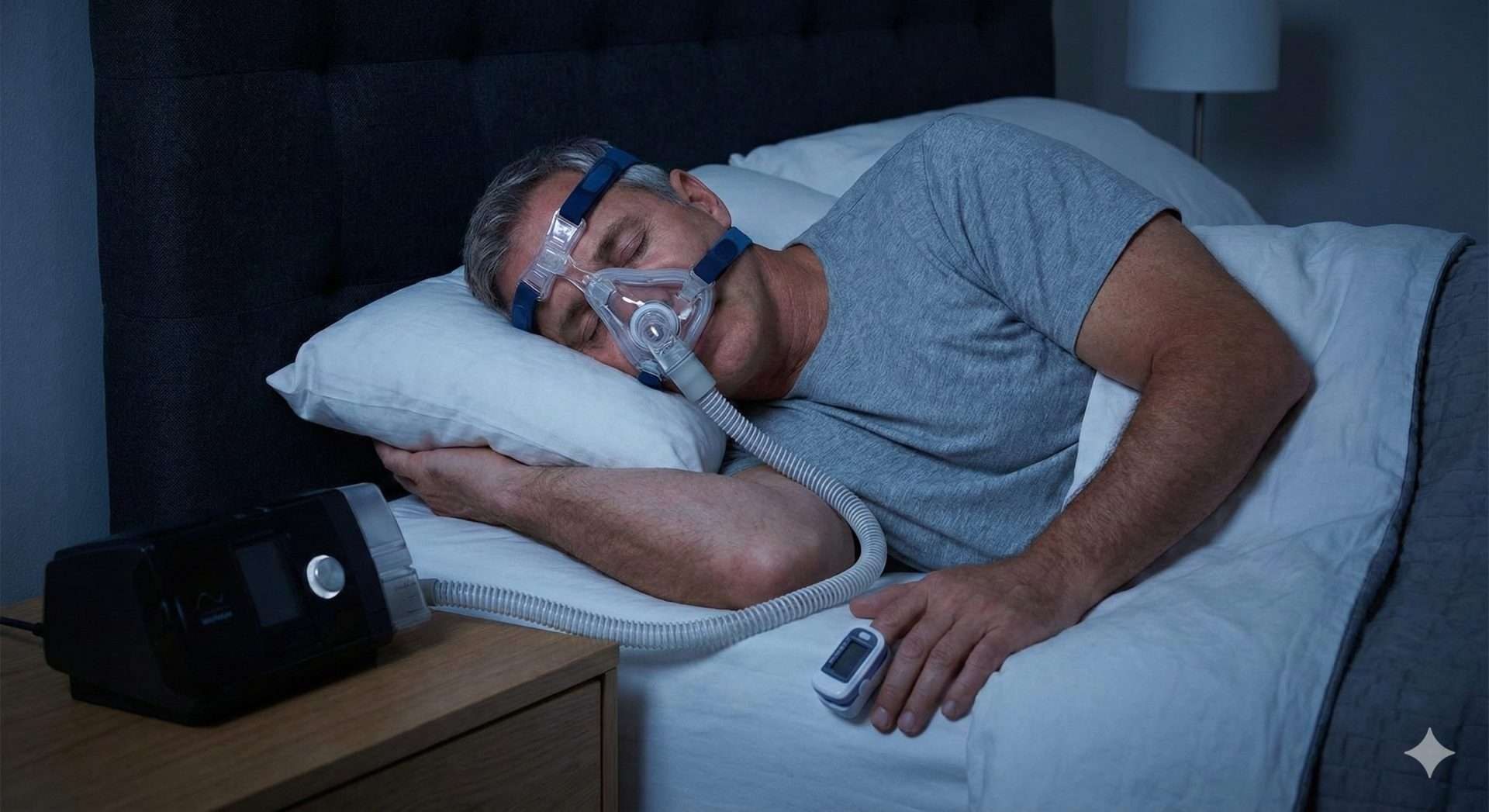
This is where sleep architecture becomes directly relevant to dental sleep medicine. Obstructive sleep apnea doesn't affect every sleep stage equally — airway-narrowing events are typically worse during REM sleep, when the muscles that keep your airway open go through the same temporary loss of tone that relaxes your limbs, making the tongue and soft palate more likely to collapse. That's why some patients have relatively mild overall apnea numbers but a much rockier picture specifically during REM — a pattern a sleep study can identify but a symptom checklist alone can't.[7] Because REM sleep is concentrated in the second half of the night, this also means the most severe breathing disruptions for many OSA patients happen closer to morning, right when REM periods are longest.
If you snore heavily, wake up gasping, or feel unrefreshed no matter how many hours you spend in bed, the issue may not be how long you're sleeping but what's happening to your sleep architecture — and specifically, whether apnea events are fragmenting your deep and REM sleep before they can do their job. Dr. Boris Zusin, a Diplomate of the American Board of Dental Sleep Medicine, works with patients on exactly this kind of evaluation and, when appropriate, custom oral appliance therapy as an alternative to CPAP. Learn more on our Sleep Apnea Treatment page, or read Oral Appliance vs CPAP to compare your options.
Sources
- Sleep and Inflammation: Partners in Sickness and in Health — Irwin MR, Nature Reviews Immunology (2019)
- Sleep-Wake Disorders (DSM-5-TR) — American Psychiatric Association (2022)
- Impact of Sleep Disorders and Disturbed Sleep on Brain Health: A Scientific Statement From the American Heart Association — Gottesman RF, Lutsey PL, Benveniste H, et al., Stroke (2024)
- Sleep Health — Robbins R, Quan S, NEJM Evidence (2024)
- Waste Clearance Shapes Aging Brain Health — Jiang-Xie LF, Drieu A, Kipnis J, Neuron (2025)
- GRU-Powered Sleep Stage Classification With Permutation-Based EEG Channel Selection — Moctezuma LA, Suzuki Y, Furuki J, Molinas M, Abe T, Scientific Reports (2024)
- Neural Network Analysis of Sleep Stages Enables Efficient Diagnosis of Narcolepsy — Stephansen JB, Olesen AN, Olsen M, et al., Nature Communications (2018)
- The Missing Link Between Sleep Disorders and Age-Related Dementia: Recent Evidence and Plausible Mechanisms — Zhang F, Zhong R, Li S, Chang RC, Le W, Journal of Neural Transmission (2017)
- Sleep Stage-Specific Effects of 0.75 Hz Phase-Synchronized rTMS and tACS on Delta Frequency Activity During Sleep — Takahashi K, Kuo MF, Nitsche MA, Scientific Reports (2026)
- Slow-Wave Sleep and MRI Markers of Brain Aging in a Community-Based Sample — Baril AA, Beiser AS, Mysliwiec V, et al., Neurology (2021)
- Consciousness and Sleep — Tononi G, Boly M, Cirelli C, Neuron (2024)
- Comparing Targeted Memory Reactivation During Slow Wave Sleep and Sleep Stage 2 — Carbone J, Bibian C, Born J, Forcato C, Diekelmann S, Scientific Reports (2024)
- Sleep-Related Changes Prior to Cognitive Dysfunction — Pérez-Carbonell L, Iranzo A, Current Neurology and Neuroscience Reports (2023)
- Destabilization of Light NREM Sleep by Thalamic PLCβ4 Deletion Impairs Sleep-Dependent Memory Consolidation — Hong J, Ha GE, Kwak H, et al., Scientific Reports (2020)
- Auditory Closed-Loop Stimulation of EEG Slow Oscillations Strengthens Sleep and Signs of Its Immune-Supportive Function — Besedovsky L, Ngo HV, Dimitrov S, et al., Nature Communications (2017)
- Accelerometer-Derived Real-World Sleep Stages and Risk of Incident Diseases: A UK Biobank Cohort Study and Phenome-Wide Association Analysis — Luo J, Liu R, Yin J, et al., PLoS Medicine (2026)
- Patterns of Polysomnography Parameters in 27 Neuropsychiatric Diseases: An Umbrella Review — Zhang Y, Ren R, Yang L, et al., Psychological Medicine (2023)
- Narcolepsy — Maski K, Scammell TE, JAMA (2026)
- Sleep and Mental Disorders: A Meta-Analysis of Polysomnographic Research — Baglioni C, Nanovska S, Regen W, et al., Psychological Bulletin (2016)
- Use of Portable 24-Hour Polysomnography as an Alternative Diagnostic Tool for Narcolepsy Type 1 — Biscarini F, Vandi S, Zenesini C, et al., Neurology (2025)
- Narcolepsy — Scammell TE, New England Journal of Medicine (2015)
- Understanding and Approaching Excessive Daytime Sleepiness — Pérez-Carbonell L, Mignot E, Leschziner G, Dauvilliers Y, The Lancet (2022)
- Nocturnal Rapid Eye Movement Sleep Latency for Identifying Patients With Narcolepsy/Hypocretin Deficiency — Andlauer O, Moore H, Jouhier L, et al., JAMA Neurology (2013)
- Somno-Art Software Identifies Pathology-Induced Changes in Sleep Parameters Similarly to Polysomnography — Thiesse L, Staner L, Bourgin P, et al., PLOS One (2023)
- Sleep Disorders in Children: Classification, Evaluation, and Management. A Review — Gemke RJBJ, Burger P, Steur LMH, European Journal of Pediatrics (2024)
- Objective Polysomnography-Based Sleep Features and Major Depressive Disorder Subtypes in the General Population — Solelhac G, Berger M, Strippoli MF, et al., Psychiatry Research (2023)
- The Status of Sleep Abnormalities as a Diagnostic Test for Major Depressive Disorder — Arfken CL, Joseph A, Sandhu GR, et al., Journal of Affective Disorders (2014)
- Stage-Specific Interactions Among PLM, RBD, and OSAHS in Parkinson's Disease and MSA — Zhang Z, Li M, Wang Y, et al., Neurological Sciences (2026)
- Periodic Limb Movements in Patients With Obstructive Sleep Apnea Syndrome — Zhou X, Zhou B, Li Z, et al., Scientific Reports (2021)
- Sleep Disorders in Childhood — Krishna J, Kalra M, McQuillan ME, Pediatrics in Review (2023)
- A Unified Time-Frequency Foundation Model for Sleep Decoding — Huang W, Wang Y, Cheng H, et al., Nature Communications (2026)
Related to This Article
Have a Dental Question of Your Own?
Reach out and we'll help you find the right next step.
Schedule Your Visit Call 212-877-7475