Why Does My Tooth Hurt When I Drink Cold Water? Causes & When to Worry
A quick twinge from cold water is usually sensitivity — but pain that lingers after the cold is gone is a different, more urgent signal. Here's how to tell them apart, what actually causes it, and when it's worth an exam...
By Dr. Boris Zusin · Published August 24, 2026
Cold-water pain is common, but not all cold sensitivity means the same thing. The single most useful clue is how long the pain lasts after the cold is gone — that timing alone points toward whether this is a minor, manageable issue or something that needs an exam soon.
A Quick, Sharp Twinge That Fades Fast
If the pain hits the moment cold water touches the tooth and fades within about 1–5 seconds once it's gone, that's the classic pattern of dentin hypersensitivity — a well-studied, benign response where fluid inside microscopic tubules in the dentin shifts in response to cold, triggering nerve receptors near the pulp. It's uncomfortable but not typically an emergency.
Pain That Lingers After the Cold Is Gone
If the ache continues well past that — clinically, responses lasting roughly 6–10 seconds or longer are associated with irreversible pulpitis, meaning the nerve inside the tooth is inflamed in a way that generally won't resolve on its own. That pattern often points to a deep cavity, a cracked tooth, or a failing filling reaching the nerve, and is more likely to need a filling, crown, or in some cases a root canal referral, rather than just a sensitivity toothpaste. If this lingering pattern showed up after a recent filling specifically, see our guide on reversible sensitivity vs. irreversible pulpitis for how that distinction gets made.
Pain Isolated to One Specific Tooth
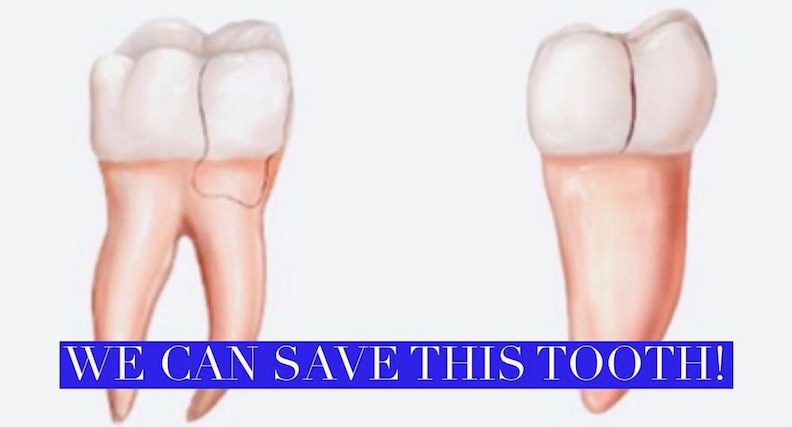
General sensitivity across several teeth is more consistent with worn enamel or gum recession affecting the whole mouth. Pain that's clearly coming from one specific tooth — especially if it's hard to pin down exactly which one — is more likely to be that tooth's individual problem, and cracked tooth syndrome specifically is notorious for causing sharp, hard-to-localize pain with cold that doesn't show up clearly on an X-ray.
Common Causes of Cold Sensitivity
- Worn or eroded enamel — from acidic foods and drinks, aggressive brushing, or teeth grinding, which thins the protective outer layer and exposes the sensitive dentin underneath.
- Receding gums — when gum tissue pulls back, it exposes the tooth root, which isn't protected by enamel and is naturally more sensitive to temperature.
- A cavity — decay that's eaten through enamel gives cold (and sweets) a more direct path to the nerve.
- A cracked tooth — a crack, even a hairline one invisible to the eye, can let cold reach the nerve through a pathway that isn't supposed to be there.
- A failing or leaking filling — an old filling with a gap at the margin lets cold seep underneath it, right next to the nerve.
- Recent dental work or whitening — teeth are often temporarily more sensitive to cold for a few days after a cleaning, filling, or whitening treatment; this typically settles on its own.
When It's Worth Getting Checked Soon
A few signals point toward getting seen sooner rather than waiting it out: pain that lingers well past the cold itself, pain that wakes you up at night, pain that's also triggered by heat or by biting down, or any visible swelling. Those patterns are more consistent with the nerve being genuinely compromised rather than simple surface sensitivity, and delaying an exam in that case risks the problem progressing to an infection.
Not sure which category your pain falls into? Come in for an exam, or read more about general tooth sensitivity if the pain fades quickly.
Sources
- Pathogenesis, Diagnosis and Management of Dentin Hypersensitivity: An Evidence-Based Overview for Dental Practitioners — Liu XX, Tenenbaum HC, Wilder RS, et al., BMC Oral Health (2020)
- Cracked Tooth Syndrome — Rechand F, Rethman M, StatPearls, NCBI Bookshelf, National Institutes of Health (2024)
- Endodontic Diagnosis — American Association of Endodontists, Colleagues for Excellence (2013)
Related to This Article
Have a Dental Question of Your Own?
Reach out and we'll help you find the right next step.
Schedule Your Visit Call 212-877-7475