TMJ Physical Therapy in NYC: When Do You Need It, and When Is an Appliance Enough?
Physical therapy and an oral appliance aren't competing treatments for TMJ — they usually work best together. Here's what the evidence actually shows about jaw exercise, manual therapy, and how the two approaches fit together...
By Dr. Boris Zusin · Published August 20, 2026 · Updated August 30, 2026
A common question once someone is diagnosed with TMD is whether they need physical therapy, an oral appliance, or both. It's not really an either-or decision — current evidence-based guidance for TMD treatment generally favors combining conservative approaches rather than picking a single one, and physical therapy and an oral appliance address genuinely different parts of the problem. Multimodal physiotherapy — supervised jaw exercise, manual therapy, and patient self-management combined — is the evidence-based core of physical therapy for muscle-related TMD (myalgia): the largest network meta-analysis on the subject found that therapist-assisted jaw mobilization and manual trigger point therapy are among the most effective interventions for chronic TMD pain, and that combined exercise-plus-manual-therapy approaches consistently outperform any single modality on its own.
What TMJ Physical Therapy Actually Involves
A physical therapist trained in orofacial or TMD-focused therapy typically combines several pieces: manual therapy to release tight or overworked jaw and neck muscles, guided jaw exercises and stretching to improve range of motion and coordination, treatment aimed at the neck (since jaw and cervical mechanics are closely linked), patient education, and posture correction — with modalities like laser or ultrasound sometimes used as adjuncts rather than the main event. The best-supported protocols run roughly six weeks, with one to two supervised sessions per week plus a daily home program, rather than a single visit or a generic handout of exercises.
What the Evidence Actually Ranks Highest
Not every component of a physical therapy plan has equally strong evidence behind it. Rated from strongest to more preliminary:
- Therapist-assisted jaw mobilization and manual trigger point therapy have moderate-to-high certainty evidence behind them, and in the largest network meta-analysis on chronic TMD pain, interventions that actively "encourage movement and activity" ranked as the most effective category overall.
- Supervised jaw exercise and stretching, with or without manual trigger point work, is clearly better than a placebo for pain and probably improves day-to-day physical functioning. A dedicated meta-analysis of exercise therapy found it reduced pain, raised patients' pressure pain threshold, and improved how far the jaw could open both actively and passively.
- Manual therapy to the jaw muscles, the joint itself, and the cervical spine shows moderate effects on both pain and mouth opening across several umbrella reviews pooling the available trials.
- Treating the neck specifically has high-certainty evidence behind it for myogenic (muscle-driven) TMD — cervical manual therapy, with or without exercise, reduces pain intensity and raises the pressure pain threshold at the jaw muscles, which reflects how much the neck genuinely contributes to jaw pain for a lot of patients.
- Low-level laser therapy, therapeutic ultrasound, and TENS are lower-certainty adjuncts, not stand-alone treatments — useful in combination with exercise and manual therapy for some patients, but not a substitute for the core program on their own.
What a Supervised PT Program Typically Looks Like
A representative protocol from a recent randomized trial — adaptable to either in-person visits or telerehabilitation — runs about six weeks, twice weekly, roughly 50 minutes per session, combining diaphragmatic breathing and relaxation, gentle isometric neck and jaw exercises (a short contraction followed by relaxation, repeated), controlled jaw-opening movements, muscle stretching, and friction massage over the tender muscle points. Every patient is also taught basic self-management: a softer diet during flare-ups, letting the jaw rest in its natural position, and avoiding habits that overload the joint, like wide yawning, gum chewing, or clenching. That combination of hands-on treatment plus a daily home program is what shows up consistently across the strongest trials — not exercises alone, and not manual therapy alone.
Why the Neck Is Often Part of the Plan
It surprises some patients that a jaw problem involves neck treatment at all, but the evidence for this connection is genuinely strong — TMD and cervical spine dysfunction are a well-documented comorbidity, not a coincidence, with neck pain reported in roughly 70% of TMD patients. The best explanation isn't primarily postural or biomechanical; it's neurophysiologic. Sensory input from the trigeminal nerve (which carries jaw and face sensation) and from the upper cervical spine (the C1–C3 nerve levels) converges on the same relay station in the brainstem, called the trigeminocervical nucleus. Because that convergence point processes both incoming signals together, pain that actually starts in the neck can be felt as though it's coming from the jaw or face, and vice versa — a real neurological cross-wiring, not confusion on the patient's part. A meta-analysis pooling the available research found a clinically meaningful association between neck disability and jaw disability, but notably found no significant difference in neck alignment or forward-head posture between TMD patients and people without TMD — which is part of why the field has shifted away from a purely postural explanation and toward this shared-nerve-pathway model. That same evidence suggests neck problems are more likely to perpetuate an existing TMD than to have caused it in the first place, though the direction of that relationship isn't fully settled.
This connection isn't just theoretical. Tenderness in the neck muscles — particularly the sternocleidomastoid and upper trapezius — is common in TMD patients and tends to track with how severe the TMD is, especially in muscle-driven (myogenous) TMD. Reduced neck range of motion and lower pressure pain thresholds (meaning the neck is more sensitive to pressure than normal) are also well-documented findings in TMD patients, though the evidence on abnormal neck muscle activation patterns and posture specifically is more mixed. Practically, this is why a thorough workup for persistent TMD — especially the muscle-driven type — includes assessing the cervical spine directly: checking neck disability, testing upper-cervical mobility (a maneuver called the flexion-rotation test), testing the endurance of the deep neck flexor muscles (the craniocervical flexion test), and checking for tenderness at the jaw and neck muscles together, not evaluating the jaw in isolation.
The payoff for actually treating the neck is well-supported by trial evidence, not just theory. A systematic review and meta-analysis found cervical manual therapy more effective than a placebo or minimal intervention for both TMD pain intensity and pressure pain sensitivity at the jaw muscles, with combining cervical manual therapy and jaw-focused (craniomandibular) therapy producing better short-term results than cervical treatment alone. A 2024 analysis using the GRADE framework for rating evidence quality went further, rating the evidence as high-certainty specifically for cervical rehabilitation reducing pain and raising pressure pain thresholds at the chewing muscles in myogenic TMD — a notably strong rating in a field where most treatment evidence is only low-to-moderate certainty. Individual randomized trials back this up with real numbers: one trial combining upper-cervical joint mobilization with craniocervical flexor muscle training in women with TMD found progressively decreasing orofacial pain that became statistically significant by the fourth week of treatment, and a 2025 trial found cervical stabilization training improved TMJ symptom severity, pain intensity, and cervical muscle performance more than a home-exercise program alone.
Practical takeaway: in persistent TMD — especially the muscle-driven type — a cervical spine evaluation (not just a jaw exam) and cervical-focused manual therapy or stabilization exercise are worth discussing as part of the plan, since the research now supports the neck as a genuine contributor to jaw pain rather than an unrelated afterthought.
Office Ergonomics: A Reasonable, Low-Risk Add-On for Desk Workers
For patients whose TMD flares alongside long hours at a computer, workstation ergonomics is a rational, low-risk piece of the plan — though it's worth being honest that the evidence here is indirect. No randomized trial isolating ergonomic workstation modification as a stand-alone TMD treatment has been published; the rationale instead rests on epidemiologic associations linking prolonged computer use, poor workstation setup, static sitting, and work-related psychosocial stress to TMD symptoms, plus extrapolation from the cervical rehabilitation evidence above and the broader workplace musculoskeletal literature. Office workers using a computer uninterrupted for more than two hours a day have shown roughly double the odds of TMD symptoms, with each additional two hours of average use associated with a further doubling of symptom burden in one study. Poor ergonomics compounds that risk by allowing sustained postural strain and parafunctional habits — slouching, chewing on one side, resting the chin or teeth against a hand — to become entrenched, and those habitual behaviors show some of the strongest correlations with TMD symptoms in working populations. Work-related psychosocial stress and low muscle-rest time appear to contribute independently of posture itself, which is why ergonomics is best framed as one piece of a broader plan rather than a fix on its own.
General workplace ergonomic programs — adjustable or sit-stand desks, more frequent breaks, ergonomics training, and better lighting — are well-supported for reducing musculoskeletal complaints broadly, though that evidence is for neck and shoulder outcomes rather than TMD specifically. Where ergonomics connects most directly to jaw treatment is through posture: standard TMD physical therapy already includes education on jaw, neck, and head posture, and neutral jaw-posture training (tongue resting up, teeth apart, jaw relaxed) translates naturally to a desk setting. In practice, a reasonable program for a desk-bound TMD patient combines a few pieces: setting the monitor at eye level to discourage forward-head posture, taking scheduled movement breaks, self-monitoring for clenching or chin-on-hand habits while working, practicing the same neutral jaw-and-neck posture taught in PT throughout the workday, continuing the craniocervical and postural exercises that already have direct trial support, and addressing work-related stress where it's a factor. Because this recommendation rests on associational evidence and extrapolation rather than a TMD-specific ergonomics trial, it's best understood as a sensible, reversible adjunct within a broader conservative plan — not a proven treatment on its own.
Add-Ons With Newer Evidence: Aerobic Exercise and the Mind-Body Connection
A 2026 randomized trial found that adding higher-intensity aerobic interval exercise on top of standard physical therapy, for TMD-myalgia patients whose pain had features of central sensitization, reduced pain, sensitization symptoms, and fear of movement more than physical therapy alone — with the pain reduction still holding at twelve weeks. Separately, that same large network meta-analysis on chronic TMD pain found that cognitive behavioral therapy combined with biofeedback or relaxation training ranked as the single most effective intervention studied for chronic TMD pain overall, ahead of any purely physical intervention. That's a meaningful finding: it supports treating persistent TMD pain as a whole-person (biopsychosocial) problem, where physical therapy for the jaw and neck is paired with pain-coping and stress-management tools rather than treated as a purely mechanical fix.
Exercise vs. an Oral Appliance: Not Competitors
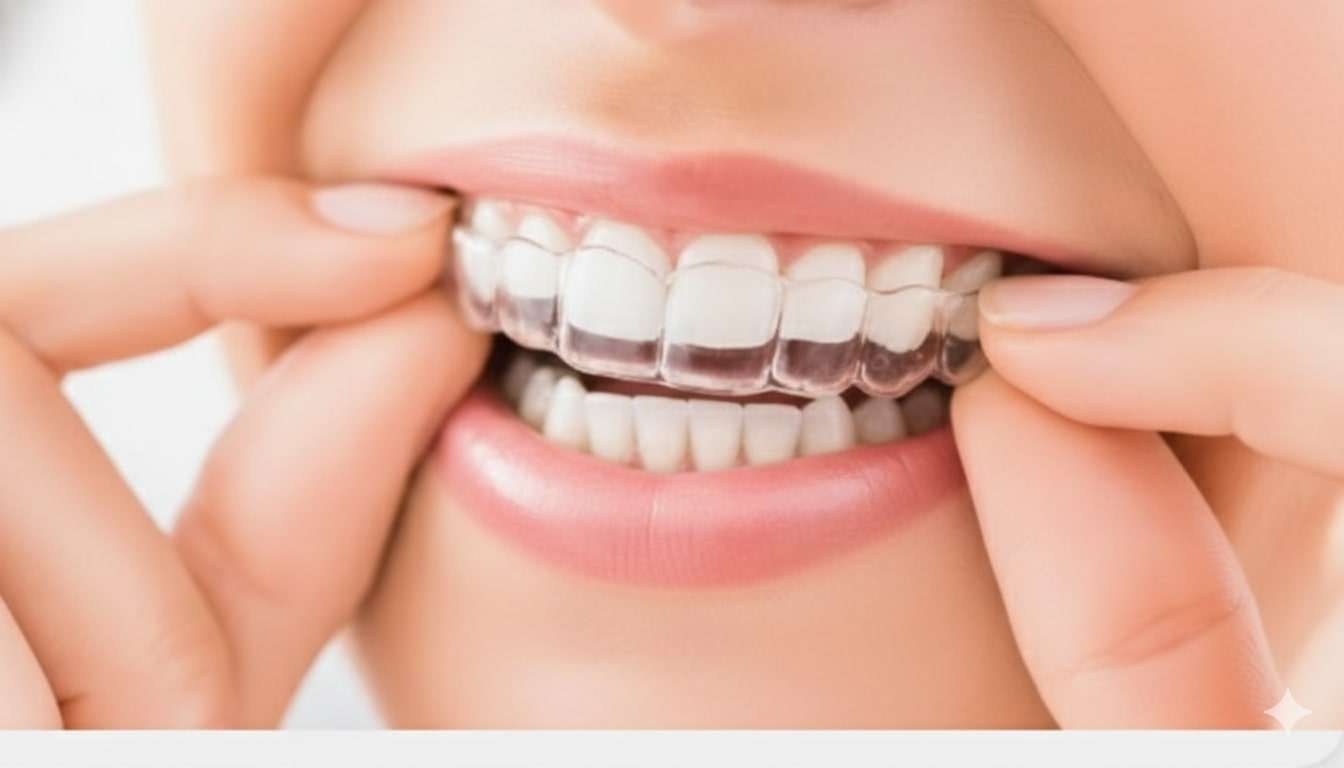
Research comparing the two directly has found that exercise therapy performs at least as well as an occlusal splint (a night-guard-style oral appliance) for pain and jaw range of motion on its own — and that adding exercise therapy to a splint outperforms wearing the splint alone. That lines up with how we think about treatment planning: an oral TMJ appliance works passively, mostly at night, to reduce joint load and interrupt grinding or clenching patterns during sleep, while physical therapy is an active, hands-on approach addressing muscle tension, restricted motion, and postural or cervical contributors during the day. They're solving different parts of the same problem, which is exactly why the strongest outcomes tend to come from combining them rather than picking one.
When PT Is Usually the Right Call
Physical therapy tends to be especially useful when muscle tightness, restricted jaw opening, neck tension, or postural habits are a significant part of the picture — not just joint symptoms in isolation. If your TMD came on alongside or after a period of high stress, poor posture (a lot of desk or phone use), or a neck injury, PT is often a meaningful part of the plan rather than an optional extra.
When an Appliance Alone May Be Enough
For patients whose primary issue is nighttime clenching or grinding with relatively contained muscle involvement, a well-fitted appliance addressing the nighttime load may resolve symptoms without a dedicated PT program. This isn't a hard rule — it depends on the individual exam findings.
Working Together, Not Competing
The strongest outcomes for TMD generally come from combining conservative measures — appliance therapy, physical therapy, habit modification, and sometimes short-term medication or stress management — rather than relying on a single intervention. A thorough TMJ evaluation should identify which combination fits your specific presentation, and can include a referral to a physical therapist experienced with jaw disorders when that's the right next step.
If you're not sure whether your case needs PT, an appliance, or both, a TMJ evaluation is the place to start — and if PT is indicated, we're glad to coordinate a referral rather than trying to make an appliance do a job it isn't suited for.
Sources
- Temporomandibular Joint Dysfunctions: A Systematic Review of Treatment Approaches — González-Sánchez B, García Monterey P, Ramírez-Durán MDV, et al., Journal of Clinical Medicine (2023)
- Temporomandibular Disorders: Rapid Evidence Review — Matheson EM, Fermo JD, Blackwelder RS, American Family Physician (2023)
- Psychological Therapies for Temporomandibular Disorders (TMDs) — Penlington C, Bowes C, Taylor G, et al., Cochrane Database of Systematic Reviews (2022)
- Management of Chronic Pain Secondary to Temporomandibular Disorders: A Systematic Review and Network Meta-Analysis of Randomised Trials — Yao L, Sadeghirad B, Li M, et al., BMJ (2023)
- Effectiveness of Telerehabilitation in Individuals With Myofascial Pain and Temporomandibular Joint Dysfunction: A Randomized Controlled Trial — Fazlıoğlu N, Kara Kaya B, Kütük N, Akıncı B, Journal of Oral Rehabilitation (2026)
- Multimodal Physiotherapeutic Treatment in Adolescents With Temporomandibular Disorders: A Randomised Controlled Trial — Garrett A, Biasotto-Gonzalez DA, Niszezak CM, et al., Journal of Oral Rehabilitation (2025)
- Exercise Therapy Improves Pain and Mouth Opening in Temporomandibular Disorders: A Systematic Review With Meta-Analysis — Idáñez-Robles AM, Obrero-Gaitán E, Lomas-Vega R, et al., Clinical Rehabilitation (2023)
- Effects of Physiotherapy on Pain and Mouth Opening in Temporomandibular Disorders: An Umbrella and Mapping Systematic Review With Meta-Meta-Analysis — Arribas-Pascual M, Hernández-Hernández S, Jiménez-Arranz C, et al., Journal of Clinical Medicine (2023)
- Effectiveness of Manual Therapy Applied to Craniomandibular Structures in Temporomandibular Disorders: A Systematic Review — Asquini G, Pitance L, Michelotti A, Falla D, Journal of Oral Rehabilitation (2022)
- The Effectiveness of Cervical Rehabilitation Interventions for Pain in Adults With Myogenic Temporomandibular Disorders: A Systematic Review and Meta-Analysis — Bednarczyk V, Proulx F, Paez A, Journal of Oral Rehabilitation (2024)
- Occlusal Interventions for Managing Temporomandibular Disorders — Singh BP, Singh N, Jayaraman S, et al., Cochrane Database of Systematic Reviews (2024)
- Effectiveness of Manual Therapy, Exercise, Low-Level Laser Therapy, Ultrasound, and Transcutaneous Electrical Nerve Stimulation in Reducing Pain and Improving Mouth Opening in Temporomandibular Joint Disorders: A Network Meta-Analysis of Randomized Controlled Trials — Lin LH, Hsieh GJ, Lin TY, et al., Medicine (2026)
- Effects of Aerobic Exercise and Strength Training on Nociplastic Pain and Clinical Features in Temporomandibular Disorders With Myalgia: A Randomized-Controlled Trial — Dantony F, Romero-Rodríguez D, Blanco D, et al., Journal of Oral Rehabilitation (2026)
- Accurate Diagnosis and Treatment of Painful Temporomandibular Disorders: A Literature Review Supplemented by Own Clinical Experience — Garstka AA, Kozowska L, Kijak K, et al., Pain Research & Management (2022)
- Headaches and Myofascial Temporomandibular Disorders: Overlapping Entities, Separate Managements? — Conti PC, Costa YM, Gonçalves DA, Svensson P, Journal of Oral Rehabilitation (2016)
- Physical Therapy in Addition to Occlusal Splint in Myogenic Temporomandibular Disorders: A Randomised Controlled Trial — Romeo A, Incorvati C, Vanti C, et al., Journal of Oral Rehabilitation (2024)
- Critical Appraisal of Clinical Trials Evaluating Physical Therapy Treatments for Temporomandibular Disorders: A Scoping Review — Ballesteros-Frutos J, Fernandez-Matias R, Gallardo-Zamora P, Pecos-Martín D, Journal of Oral Rehabilitation (2024)
- Jaw Dysfunction Is Associated with Neck Disability and Muscle Tenderness in Subjects with and without Chronic Temporomandibular Disorders — Silveira A, Gadotti IC, Armijo-Olivo S, Biasotto-Gonzalez DA, Magee D, BioMed Research International (2015)
- Temporomandibular Disorders and Painful Comorbidities: Clinical Association and Underlying Mechanisms — Costa YM, Conti PC, de Faria FA, Bonjardim LR, Oral Surgery, Oral Medicine, Oral Pathology and Oral Radiology (2017)
- Mobility of the Upper Cervical Spine and Muscle Performance of the Deep Flexors in Women With Temporomandibular Disorders — Ferreira MP, Waisberg CB, Conti PCR, Bevilaqua-Grossi D, Journal of Oral Rehabilitation (2019)
- Effect of Manual Therapy and Therapeutic Exercise Applied to the Cervical Region on Pain and Pressure Pain Sensitivity in Patients With Temporomandibular Disorders: A Systematic Review and Meta-Analysis — La Touche R, Martínez García S, Serrano García B, et al., Pain Medicine (2020)
- Craniocervical and Cervical Spine Features of Patients With Temporomandibular Disorders: A Systematic Review and Meta-Analysis of Observational Studies — Cuenca-Martínez F, Herranz-Gómez A, Madroñero-Miguel B, et al., Journal of Clinical Medicine (2020)
- Assessment of Cervical Joint Position Sense and Head Posture in Individuals With Myogenic Temporomandibular Dysfunctions and Identifying Related Factors: A Case-Control Study — Yüzbaşıoğlu Ü, Kaynak BA, Taş S, Journal of Oral Rehabilitation (2025)
- Effects of Combined Jaw and Cervicoscapular Exercises on Mouth Opening and Muscle Properties in Cervical Extension Type — Yu LJ, Yan X, Kim TH, Scientific Reports (2025)
- Effectiveness of Mobilisation of the Upper Cervical Region and Craniocervical Flexor Training on Orofacial Pain, Mandibular Function and Headache in Women With TMD: A Randomised, Controlled Trial — Calixtre LB, Oliveira AB, de Sena Rosa LR, et al., Journal of Oral Rehabilitation (2019)
- Effectiveness of Cervical Stabilization Training in Individuals With Temporomandibular Joint Disorders: A Randomized Controlled Trial — Arslan M, Dursun O, Celenay ST, BMC Musculoskeletal Disorders (2025)
- The Relationship Between Work-Related Stress and Temporomandibular Disorders-Related Symptoms in Japanese Working Population — Moustafa F, Nishiyama A, Ishiyama H, Fueki K, Journal of Oral Rehabilitation (2025)
- Associations Among Temporomandibular Disorders, Chronic Neck Pain and Neck Pain Disability in Computer Office Workers: A Pilot Study — Bragatto MM, Bevilaqua-Grossi D, Regalo SC, Sousa JD, Chaves TC, Journal of Oral Rehabilitation (2016)
- Association Between Physical Activity Levels and Symptoms of Temporomandibular Disorders in Office Workers: A Cross-Sectional Observational Study — da Silva NMN, Calixtre LB, Dos Santos CR, Locks F, Journal of Oral Rehabilitation (2025)
- A Multicomponent Quasi-Experimental Ergonomic Interventional Study: Long-Term Parallel Four-Groups Interventions — Esmaeili R, Shakerian M, Esmaeili SV, et al., BMC Musculoskeletal Disorders (2023)
- Temporomandibular Disorders — Ohrbach R, Sollecito T, Omolehinwa T, et al., in Burket's Oral Medicine, 13th ed. (2021)
Related to This Article
Have a Dental Question of Your Own?
Reach out and we'll help you find the right next step.
Schedule Your Visit Call 212-877-7475