
Night Guard vs. TMJ Appliance: What's Actually the Difference?
Patients often use these two terms interchangeably, but a night guard and a TMJ appliance are built to do different jobs — here's how to tell which one you actually need...
By Dr. Boris Zusin · Published August 18, 2026
“Night guard” and “TMJ appliance” get used almost interchangeably in casual conversation, and patients frequently come in asking for one when what they actually need is the other. Both are worn in the mouth, usually at night, and both can be made of similar materials — but they're built to solve different problems, and the difference matters for whether the device actually helps.
What a Night Guard Is For
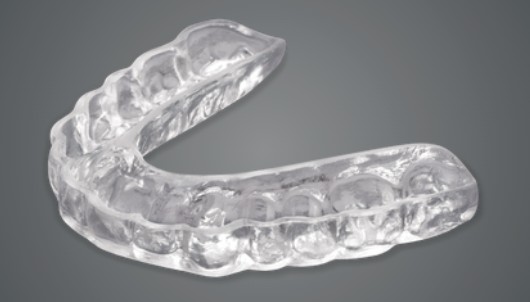
A standard night guard is designed primarily to protect your teeth from the physical force of grinding and clenching (bruxism). It's typically a simple, relatively rigid or semi-rigid shell that fits over the upper or lower arch and creates a barrier between the teeth, absorbing the wear and shock that would otherwise fall directly on your enamel. Its job is damage control for your teeth — it doesn't reposition your jaw joint.
What a TMJ Appliance Is For
A TMJ appliance (sometimes called an occlusal splint or stabilization splint) is designed with a specific bite relationship built into it — the goal is to change how your jaw closes and how much load goes through the temporomandibular joint itself, not just protect the teeth. Depending on the design, it may hold the jaw in a slightly different position, redistribute muscle activity more evenly, or reduce strain on the joint and the muscles that move it. The evidence for stabilization splints in reducing TMD pain and improving jaw function is reasonably well supported, though results vary by patient and splint design.
Same Materials, Different Design
This is where the confusion usually comes from: both devices can look similar — clear or opaque, hard acrylic, custom-fitted to your teeth. The difference is in the specific occlusal (bite) scheme built into the device, which requires a dental evaluation of your jaw joint, muscles, and bite to design correctly. A generic night guard isn't built with that scheme in mind, which is why it may not help — or can occasionally worsen — a true TMJ problem.
Over-the-Counter Versions
“Boil-and-bite” guards from a pharmacy fall into the night-guard category at best, and even there, they're a compromise — generic fit, generic thickness, no adjustment for your actual bite. They're better than nothing for basic tooth protection in a pinch, but they're not a substitute for either a properly fitted custom night guard or a TMJ appliance, and they're not appropriate for someone with real jaw joint symptoms.
How to Know Which One You Need
If your main concern is worn-down, chipped, or sensitive teeth from grinding, with no jaw pain, clicking, or limited opening, a well-fitted night guard is usually the right call. If you're dealing with jaw pain, clicking or popping, morning jaw stiffness, headaches that seem to originate near the temples or jaw, or difficulty opening your mouth fully, that points toward a TMD issue that a standard night guard likely won't resolve — you'd want an evaluation for a proper TMJ appliance instead. See our full rundown of TMJ disorder symptoms if you're not sure which category you fall into.
The Bottom Line
The name on the box (or the name a friend used) doesn't determine what a device actually does — the design does. If you're not sure whether you need simple grinding protection or a joint-specific appliance, that's exactly what a dental evaluation is for, and it's a more reliable starting point than guessing based on what worked for someone else.
Sources
- Efficacy of Stabilisation Splint Treatment on Temporomandibular Disorders — Niemelä K, Korpela M, Raustia A, Ylöstalo P, Sipilä K, Journal of Oral Rehabilitation (2012)
- Occlusal Interventions for Managing Temporomandibular Disorders — Singh BP, Singh N, Jayaraman S, et al., Cochrane Database of Systematic Reviews (2024)
- Diagnosis and Treatment of Temporomandibular Disorders — Gauer RL, Semidey MJ, American Family Physician (2015)
Related to This Article
Have a Dental Question of Your Own?
Reach out and we'll help you find the right next step.
Schedule Your Visit Call 212-877-7475