Pain When Biting Down on One Tooth: What It Usually Means
Pain that shows up specifically when you bite down, isolated to one tooth, is a different diagnostic pattern than general sensitivity — and it usually points to one of three specific causes. Here's how to tell them apart...
By Dr. Boris Zusin · Published August 27, 2026
Pain isolated to a single tooth, specifically triggered by biting or chewing pressure, is a meaningfully different pattern than the more diffuse sensitivity a lot of people describe from cold drinks or sweets. Bite-triggered pain in one specific tooth almost always points to one of three localized problems: a filling sitting slightly too high, a crack in the tooth, or an infection at the root. Telling them apart matters, because the fix for each one is different.
A Filling (or Crown) That's Sitting Too High
If the pain started right after a filling or crown was placed, this is the first thing to suspect. Even a fraction of a millimeter of extra height on a new restoration concentrates your full bite force onto that one spot every time you close down, which inflames the ligament around the tooth's root. It's a mechanical problem, not a sign anything is wrong with the tooth itself, and it's usually simple to fix: a quick adjustment to lower the restoration typically resolves it within a day.
A Cracked Tooth
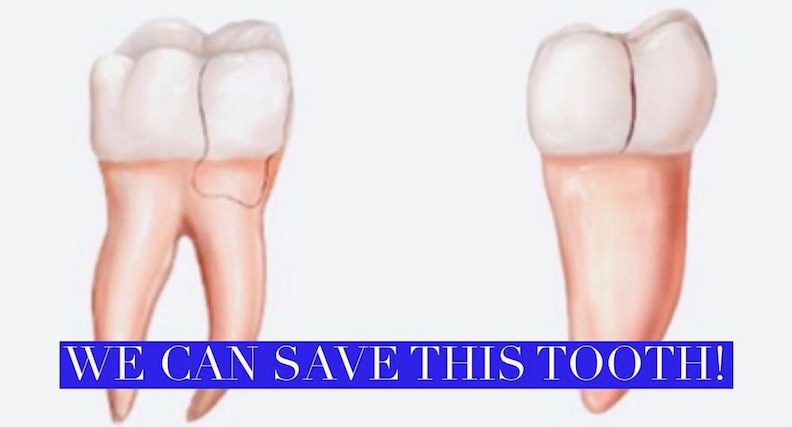
A crack that runs into the tooth's dentin (the layer beneath the enamel) tends to cause a very specific symptom: a sharp, sometimes electric jolt of pain right when you bite down, particularly on release of the bite rather than during steady pressure — a pattern clinically known as cracked tooth syndrome. The crack itself can be genuinely hard to see, even on an X-ray, since it often runs vertically through the tooth rather than showing up as an obvious line. A crack matters because it opens a pathway for bacteria to reach the nerve, and left untreated, it can progress to a full split or a nerve infection. Depending on the crack's depth and direction, treatment ranges from a crown (to hold the tooth together and stop the crack from spreading) to a root canal if the nerve is already involved, or in the most severe cases, extraction if the crack extends below the gumline.
An Abscess (Infection at the Root)
If the pain has been building over days rather than appearing suddenly, especially if it's now accompanied by lingering pain after you bite (not just a quick jolt), swelling, or tenderness when you tap the tooth, an infection at the root tip is a real possibility. Bite pain from an abscess happens because the infection has caused inflammation in the ligament and bone around the root, which then reacts to pressure. This is the pattern most likely to also come with a parulis (a small bump draining on the nearby gum) or facial swelling if it progresses. It requires root canal treatment or extraction — there's no home remedy that resolves an active infection.
Distinguishing Between the Three
A few clues help sort out which one you're dealing with before you're even seen:
- Timing since a dental procedure — pain that started right after a filling or crown points strongly toward a high bite.
- Sharp vs. lingering — a quick, sharp jolt on release of the bite suggests a crack; pain that lingers well after you stop biting suggests nerve involvement, whether from a crack or an infection.
- Swelling or a bump on the gum — this points toward infection rather than a high filling or a simple crack.
- Sensitivity to cold as well as biting — more consistent with a crack reaching the dentin than with a purely mechanical high spot.
These are useful clues, not a substitute for an exam — a bite test, dye staining, transillumination (shining a light through the tooth to reveal a crack), and an X-ray are what actually confirm the diagnosis, since a filling adjustment, a crack, and an abscess can genuinely feel similar from the inside.
When to Be Seen Soon vs. Right Away
If the pain is mild and just started, it's reasonable to call and get on the schedule within the next few days. If you have swelling, a fever, pain that's escalating rather than staying steady, or pain that wakes you up at night, that combination points toward an infection that's worth being seen for urgently rather than waiting it out.
Frequently Asked Questions
Usually not. Many cracks are invisible to the naked eye and don't show up clearly on a standard X-ray, since they often run vertically through the tooth rather than across it. Diagnosis relies more on your symptom pattern, a bite test, and sometimes dye or transillumination than on what the tooth looks like.
It depends on the cause. A high filling won't resolve on its own — it needs an adjustment. A crack won't heal itself and can progress if untreated. An infection will not resolve without treatment and can worsen. None of the three causes of isolated bite pain reliably improve without a dentist addressing the actual source.
Being able to chew on the opposite side doesn't mean it's not urgent — it just means you've adapted around the pain. Swelling, fever, or pain that's getting worse are the signals that matter for urgency, not whether you can still eat elsewhere.
A normal X-ray doesn't rule out a crack — cracks are frequently invisible on standard imaging, especially early on. If your symptom pattern strongly suggests cracked tooth syndrome despite a clear X-ray, that's still worth taking seriously and monitoring or treating based on the clinical picture.
Sources
- Cracked Tooth Syndrome — Rechand F, Rethman M, StatPearls, NCBI Bookshelf, National Institutes of Health (2024)
- Cracked Tooth Diagnosis and Treatment: An Alternative Paradigm — Mamoun JS, Napoletano D, European Journal of Dentistry (2015)
- Cracked Tooth (Fractured Tooth) — Cleveland Clinic (2024)
Related to This Article
Have a Dental Question of Your Own?
Reach out and we'll help you find the right next step.
Schedule Your Visit Call 212-877-7475