Metallic Taste in Your Mouth: Dental and Medical Causes Explained
A metallic taste can come from a lot of places, dental and otherwise — from an old filling to a medication side effect. Here's how to work through the possibilities, including the rare ones worth not missing...
By Dr. Boris Zusin · Published August 24, 2026 · Updated August 30, 2026
A persistent metallic taste is easy to dismiss, but it can have a genuine dental cause worth ruling out — especially if it's new or hasn't gone away on its own. The medical term for a distorted or unpleasant taste is dysgeusia, and while a handful of dental causes are common enough to check first, the full list of possible causes is broader than most people expect — medications alone are the single most commonly identified cause across taste-disorder cases overall.
Older Metal Fillings or Crowns — and a "Battery in Your Mouth" Effect
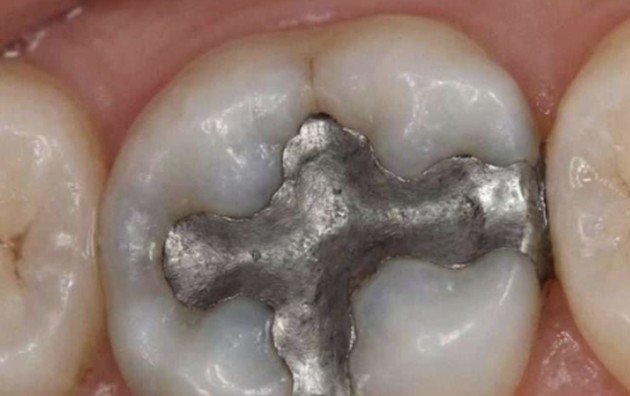
Older amalgam (silver) fillings or metal crowns can occasionally contribute to a lingering metallic taste, particularly if a filling is worn, cracked, or in contact with a different metal restoration elsewhere in your mouth. When two dissimilar metals — say, a gold crown and an amalgam filling — are both bathed in saliva, saliva can act as an electrolyte and create a small electrical (galvanic) current between them, similar in principle to a battery. Research on dental alloys has documented this galvanic corrosion effect between dissimilar metals in the mouth, and patients sometimes notice it as a metallic or salty taste, or occasionally a brief tingling sensation. Replacing an aging or reactive metal filling with a tooth-colored composite one resolves this for a lot of patients.
Gum Inflammation or Infection
Bleeding gums — even mild bleeding you might not notice while brushing — can introduce a subtle metallic taste, since blood itself carries that flavor. This is one of the more common early signs of gum disease: as gingivitis progresses, gum tissue becomes more prone to bleeding with normal brushing or flossing, and that low-grade bleeding is often what patients are tasting without realizing it. A dental infection, or oral thrush (candidiasis) — more common with dry mouth, dentures, recent antibiotics, steroid inhalers, or diabetes — can contribute in a similar way.
A New Filling or Crown Settling In
It's common to notice a mild metallic or unusual taste for a few days right after a new filling or crown is placed, as your mouth and bite adjust. This is usually temporary and resolves on its own within a week or two; a taste that persists well beyond that is worth mentioning at a follow-up.
Medications: the Single Most Common Cause Overall
Across taste-disorder cases in general, a medication side effect is the most frequently identified explanation. A genuinely long list of common drugs is well documented to cause a metallic or bitter taste, including metronidazole (a common antibiotic), ACE inhibitor blood pressure medications like lisinopril and captopril, several calcium channel blockers, acetazolamide, certain antifungals, lithium, topiramate, losartan, and metformin, which causes a taste disturbance in roughly 1 in 10 to 1 in 100 people who take it. Some chemotherapy drugs are well-known culprits too. The taste change often starts early — sometimes with the very first dose — and typically fades within a few weeks of stopping the medication. If a metallic taste started around the same time as a new prescription, that timing is usually the biggest clue, and it's worth mentioning to whichever provider prescribed it before assuming it's dental.
Dry Mouth, Sinus Congestion, and Post-Viral Taste Changes
Dry mouth (xerostomia) is one of the strongest individual risk factors for a distorted sense of taste, whether it's caused by medication, a health condition like Sjögren's syndrome, or prior radiation treatment. Sinus infections and ordinary upper respiratory infections can also blunt or distort taste temporarily. A more recent and well-documented example is COVID-19: taste changes affected roughly 45–50% of people during acute infection, and while most people recover within about two weeks, a meaningful share — over 8% in pooled data — still have some taste disturbance three months or more afterward.
Acid Reflux (GERD)
Stomach acid making its way back up the esophagus can produce a phantom taste that's often sour but sometimes metallic, and it frequently comes with a telltale sign we can actually see in the mouth: erosion of the tooth enamel, especially on the back (tongue-side) surfaces of the upper teeth. If reflux symptoms and a metallic taste are showing up together, that's a pattern worth mentioning to your physician — and if enamel erosion is part of the picture, here's how we manage that from the dental side while your reflux itself is treated medically.
Nutritional Deficiencies
Low zinc is a recognized cause of taste disturbance, and can be assessed with a blood zinc level (sometimes alongside a copper-to-zinc ratio, which can help clarify a borderline result). Iron deficiency and vitamin B12 deficiency are also associated with taste changes, and both are checked with routine bloodwork. Pregnancy is its own common, self-limited cause of taste change and doesn't usually need any workup at all.
When It Could Be Something More Serious
Most causes of a metallic taste are benign, but a small number of causes are worth not missing, particularly if the taste persists, comes with other symptoms, or doesn't fit any of the patterns above. Heavy metal exposure — lead, mercury, arsenic, or cadmium — can cause a metallic taste alongside nonspecific gut, nerve, skin, or kidney symptoms, and is worth mentioning if you have relevant occupational, hobby (like soldering or older paint), or well-water exposure; it's confirmed with a targeted blood or urine test. Chronic kidney disease can cause a metallic taste through a buildup of waste products the kidneys would normally clear, checked with routine kidney function bloodwork. Rarely, a brain lesion affecting the pathways involved in taste can be responsible, and this possibility is taken seriously when a metallic taste comes with a new headache pattern, other neurological symptoms, or a history of head trauma — that combination warrants imaging and a referral, not something we'd manage from the dental chair.
Because the list runs from completely benign to genuinely important not to miss, the right approach is layered: rule out the dental causes first since they're the most direct thing we can actually check and treat, then loop in your physician if the exam comes back clean and the taste persists — especially if it's new, ongoing beyond a couple of weeks, or paired with any of the symptoms above.
Wondering if an old filling is the cause? Learn more about what's actually in older fillings or tooth-colored filling options.
Sources
- Galvanic Corrosion of Dental Cobalt-Chromium Alloys and Dental Amalgam in Artificial Saliva — van Vuuren LJ, Odendaal JS, Pistorius PC, SADJ (South African Dental Journal) (2008)
- Periodontal Disease — Gasner NS, Schure RS, StatPearls, NCBI Bookshelf, National Institutes of Health (2023)
- Taste Disorders — National Institute of Dental and Craniofacial Research (NIDCR), National Institutes of Health
- A Review and Guide to Drug-Associated Oral Adverse Effects — Dental, Salivary and Neurosensory Reactions. Part 1 — Teoh L, Moses G, McCullough MJ, Journal of Oral Pathology & Medicine (2019)
- Taste Dysfunction as a Predictor of Depression in Schizophrenia: A Systematic Review and Meta-Analysis — Liu J, Sun SJ, Lu Y, et al., PLoS One (2023)
- Oral Manifestations of Commonly Prescribed Drugs — Glick A, Sista V, Johnson C, American Family Physician (2020)
- Taste Dysfunction: A Practical Guide for Oral Medicine — Cowart BJ, Oral Diseases (2011)
- Clinical and Physiological Investigations in Patients With Taste Abnormality — Osaki T, Ohshima M, Tomita Y, Matsugi N, Nomura Y, Journal of Oral Pathology & Medicine (1996)
- Interventions for Managing Taste Disturbances — Kumbargere Nagraj S, George RP, Shetty N, et al., Cochrane Database of Systematic Reviews (2017)
- Taste Changes (Dysgeusia) in COVID-19: A Systematic Review and Meta-Analysis — Aziz M, Perisetti A, Lee-Smith WM, et al., Gastroenterology (2020)
- Oral Manifestations in the Post COVID-19 Condition: A Systematic Review With Meta-Analysis — Avais LS, Pacheco EC, Gomes LPOZ, et al., Reviews in Medical Virology (2025)
- ACG Clinical Guideline: Malnutrition and Nutritional Recommendations in Liver Disease — Singal AK, Wong RJ, Dasarathy S, et al., The American Journal of Gastroenterology (2025)
- Validity of the Copper/Zinc Ratio as a Diagnostic Marker for Taste Disorders Associated With Zinc Deficiency — Yanagisawa H, Kawashima T, Miyazawa M, Ohshiro T, Journal of Trace Elements in Medicine and Biology (2016)
- Iron Deficiency in Adults — Auerbach M, DeLoughery TG, Tirnauer JS, The Journal of the American Medical Association (2025)
- Elementary Overview of Heavy Metals — Jannetto PJ, Cowl CT, Clinical Chemistry (2023)
- Clinical and Forensic Signs Resulting From Exposure to Heavy Metals and Other Chemical Elements of the Periodic Table — de Carvalho Machado C, Dinis-Oliveira RJ, Journal of Clinical Medicine (2023)
- Smell and Taste Disorders in Primary Care — Savard DJ, Ursua FG, Gaddey HL, American Family Physician (2023)
Related to This Article
Have a Dental Question of Your Own?
Reach out and we'll help you find the right next step.
Schedule Your Visit Call 212-877-7475