
TMJ Exercises: Jaw Stretches That Can Help (and What the Evidence Actually Shows)
A handful of gentle jaw exercises are commonly recommended for TMD — here's what they involve, what the research actually supports, and when to stop and get evaluated instead...
By Dr. Boris Zusin · Published August 22, 2026
A handful of gentle jaw exercises — a partial-opening “goldfish” stretch, jaw glides, light resisted opening, and a tongue-up rest position — are commonly recommended for muscle-related TMD pain, done gently for a few repetitions, several times a day. There's a reasonable clinical case for trying them, but it's worth understanding both what they can realistically do and what the research actually supports before relying on them alone.
What the Evidence Says
A systematic review of exercise therapy for pain-related TMD found that coordination exercises showed the most consistent benefit for pain relief and jaw mobility, with stretching, controlled-opening, and resistance exercises also showing positive effects in the available studies. The honest caveat: the underlying evidence base is still small and of relatively low certainty, so these findings should be read as promising rather than definitive. That said, there's clinical consensus that jaw exercises are reasonable to recommend for muscle-related jaw pain (myalgia), restricted opening from tight jaw-closing muscles, and certain disc-displacement presentations.
4 Gentle TMJ Stretches for Jaw Pain Relief
- Tongue-Up Rest Position. Rest your tongue gently on the roof of your mouth just behind your front teeth, lips together, teeth slightly apart. This is the jaw's natural resting position — many people with TMD unconsciously clench or rest their teeth together throughout the day, and retraining this habit as your default is one of the simplest things you can do. Hold it as often as you remember to.
- The Goldfish Exercise (Partial Opening). With your tongue on the roof of your mouth, slowly open your mouth about halfway, keeping the movement smooth and symmetrical, then close. 5–6 repetitions, a few times a day. The goal is a controlled, even motion rather than range for its own sake — stop well before any point that causes sharp pain or catching.
- Side-to-Side and Forward Jaw Glides. Gently move your lower jaw side to side, and then gently forward and back, staying within a comfortable range. 5–6 repetitions in each direction, a few times a day. These target coordination of the muscles that guide jaw movement.
- Light Resisted Opening/Closing. Place gentle thumb or finger resistance under the chin while slowly opening, or resistance against the front teeth while slowly closing. 5–6 repetitions, a few times a day. This should stay light, not a maximal-effort exercise — it's meant to build controlled strength, not push through resistance.
Consistency matters more than intensity. These are not exercises meant to push through pain or force a stuck jaw open; steady, low-effort repetition several times a day is the model that shows up in the research.
When Stretches Aren't Enough
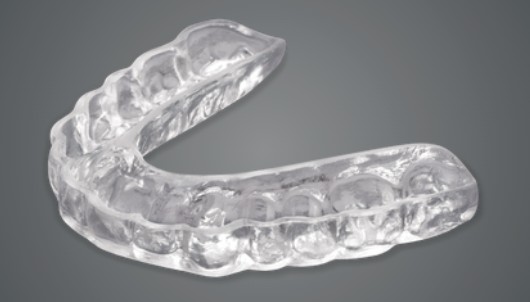
While stretching relieves acute muscular tightness, chronic jaw clicking, clenching, or morning headaches often point to nighttime bruxism or joint instability that stretching alone won't resolve — that's usually a sign it's time for a custom night guard or stabilizing appliance rather than more exercises. Stop and see a dentist if exercises consistently increase your pain, if your jaw locks (open or closed) and won't release, or if you notice new or worsening clicking, popping, or swelling.
Exercises Work Best as Part of a Plan
On their own, jaw exercises tend to help most with muscle tension and mobility. For symptoms driven more by joint load, nighttime clenching, or disc position, they're usually paired with other conservative measures — an oral appliance for nighttime protection, guided physical therapy for a more structured hands-on approach, or the everyday habit changes covered in our TMJ self-care guide.
If you're not sure which exercises are appropriate for your specific symptoms, that's a reasonable thing to ask about at a TMJ evaluation rather than guessing from a general list.
Sources
- Effectiveness of Exercise Therapy on Pain Relief and Jaw Mobility in Patients with Pain-Related Temporomandibular Disorders: A Systematic Review — Shimada A, Ogawa T, Sammour SR, Narihara T, Kinomura S, Koide R, Noma N, Sasaki K, Frontiers in Oral Health (2023)
- Temporomandibular Joint Dysfunctions: A Systematic Review of Treatment Approaches — González-Sánchez B, García Monterey P, Ramírez-Durán MDV, et al., Journal of Clinical Medicine (2023)
- Temporomandibular Disorders: Rapid Evidence Review — Matheson EM, Fermo JD, Blackwelder RS, American Family Physician (2023)
Related to This Article
Have a Dental Question of Your Own?
Reach out and we'll help you find the right next step.
Schedule Your Visit Call 212-877-7475