Restorative Dentistry in NYC: Which Treatment Do You Actually Need?
Fillings, crowns, bridges, implants, dentures, root canals — restorative dentistry covers a lot of ground. Here's how to think about which category your tooth actually falls into...
By Dr. Boris Zusin · Published August 29, 2026
"Restorative dentistry" is one of those terms that gets used constantly but rarely explained — it's the umbrella category covering any treatment that repairs a damaged tooth or replaces a missing one. If you've been told you need "restorative work" and aren't sure what that actually means for your specific case, here's a plain-language walk-through of the main options and how a dentist decides which one applies.
The Core Categories
Restorative dentistry breaks down into a handful of main treatments, roughly in order of how much of the tooth is involved:
- Tooth-colored fillings — for a cavity, small chip, or crack where enough healthy tooth structure remains. Usually a single visit. See Tooth-Colored Fillings.
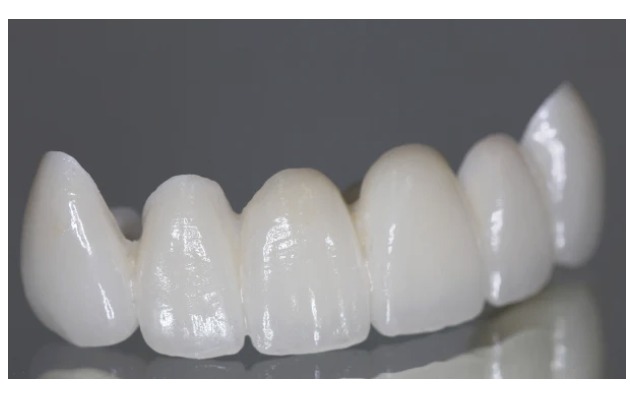
- Crowns — for a tooth that's lost too much structure to reliably hold a filling, often after a large cavity, fracture, or root canal. See Crown and Bridges.
- Bridges — replace one or more missing teeth using the neighboring teeth as anchors.
- Root canal treatment — removes infected or inflamed tissue inside a tooth so the tooth can be saved instead of extracted, usually followed by a crown. See Root Canal Treatment.
- Dental implants — a titanium post placed in the jawbone that replaces a missing tooth's root, topped with a crown, bridge, or denture. See Dental Implants.
- Dentures — full, partial, or implant-supported prosthetics for patients missing some or all of the teeth in an arch. See Dentures.
How a Dentist Decides Which One You Need
The guiding principle is to start with the least invasive option that will actually hold up, and escalate only as far as the tooth genuinely requires. A small cavity gets a filling, not a crown — jumping straight to a crown would mean removing healthy tooth structure unnecessarily. A cracked tooth with enough remaining structure gets a crown rather than an extraction. A missing tooth gets evaluated for an implant before defaulting to a bridge, which requires cutting down two healthy neighboring teeth to serve as anchors. That sequencing is what separates a plan built around your specific tooth from one built around a single default procedure applied to every case.
Restorative vs. Cosmetic Dentistry — What's the Actual Difference?
These categories overlap constantly in practice, which is part of why the terminology gets confusing. A crown restores a broken tooth's function and improves how it looks; a composite filling repairs decay while staying invisible. The real distinction is intent: restorative dentistry is oriented around function and health — can you chew normally, is the tooth protected, is an infection resolved — while purely cosmetic treatments like whitening or veneers on already-healthy teeth are oriented around appearance alone. If your goal is more about how your smile looks overall, our Smile Makeover page covers that side of things.
What It Typically Costs in NYC
Cost depends entirely on which category your tooth falls into. As a general reference point in New York City: a composite filling typically runs a few hundred dollars, a crown roughly $1,200–$2,500, a traditional bridge about $2,500–$6,000, a full or partial denture about $600–$3,000 per arch, and a single-tooth implant with crown often $4,000–$6,000 or more. See our crown and bridge cost breakdown and denture cost guide for more detail on those specific categories.
Can Every Damaged Tooth Be Saved?
Most damaged teeth can be restored with the right combination of treatment — a filling, a crown, or a root canal followed by a crown. Extraction is reserved for teeth with damage or infection too extensive to reliably restore, and even then, the conversation includes what replaces the tooth afterward, not just the extraction itself.
Frequently Asked Questions
General dentists handle most restorative treatment — fillings, crowns, bridges, and dentures. Root canal treatment and dental implant placement are typically referred to specialists (an endodontist and oral surgeon or periodontist, respectively), with your general dentist coordinating the plan and handling the restorative side, like the crown that follows a root canal.
It varies widely by treatment. A filling is usually one visit. A crown typically takes two visits over 1–2 weeks. A bridge follows a similar timeline to a crown. Implants and implant-supported dentures take the longest, often several months total, since the implant needs time to integrate with the jawbone before the final restoration is placed.
Most restorative procedures are done under local anesthesia and are no more uncomfortable than a routine filling. Some mild soreness or sensitivity afterward is normal and typically resolves within a few days.
Sources
- Restorative Dentistry: What It Is, Types & Procedures — Cleveland Clinic
Related to This Article
Have a Dental Question of Your Own?
Reach out and we'll help you find the right next step.
Schedule Your Visit Call 212-877-7475