How to Clean Invisalign Aligners and Retainers
Clear aligners and retainers go cloudy and start smelling fast if they're only rinsed. Here's the routine that actually keeps them clear, clean, and undamaged...
By Dr. Boris Zusin · Published September 5, 2026
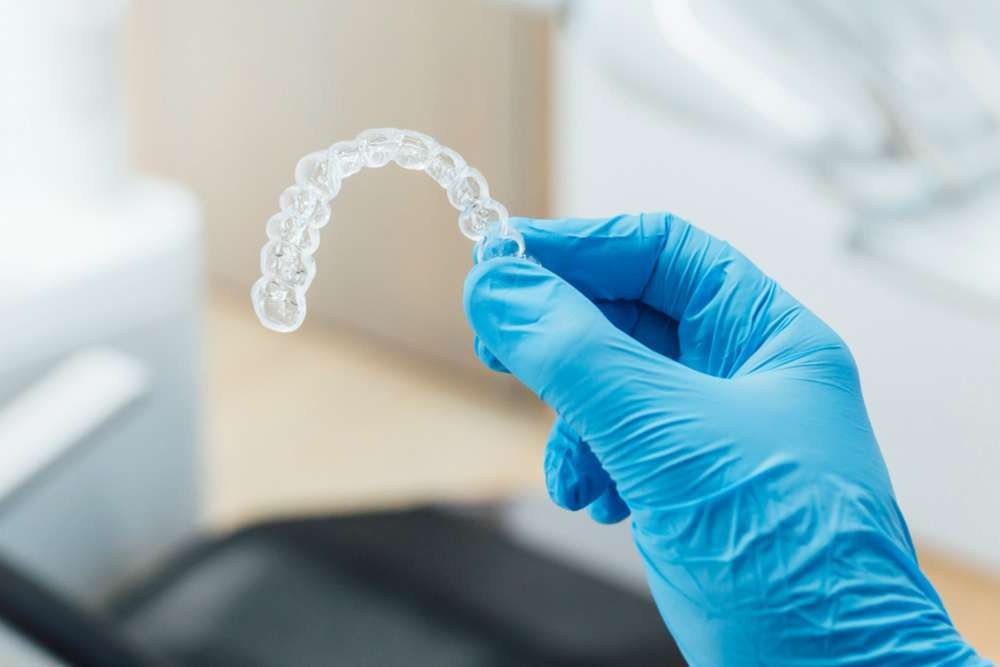
Clear aligners and thermoplastic retainers only stay clear if you clean them the right way. Rinsing alone isn't enough — it leaves behind the thin bacterial film that makes trays go cloudy, smell, and eventually stain. The good news: the routine that actually works takes just a couple of minutes a day.
Rinse Every Time You Take It Out
Use cool water only — never hot. Hot water (including a hot tap, or running it through the dishwasher) warps thermoplastic material, which changes how the tray fits from that point on.
Brush Gently, Once or Twice a Day
A soft toothbrush and a plain, non-abrasive toothpaste is fine. Skip whitening toothpaste or anything abrasive — it's rough enough to leave tiny scratches in the clear plastic, and those scratches are exactly where bacteria collect and where staining starts.
Add a Chemical Soak
Brushing alone leaves a film that plain scrubbing can't fully remove. A few times a week (or daily, if you tend toward buildup), soak the aligner or retainer in a manufacturer cleaning product or an effervescent retainer/denture-cleaning tablet, following the label's soak time — usually 5–15 minutes in a glass of cool water. Rinse thoroughly afterward before putting it back in. Combining brushing with this kind of soak gets trays measurably cleaner than either step alone, without damaging the surface the way harsher methods can.
What to Avoid
- Hot water or heat of any kind — warps the material and changes the fit.
- Whitening or abrasive toothpaste — scratches the clear plastic.
- Soaking longer than the product's label says — leaving a tray in a cleaning solution far past the recommended time (overnight, for example) can actually degrade some aligner materials rather than just cleaning them more thoroughly.
- Colored or alcohol-based mouthwash as a routine soak — can discolor and damage the plastic over time.
Storing Them When They're Out of Your Mouth
Always use the case — never a napkin, tissue, or loose pocket, which is how trays get thrown away by accident or cracked. Keep the case away from heat, including car dashboards and radiators.
A Quick Note If You Tend to Build Up Plaque Fast
If your retainers or aligners seem to cloud up or smell despite a consistent routine, a household ultrasonic cleaner used with a diluted chlorhexidine rinse has been shown to clean more thoroughly than brushing or soaking alone, without harming the material's color or surface. Worth asking about at your next visit if this is a recurring issue for you.
For the full picture on wear time, switching trays, and what to do if one is lost or cracked, see our complete Invisalign care instructions.
Sources
- The Effectiveness of Different Cleaning Methods for Clear Orthodontic Aligners: Impacts on Physical, Mechanical, and Chemical Properties — an In Vivo Study — Alweneen A, Alqahtani N, Polymers (2025)
- Effectiveness of Household Ultrasonic Cleaning With Chemical Agents on Thermoplastic Retainers: A Clinical Study — Sambhavaphol P, Torrungruang K, Premsuriya N, et al., American Journal of Orthodontics and Dentofacial Orthopedics (2025)
- Effects of Cleaning Protocols on Surface Roughness and Optical Properties of Thermoplastic Orthodontic Retainers — Huang X, Jia A, Peng M, et al., Clinical Oral Investigations (2025)
Related to This Article
Have a Dental Question of Your Own?
Reach out and we'll help you find the right next step.
Schedule Your Visit Call 212-877-7475