
Rotation, Torque, and Deep Bites with Clear Aligners: Which Tools Actually Help?
Rotating round teeth, pulling a tooth down, and tipping a root are the hardest movements for any clear aligner. Here's what the research says about attachments, IPR, bite ramps, and mini-screws, and why refinements are normal...
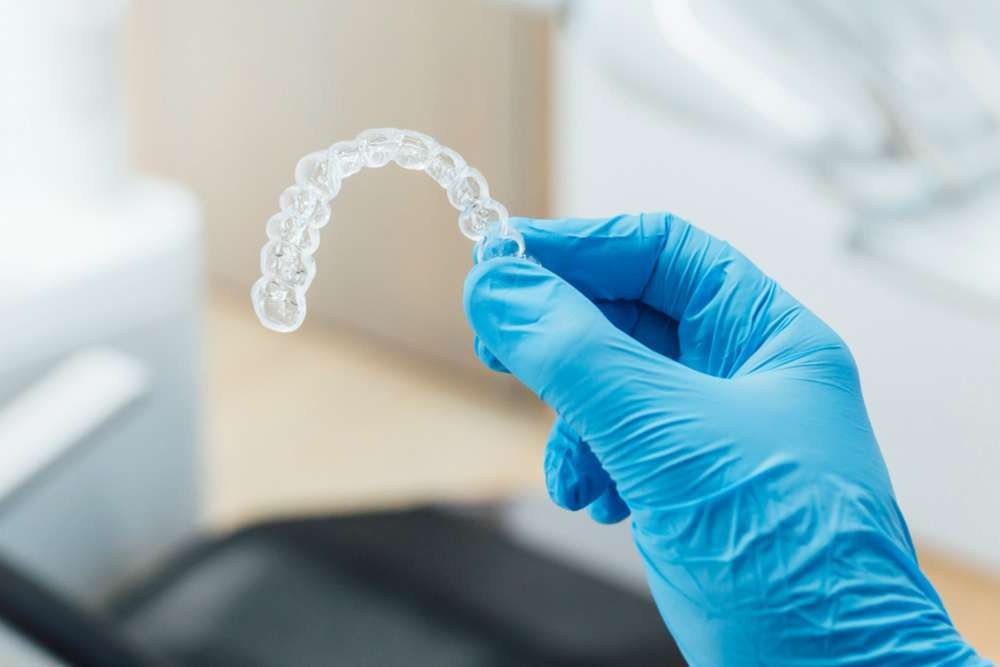
By Dr. Boris Zusin · Published October 10, 2026
Clear aligners are very good at some tooth movements and noticeably less good at others. If your case involves rotating round teeth, pulling a tooth down into place, or tipping the root of a tooth, the research is clear that results depend far less on the logo on the box than on how the case is planned and which extra tools are used alongside the aligners. Here's what those tools are and why they matter.
Dr. Zusin is an Invisalign® Preferred Provider. We've tried to describe what the research says, including its limits, rather than to promote a brand.
Which Movements Are Hard?
Across every system studied, movements fall into a rough order of predictability:
- Tipping (leaning a tooth) is the most predictable.
- Bodily translation (sliding a whole tooth sideways) comes next.
- Rotation, extrusion, intrusion, and torque (rotating round teeth, pulling a tooth down, pushing one up, or tilting the root) are the least predictable.
Round-shaped canines and premolars are the teeth that rotate least accurately, and orthodontists rate extrusion and root torque as the single hardest movements. In published data on Invisalign, accuracy has been reported at roughly 50% overall, 46% for rotation, and 35% for pushing the lower front teeth down. These are not marketing numbers, and they're low, which is why more than 70% of cases in the research needed at least one refinement, most often because of rotation, extrusion, or torque on the front teeth.
Does the Brand Matter for These Movements?
Less than you'd think, and the evidence is thinner than people assume. Invisalign has the largest body of published accuracy data and the most developed set of built-in features for difficult movements. In a survey of orthodontists, those who were confident treating severe cases disproportionately used Invisalign. One direct comparison with 3M Clarity found comparable results for mild to moderate cases, but Clarity under-corrected rotations on several teeth, and the biggest errors in both systems were rotational and vertical. Other systems, including SureSmile, ClearCorrect, and in-house printed aligners, have less high-quality evidence on complex movements, which doesn't mean they perform worse, only that it hasn't been tested as thoroughly.
No system has been shown to be better than the others at rotation, extrusion, or torque in head-to-head trials. For more on how the systems compare, see Invisalign vs. Other Clear Aligners.
The Tools That Improve the Odds
Aligners work best when the plan adds extras that help the plastic grip the tooth, make room for it, or give it something stable to push against. The main ones:
Attachments
These are small tooth-colored bumps bonded to the teeth. They're the single most important add-on, because they let the aligner apply a twisting force to rotate a tooth or a firm grip to pull one down. Their shape and position change how much force reaches the tooth, and whether a tooth had an attachment is one of the better predictors of whether that tooth needed a refinement later.
Interproximal reduction (IPR)
This means polishing a hair of enamel from between teeth to make room. A rotating tooth needs space to turn into, and the evidence behind IPR for rotation is modest, so it's one helpful lever among several, not a fix on its own.
- How much it helps. A review reported canine rotation accuracy rising from roughly 36% to 43% when IPR is done alongside the rotation. But in the original prospective Invisalign study (53 canines), average accuracy was about 36% and there was no statistically significant difference between using attachments only, IPR only, or neither.
- Timing. The usual thinking is to stage IPR to coincide with the rotation steps rather than strip everything at the start. The aligner uses the contact between neighboring teeth as a pivot to express the rotation, so removing all of it too early takes away something the aligner pushes against. This reasoning is a clinical interpretation more than a proven rule.
- Small steps. A computer model of a rotated lower premolar suggested that each aligner shouldn't ask for more than about 1.2 degrees of rotation for a round tooth, with larger steps producing unphysiologic stress on the ligament around the tooth. That's why rotation is spread over many aligners.
- Accuracy of the reduction itself. The amount of enamel actually removed often falls short of what was planned, particularly on lower canines. Using burs, a measuring gauge, and sometimes beginning to align the teeth first so the contacts open up all improve precision.
- It's often repeated at refinement. In one analysis, close to 40% of all prescribed IPR sites occurred in refinement plans, and about 45% of patients had IPR re-prescribed at the same site more than once, mostly in the lower front teeth. Staged, repeated IPR is a normal part of treatment.
Wondering how much enamel is actually removed and whether it's safe? See IPR: How Much Enamel Is Removed, and Is It Safe?
Bite ramps
For deep bites, small ramps behind the upper front teeth lift the back teeth apart slightly so the front teeth can be moved up and the curve of the bite leveled. See our guide to bite types.
Overcorrection and careful staging
Because aligners tend to under-deliver, plans often program a bit more movement than needed. Sequencing the predictable movements first and the harder ones later also affects the result, especially for vertical changes.
Elastics and precision cuts
Small rubber bands attached to cut-outs or buttons help the aligners seat fully and assist with front-to-back and vertical control.
Power ridges
These are built into the plastic behind the front teeth to apply the twisting force that controls the angle of the root.
Mini-screws (TADs)
For the hardest situations, such as closing extraction spaces, moving back teeth, or pulling an impacted canine into place, a tiny temporary screw in the bone provides a fixed anchor for the aligners to work against. Case reports describe using them with aligners to guide an impacted canine into position, and palatal placement has been reported to last longer than placement between the roots on the cheek side. Mini-screw placement and these complex cases often involve an orthodontist or oral surgeon as part of the team.
One Tooth in Detail: The Rotated Canine
Canines are the classic hard case. They're round and cone-shaped, so a smooth aligner tends to slip over them instead of gripping and turning them. An attachment gives the plastic something to push against, and its shape and angle make a measurable difference.
- Manufacturer-designed “optimized” rotation attachments did better than plain rectangles. In a study of 75 lower canines treated with Invisalign SmartTrack, the programmed rotation was achieved about 81.5% of the time with optimized attachments (changing aligners weekly), about 76.5% with optimized attachments (every two weeks), and about 63.1% with conventional vertical rectangular attachments. Switching between weekly and two-weekly wear made no significant difference, and no setup reached the level of accuracy the authors considered clinically equivalent.
- The angle of a crescent-shaped attachment may matter. In a study of 78 upper canines needing more than 10 degrees of rotation, accuracy averaged about 55% with vertical crescents, 62% with horizontal ones, and 65% with oblique ones. The overall difference between the groups wasn't statistically significant, so this is a trend, not a rule.
- Attachment type isn't everything. A study of 461 rotated teeth found that how well a rotation worked out depended mainly on how much rotation was planned, how much space was available, the direction of the turn, whether elastics were used, and the crown's shape, rather than on which attachment type was used.
The practical takeaway is that canine rotation is typically only partly achieved (often cited around 50–75%), so planning usually combines a well-chosen attachment, a little IPR for space, some built-in overcorrection, and an expected refinement. Two attachments on the same tooth (front and back) can improve the twisting force but also put more strain on the ligament around the tooth, so it's a trade-off we weigh case by case.
Refinements Are Normal
Even with all of the above, a planned refinement phase, which is a second set of aligners to finish what the first set didn't fully achieve, is a normal part of treatment for many patients rather than a sign something went wrong. We tell you this up front so there are no surprises about timing.
What This Means for You
If your teeth need mostly tipping and spacing, aligners tend to work well on their own. If you have a rotated canine, a deep bite, a tooth that needs to come down, or an impacted tooth, what matters is whether your case is planned with the right tools and a realistic refinement phase, and who is overseeing it. Book a consultation and we'll look at your teeth and tell you honestly what's realistic, or read more about Invisalign.
General education only. Many of these findings come from retrospective studies, finite-element computer models, and case reports, and individual results vary.
Sources
- Enhancing the Predictability of Tooth Movements With Clear Aligners-Part 1: Biomechanical Considerations and Determinant Factors — Long H, Park JH, American Journal of Orthodontics and Dentofacial Orthopedics (2026)
- Insight Into Clear Aligner Therapy Protocols and Preferences Among Members of the American Association of Orthodontists in the United States and Canada — Abu-Arqub S, Ahmida A, Da Cunha Godoy L, et al., The Angle Orthodontist (2023)
- Assessment of Clear Aligner Accuracy of 2 Clear Aligners Systems — Harandi MT, Abu Arqub S, Warren E, et al., American Journal of Orthodontics and Dentofacial Orthopedics (2023)
- Assessment of Orthodontic Treatment Efficacy of Clarity Aligners Using the Peer Assessment Rating Index and The American Board of Orthodontics Cast-Radiograph Evaluation — Grunheid T, Tasca AW, Kanyusik JS, Walters SA, Larson BE, American Journal of Orthodontics and Dentofacial Orthopedics (2022)
- Predictability of tooth rotations in patients treated with clear aligners — D'Antò V, Rongo R, Casaburo SD, et al., Scientific Reports (2024)
- Predictors of refinement in clear aligner therapy: a retrospective tooth-level study of maxillary anterior teeth — Ozkan TH, Scientific Reports (2025)
- Enhancing the Predictability of Tooth Movements With Clear Aligners-Part 2: Clinical Strategies — Long H, Park JH, American Journal of Orthodontics and Dentofacial Orthopedics (2026)
- The influence of attachments on the adaptability and quality of life of patients using Invisalign — Menegussi J, Salvatore Freitas KM, Blatt Ohira ET, et al., Scientific Reports (2025)
- Effects of attachment designs on clear aligner tooth movement: A finite element analysis — Alsharif K, Ngan P, Guan G, et al., PLoS One (2025)
- Predictability of curve of Spee levelling and vertical tooth movements in the lower arch with clear aligners based on cone-beam computed tomography — Wen S, Han X, He X, et al., Clinical Oral Investigations (2025)
- Effectiveness and accuracy of clear aligners in treatment of deep bite: a systematic review — Husain F, Riccardi J, Alletto L, et al., Clinical Oral Investigations (2025)
- Effectiveness of palatal anchorage device (PAD) for maxillary anterior retraction with clear aligners using finite element study — Lin S, Lu T, Zhang H, et al., Scientific Reports (2024)
- Impacted Canine Management Using Aligners Supported by Orthodontic Temporary Anchorage Devices — Greco M, Machoy M, International Journal of Environmental Research and Public Health (2022)
- A 3D comparison of planned versus achieved anterior tooth position in clear aligner treatment — Saif BS, Rao C, Wanqing H, et al., Scientific Reports (2026)
- A new method assessing predicted and achieved mandibular tooth movement in adults treated with clear aligners using CBCT and individual crown superimposition — Alwafi AA, Hannam AG, Yen EH, Zou B, Scientific Reports (2023)
- Clinical Expression of Programmed Mandibular Canine Rotation Using Various Attachment Protocols and 1- Vs 2-Week Wear Protocols With Invisalign SmartTrack Aligners: A Retrospective Cohort Study — Stephens C, Weir T, Llewellyn S, Freer E, Kerr B, American Journal of Orthodontics and Dentofacial Orthopedics (2022)
- The Accuracy of Maxillary Canines' Rotation With Different Attachment Designs: A Retrospective Study — Staderini E, Balacco M, Guglielmi F, et al., Journal of Clinical Medicine (2026)
- Predictability of Tooth Derotation With Clear Aligners and Its Influencing Factors: A Retrospective Study — Wen S, Lin D, Yuan X, et al., European Journal of Orthodontics (2025)
- Finite element analysis of the mechanical behavior of 3D printed orthodontic attachments used in aligner treatment — Nagib R, Farkas AZ, Szuhanek C, Scientific Reports (2024)
- Influence of Attachments and Interproximal Reduction on the Accuracy of Canine Rotation With Invisalign. A Prospective Clinical Study — Kravitz ND, Kusnoto B, Agran B, Viana G, The Angle Orthodontist (2008)
- Clear Aligner Orthodontic Therapy of Rotated Mandibular Round-Shaped Teeth — Cortona A, Rossini G, Parrini S, Deregibus A, Castroflorio T, The Angle Orthodontist (2020)
- Quantitative Evaluation of Implemented Interproximal Enamel Reduction During Aligner Therapy — Kalemaj Z, Levrini L, The Angle Orthodontist (2021)
- Comparison of the accuracy of three interproximal reduction methods used in clear aligner treatment — Gulec-Ergun P, Arman-Ozcirpici A, Atakan-Kocabalkan A, Tuncer NI, Clinical Oral Investigations (2024)
- Interproximal Reduction in the Refinement Phase of Invisalign Treatment: A Quantitative Analysis — Abasseri T, Weir T, Meade MJ, American Journal of Orthodontics and Dentofacial Orthopedics (2024)
Related to This Article
Have a Dental Question of Your Own?
Reach out and we'll help you find the right next step.
Schedule Your Visit Call 212-877-7475