Composite Bonding Cost in NYC: What to Actually Expect
Composite bonding is the lower-cost cosmetic option — typically a few hundred dollars per tooth in NYC — but the range within that varies more than people expect. Here's what actually drives it, and how it compares to veneers...
By Dr. Boris Zusin · Published August 27, 2026
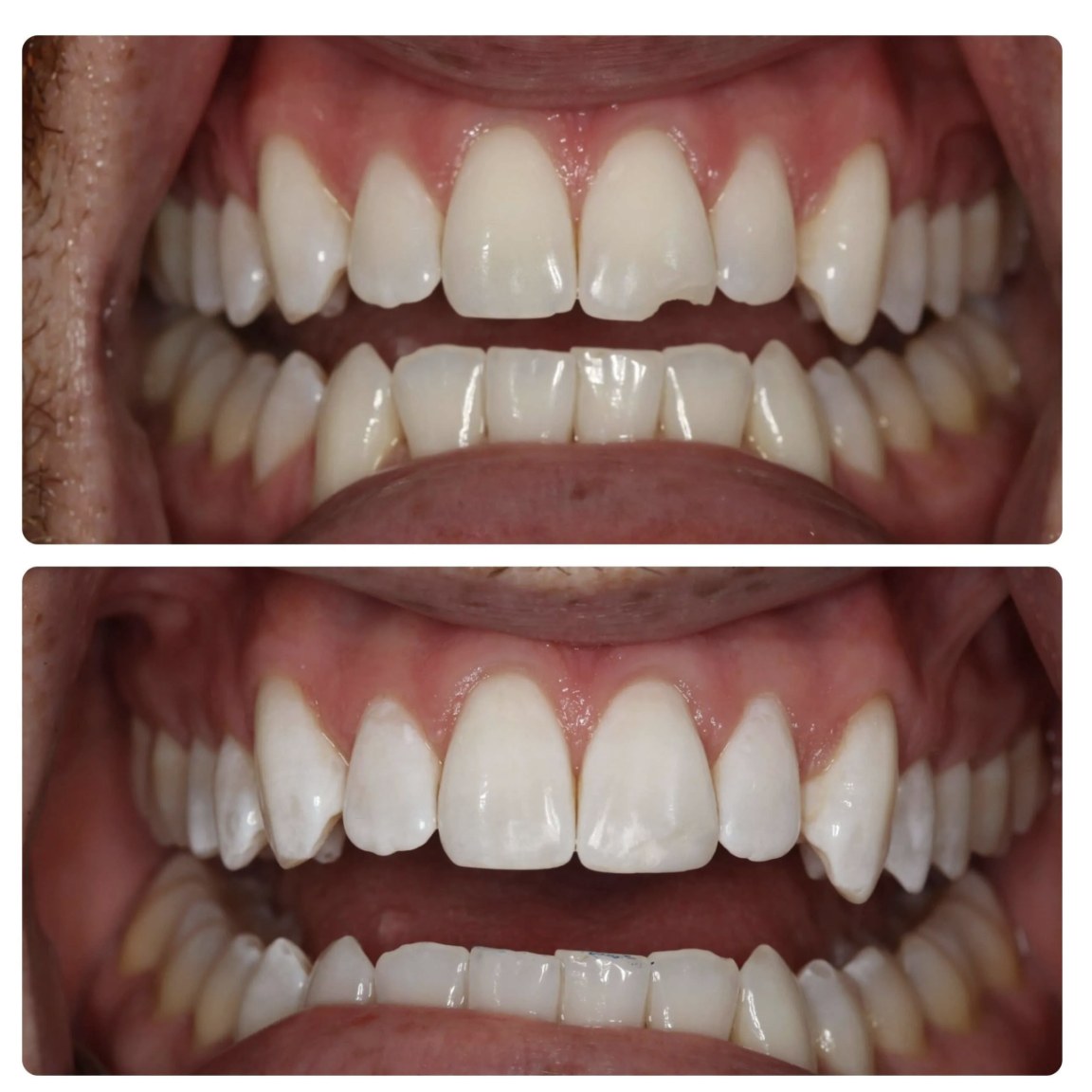
Composite bonding in New York City typically runs a few hundred dollars per tooth for straightforward cases — a small chip, a minor gap, or reshaping a single tooth — with more involved cases, like reshaping several front teeth or closing larger spaces, running higher. It's consistently the most affordable cosmetic option we offer, and understanding what moves the price within that range helps set realistic expectations before a consultation.
What Drives the Cost
- Complexity of the repair. A single small chip is a quick, straightforward addition of composite. Reshaping a tooth's overall contour, closing a diastema (gap), or matching a complex shade across multiple visible teeth takes considerably more chair time and artistry, and is priced accordingly.
- Number of teeth involved. Bonding several teeth in one visit for a more uniform cosmetic change costs more in total, though often at a somewhat better per-tooth rate than treating teeth individually across separate visits.
- Shade-matching difficulty. Blending a repair invisibly into surrounding natural teeth — especially teeth with some natural translucency or color variation — takes more skill and time than a simpler, more uniform case.
- Whether it's a repair to existing bonding or a new case. Because bonding is repairable rather than requiring full replacement when it chips or stains, touch-ups to existing composite are typically quicker and less expensive than starting fresh.
Why It's Priced the Way It Is Compared to Veneers
Bonding is applied directly to the tooth by hand in a single visit, without the lab fabrication, temporary restoration, and multiple appointments that a porcelain veneer requires — that difference in process is the core reason bonding costs meaningfully less per tooth. The trade-off runs the other direction on longevity: bonding is less durable and more prone to staining over time than porcelain, generally needing more maintenance and eventual replacement sooner. A large multicenter study following 667 direct composite restorations for up to 15 years found that while overall survival declined to about 78% by year 15, functional survival — meaning the restoration was still doing its job, with chips repaired along the way rather than the whole thing redone — stayed near 98.5%. In practice, that means bonding's real lifetime cost is often lower than the sticker price difference from veneers suggests, since most “failures” are a quick, inexpensive chairside touch-up rather than a full redo.
Does Insurance Cover It?
Cosmetic bonding — done purely to improve appearance — generally isn't covered by dental insurance, similar to veneers. Bonding used to restore function after a chip or fracture from an injury is sometimes treated differently by insurers, since it's addressing damage rather than a purely elective cosmetic change; it's worth confirming with your specific plan before treatment if that distinction applies to your case.
Paying for It
Because per-tooth bonding costs are relatively modest compared to other cosmetic options, many patients pay out of pocket without financing. For larger multi-tooth cases, we offer CareCredit financing with interest-free plans up to 12 months if spreading out the cost is preferable.
When Bonding Makes More Financial Sense Than Veneers
Bonding tends to be the better value for smaller, more contained cosmetic issues — a chip, a small gap, minor unevenness — where its lower cost and easy repairability outweigh the longevity gap. For more extensive rehabilitation across several teeth, or for anyone prioritizing the longest-lasting result, the higher upfront cost of porcelain veneers tends to pay off over the years. Many patients start with bonding on one or two teeth to address an immediate concern, then consider veneers later for a fuller cosmetic overhaul — a case-by-case decision more than a one-size-fits-all default, and something we're glad to walk through at a consultation.
Frequently Asked Questions
Not a precise one — an accurate quote depends on seeing the specific tooth or teeth involved and what the case actually requires, which varies more than a general price range can capture. A consultation gives you a real, itemized number.
It depends on your situation and timeline. If you need a fix now and aren't ready for the bigger investment of veneers, bonding is a legitimate, durable-enough option for years of use, not just a stopgap — and if you do move to veneers later, the bonding hasn't been wasted money, since it addressed the concern in the meantime.
Cosmetic bonding on visible front teeth typically involves more shade-matching and contouring precision than a functional repair on a back tooth, which can affect the price — a back-tooth composite filling addressing decay is priced differently altogether, as a restorative rather than cosmetic procedure.
Some touch-up need over the years is normal and part of what makes bonding cost-effective — most touch-ups are quick, inexpensive chairside adjustments rather than a full redo, so the cumulative cost over a decade is usually still well below what a comparable veneer case would run upfront.
Sources
- The Dental Care Market — American Dental Association, Health Policy Institute
- A Multicenter Trial on the Long-Term Performance of Direct Composite Buildups in the Anterior Dentition – Survival and Quality Outcome — Frese C, Wohlrab T, Soliman S, et al., The Journal of Adhesive Dentistry (2021)
Related to This Article
Have a Dental Question of Your Own?
Reach out and we'll help you find the right next step.
Schedule Your Visit Call 212-877-7475