What Happens If You Ignore a Cavity?
A small cavity can feel easy to put off, especially if it doesn't hurt yet — here's the actual progression of what happens if it's left untreated...
By Dr. Boris Zusin · Published August 1, 2026
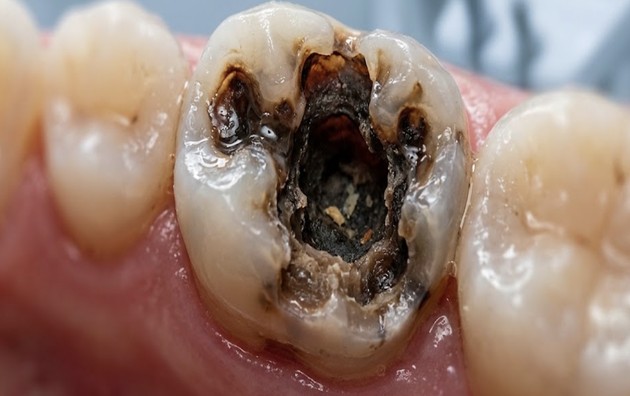
A small cavity that doesn't hurt is easy to put off — but decay doesn't pause while you wait. It follows a fairly predictable progression, and each stage is more involved to treat than the one before it.
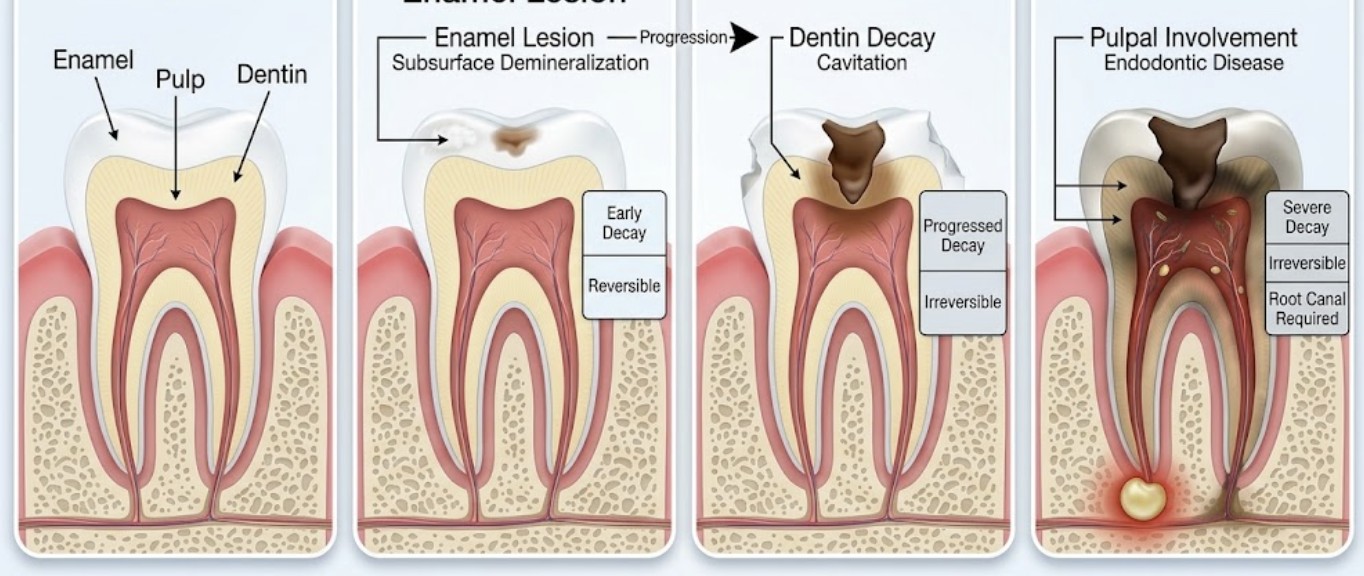
Stage 1: Enamel Decay
Decay starts in the outer enamel layer, often with no symptoms at all. At this stage, it's the simplest to treat — sometimes with fluoride and better hygiene alone, sometimes with a small, straightforward filling.
Stage 2: Dentin Decay
Once decay reaches the dentin layer beneath the enamel, it tends to spread faster (dentin is softer than enamel) and starts causing real symptoms — sensitivity to sweets, hot, or cold. This still typically just needs a filling, but a larger one than it would have at stage one.
Stage 3: Pulp Involvement
Left further, decay reaches the pulp — the nerve and blood vessels at the tooth's center — causing genuine pain, often worse when lying down or biting. At this point a filling is no longer enough; the tooth typically needs a root canal to save it.
Stage 4: Infection and Abscess
Untreated pulp involvement can progress to a dental abscess — a genuine infection that can cause swelling, fever, and pain that spreads beyond the tooth itself. This is a dental emergency, and by this stage the tooth may not be salvageable at all, sometimes requiring extraction instead of a root canal.
Caught a cavity you've been putting off? Earlier is always simpler — schedule an exam before it progresses further.
Related to This Article
Have a Dental Question of Your Own?
Reach out and we'll help you find the right next step.
Schedule Your Visit Call 212-877-7475