
Tooth-Colored Fillings vs. Metal Fillings: What's the Difference?
If you grew up with silver fillings, you might not realize composite (tooth-colored) fillings are now the standard for most cavities. Here's how the two materials actually compare...
By Dr. Boris Zusin · Published July 30, 2026
If your last filling was placed decades ago, there's a good chance it's the silver-gray metal amalgam that used to be the default. Today, tooth-colored composite fillings have largely replaced metal as the standard choice for most cavities — but the two materials still come up for comparison often enough that it's worth understanding the real differences.
What Each Material Is
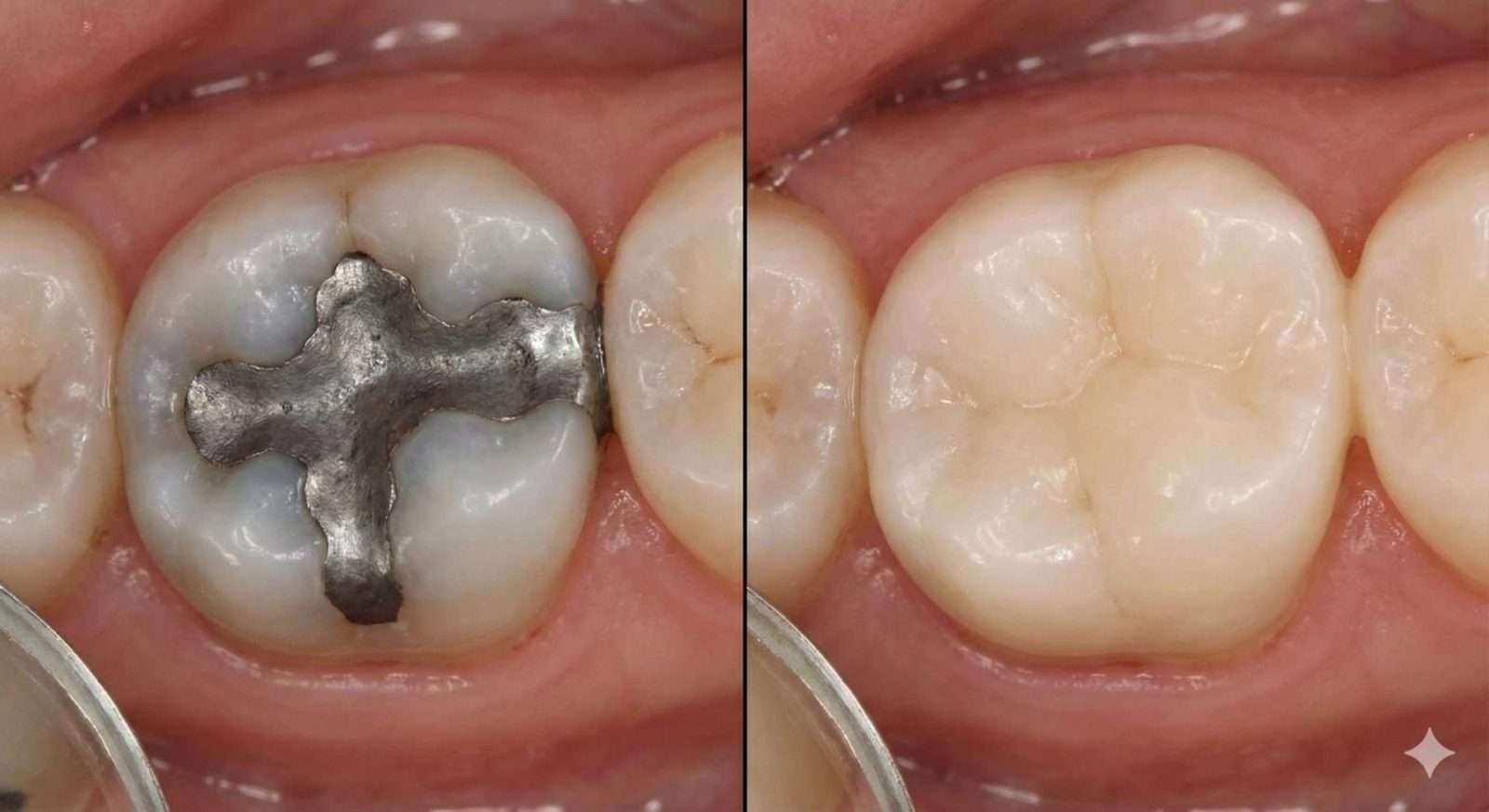
Metal (amalgam) fillings are made from a mix of metals, including silver, tin, and mercury bound in a stable alloy. Tooth-colored (composite) fillings are made from a resin material that can be shaded to match your natural tooth color and bonds directly to the tooth structure.
Appearance
This is the most obvious difference. Amalgam fillings are silver-gray and clearly visible whenever you open your mouth — noticeable on any tooth, but especially conspicuous on front teeth. Composite fillings are shaded to blend in with the surrounding tooth, making them discreet even on highly visible teeth.
How They're Placed
Amalgam is packed into a cavity that's often shaped larger than necessary to mechanically hold the filling in place. Composite resin bonds directly to the tooth surface, which generally allows for a more conservative preparation — less healthy tooth structure needs to be removed to place it.
Durability
Amalgam has a long track record and can last 10–15 years or more, sometimes outlasting composite in high-pressure back teeth. Composite fillings typically last around 5–7 years with good oral hygiene and regular checkups, and may need replacement sooner in areas with heavy chewing force, though material improvements have narrowed this gap significantly over the years.
Safety
Amalgam contains mercury bound in a stable compound; major health and dental organizations, including the ADA, consider it safe for most patients based on current evidence, though some patients prefer to avoid it for personal reasons or specific sensitivities. Composite fillings contain no mercury, which is part of why they've become the preferred default for most patients and dentists today.
Cost
Composite fillings are generally somewhat more expensive than amalgam, reflecting the material and the additional time required for the layering technique used to place them — though many insurance plans now cover composite at parity with amalgam, especially for front teeth.
Which One Is Right for You?
For most patients today, composite is the default recommendation — it looks natural, bonds conservatively, and has closed most of the durability gap that used to favor metal. Amalgam still comes up as an option in specific situations, such as very large cavities on back molars under heavy chewing load. If you have old amalgam fillings that aren't causing any problems, there's generally no need to replace them proactively — that's a conversation worth having with your dentist rather than deciding on your own.
Related to This Article
Have a Dental Question of Your Own?
Reach out and we'll help you find the right next step.
Schedule Your Visit Call 212-877-7475