
Post-Orthodontic White Spots: Why They Happen and How to Treat Them Without Drilling
Finishing braces or Invisalign only to notice faint white patches where the brackets or trays used to be is common — and there's now a way to treat it without drilling...
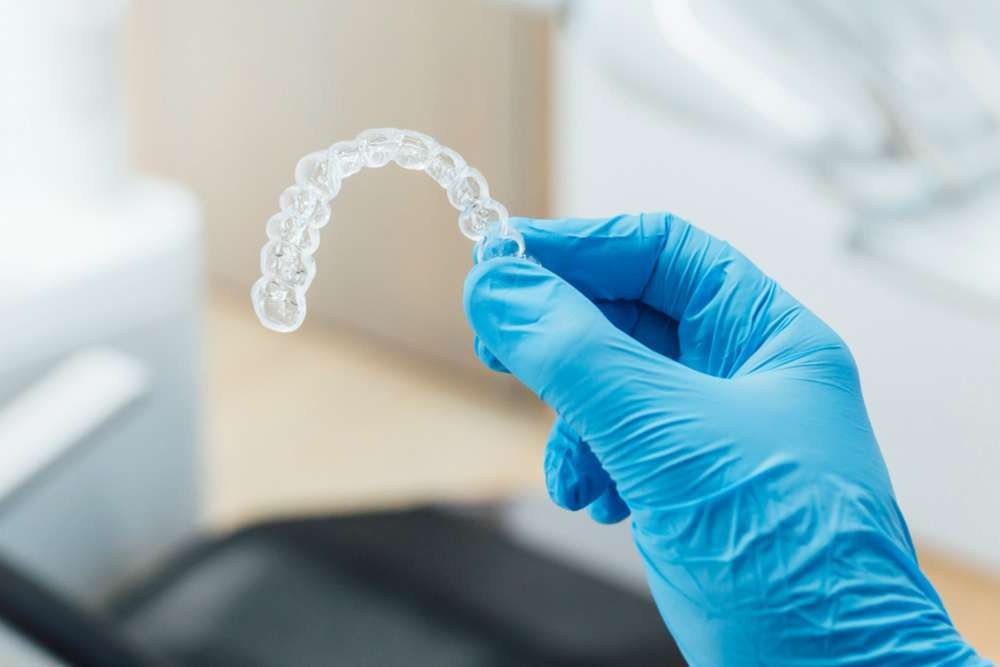
By Dr. Boris Zusin · Published August 7, 2026
Finishing orthodontic treatment is supposed to feel like a finish line — straighter teeth, brackets or aligners finally off. For a significant number of patients, though, it comes with an unwelcome surprise: faint white or chalky patches on the teeth, often in the exact outline of where a bracket sat or an aligner tray gripped.
Why It Happens
Brackets, wires, and even clear aligner trays create spots that are genuinely harder to keep clean with a toothbrush alone. Plaque that sits undisturbed against enamel for weeks or months at a time starts to demineralize the enamel underneath it — the same process that leads to a cavity, just caught (usually) before it progresses that far. Once the appliance comes off, the demineralized area is left behind as a lighter, chalkier patch than the surrounding enamel.
Why This Isn't Just a Cosmetic Footnote
It's understandably frustrating after investing months or years in orthodontic treatment, and it's also worth taking seriously clinically — a white spot lesion is genuinely demineralized enamel, not just a shade difference, and left alone it can continue to progress toward an actual cavity rather than staying static.
Treatment Options
Historically, patients were often told to simply wait and hope it faded, or offered microabrasion, which mechanically polishes away a thin layer of the discolored enamel. Resin infiltration (Icon) offers another route: rather than removing enamel, a resin is infiltrated into the porous, demineralized structure itself, sealing it from within. This both helps even out the appearance and stops the lesion from progressing further — in one visit, without drilling or anesthesia. Research directly comparing resin infiltration to fluoride varnish for this exact use case — masking post-orthodontic white spots — has found infiltration produces a meaningfully better esthetic result.
Timing
Resin infiltration can typically be done once orthodontic treatment (braces or Invisalign) is complete and the lesion is confirmed to be non-cavitated. If a spot looks more advanced or has progressed to an actual cavity, a filling would be the appropriate treatment instead — part of the exam is sorting out which situation applies.
If you finished orthodontic treatment with white spots you'd like addressed, learn more about Icon treatment or schedule a consultation.
Sources
- Efficacy of Resin Infiltration to Mask Post-Orthodontic or Non-Post-Orthodontic White Spot Lesions or Fluorosis: A Systematic Review and Meta-Analysis — Clinical Oral Investigations (2021)
- Resin Infiltration Versus Fluoride Varnish for Visual Improvement of White Spot Lesions During Multibracket Treatment: A Randomized-Controlled Clinical Trial — Clinical Oral Investigations (2024)
- The Hydrochloric Acid-Pumice Microabrasion Technique in the Treatment of Post-Orthodontic Decalcification — Welbury RR, Carter NE, British Journal of Orthodontics (1993)
Related to This Article
Have a Dental Question of Your Own?
Reach out and we'll help you find the right next step.
Schedule Your Visit Call 212-877-7475