Light Sleeper With Sleep Apnea: Does a Low Arousal Threshold Affect an Oral Appliance?
Some people with sleep apnea wake at the slightest breathing disturbance. Here is what that means for an oral appliance, and why sleeping pills are not the answer...
By Dr. Boris Zusin · Published November 15, 2026
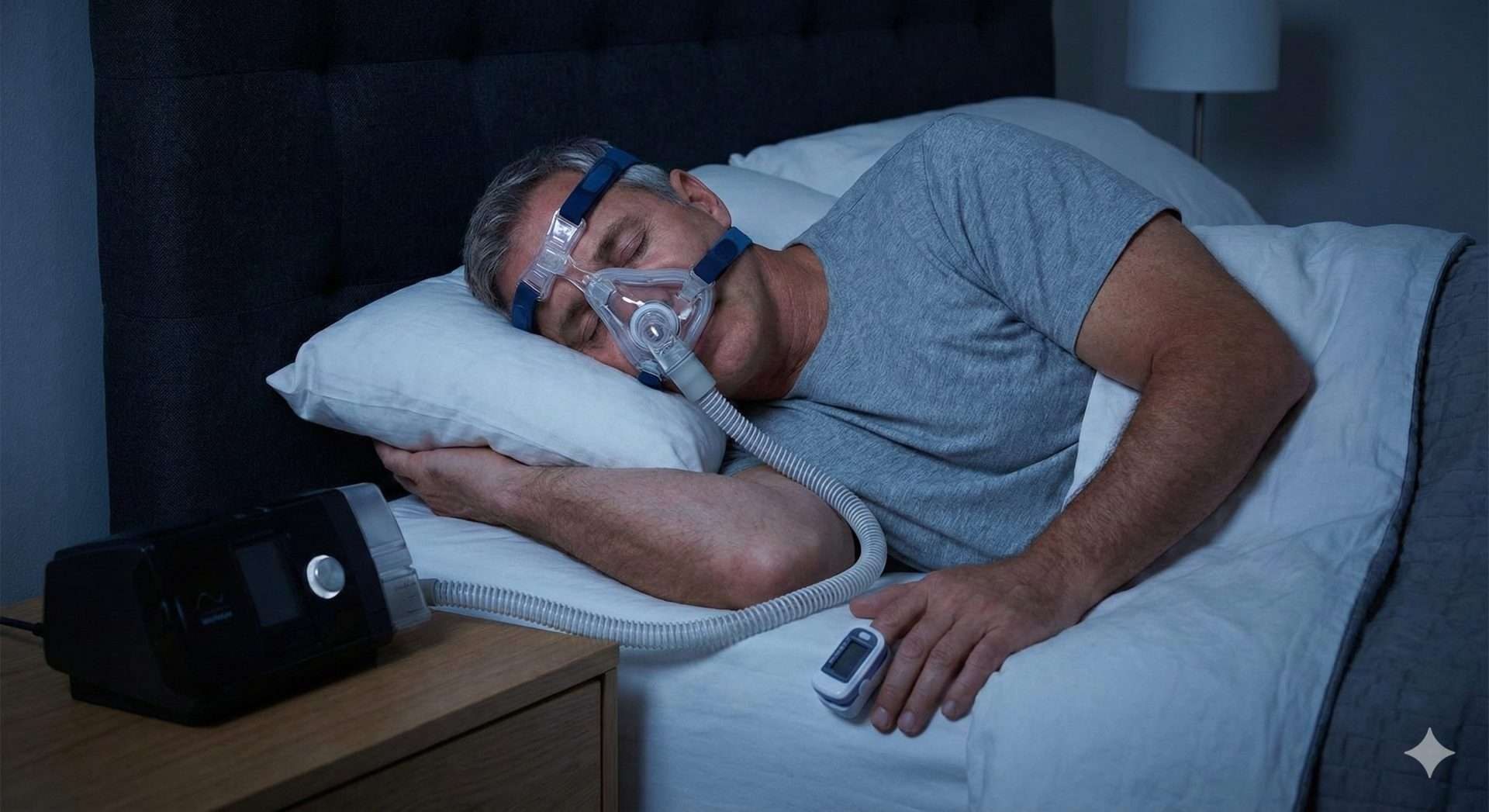
Some people with sleep apnea wake up at the slightest breathing disturbance. Researchers call this a low arousal threshold. It is common, present in roughly a third to a half of people with sleep apnea, and it raises a fair question: does it change how well an oral appliance works?
What a Low Arousal Threshold Means
When your airway narrows, effort to breathe rises. Most people eventually wake briefly to reopen it. In a light sleeper, that arousal happens early, before the throat muscles can help. It ends the event, but it also breaks up your sleep and can set up the next one.
Does It Predict Appliance Success?
Studies are inconsistent. In the largest one, a higher arousal threshold was linked to better results, but smaller studies did not confirm it. Lighter sleepers tend to be older, leaner and more often women, with milder, REM-related apnea, which is a group that often responds well to an appliance. So it is not a reason to withhold one. It seems to matter more in combination: patients with several unfavorable traits at once tended to respond less well.
What It Can Mean in Practice
- Your sleep study may look good while you still feel tired. Events in light sleepers are often shallow breathing reductions that end in waking. A follow-up study that scores arousals, ideally in a sleep lab, shows more than a simple home test.
- Insomnia may be part of the picture. Cognitive behavioral therapy for insomnia can help and may even lower apnea severity.
- Staying with treatment matters. Light sleepers have had a harder time keeping up CPAP and nerve stimulation therapy, so we check in on comfort and symptoms, not only the numbers.
What About Sleeping Pills?
Sleeping pills are not a treatment for sleep apnea. A review of 27 trials found they raise the arousal threshold only slightly and do not reduce the apnea index. Any medication decision should be made with your physician.
Waking often or still tired on your appliance? Schedule a visit. We will review your results and coordinate with your sleep physician.
Sources
- Polysomnographic Endotyping to Select Patients With Obstructive Sleep Apnea for Oral Appliances — Bamagoos AA, Cistulli PA, Sutherland K, et al., Annals of the American Thoracic Society (2019)
- Prediction of Non-Responders to Oral Appliance Treatment of Obstructive Sleep Apnea: A Pilot Study — Opsahl UL, Berge M, Lehmann S, Bjorvatn B, Johansson A, Sleep and Breathing (2025)
- Relationship Between OSA Pathophysiological Phenotypes and Treatment Response to Mandibular Advancement Devices: A Pilot Study — Manetta IP, Duarte BB, Nucci LB, Enes CC, Journal of Clinical Sleep Medicine (2024)
- Hypnotics on Obstructive Sleep Apnea Severity and Endotypes: A Systematic Review and Meta-Analysis — Messineo L, Sands SA, Labarca G, American Journal of Respiratory and Critical Care Medicine (2024)
- Low Arousal Threshold Is Associated With Altered Functional Connectivity of the Ascending Reticular Activating System in Patients With Obstructive Sleep Apnea — Byun JI, Jahng GH, Ryu CW, et al., Scientific Reports (2024)
- Scalable Sleep Apnoea Endotype Profiling and Estimated Oral Appliance Treatment Response in a Large Clinical Cohort — Manners J, Dutta R, Levendowski DJ, Eckert DJ, Respirology (2026)
- Upper-Airway Collapsibility and Loop Gain Predict the Response to Oral Appliance Therapy in Patients With Obstructive Sleep Apnea — Edwards BA, Andara C, Landry S, et al., American Journal of Respiratory and Critical Care Medicine (2016)
- Mandibular Advancement Device Treatment Efficacy Is Associated With Polysomnographic Endotypes — Op de Beeck S, Dieltjens M, Azarbarzin A, et al., Annals of the American Thoracic Society (2021)
- Clinical Predictors of the Respiratory Arousal Threshold in Patients With Obstructive Sleep Apnea — Edwards BA, Eckert DJ, McSharry DG, et al., American Journal of Respiratory and Critical Care Medicine (2014)
- Polysomnographic Phenotypes: Predictors of Treatment Response in Obstructive Sleep Apnea With Mandibular Advancement Devices — Camañes-Gonzalvo S, Marco-Pitarch R, García-Selva M, et al., European Archives of Oto-Rhino-Laryngology (2025)
- Physiological Traits and Adherence to Sleep Apnea Therapy in Individuals With Coronary Artery Disease — Zinchuk AV, Chu JH, Liang J, et al., American Journal of Respiratory and Critical Care Medicine (2021)
- Low Arousal Threshold Is Associated With Unfavorable Shift of PAP Compliance Over Time in Patients With OSA — Wu H, Fang F, Wu C, Zhan X, Wei Y, Sleep and Breathing (2021)
- Polysomnographic Parameters Predicting Positive Airway Pressure Adherence — Nilrat N, Banhiran W, Keskool P, Pimolsri C, Kasemsuk N, Sleep and Breathing (2025)
- Low Arousal Threshold and Long-Term Adherence to Hypoglossal Nerve Stimulation — Kaki PC, Ravuri S, Patel SD, et al., JAMA Otolaryngology-Head and Neck Surgery (2026)
- Clinical Practice Guideline for the Treatment of Obstructive Sleep Apnea and Snoring With Oral Appliance Therapy: An Update for 2015 — Ramar K, Dort LC, Katz SG, et al., Journal of Clinical Sleep Medicine / Journal of Dental Sleep Medicine (2015)
- Developments in Pharmacotherapy for Obstructive Sleep Apnoea: Unlocking the Potential for Targeted Treatment — Eckert DJ, Drugs (2026)
- Stepwise Add-On and Endotype-Informed Targeted Combination Therapy to Treat Obstructive Sleep Apnea: A Proof-of-Concept Study — Aishah A, Tong BKY, Osman AM, et al., Annals of the American Thoracic Society (2023)
- Combined Supplemental Oxygen and Mandibular Advancement Device Therapy for Obstructive Sleep Apnoea: A Randomised Controlled Trial — Edwards BA, Thomson LDJ, Vena D, et al., European Respiratory Journal (2025)
- The Relationship Between Sleep Bruxism and Sleep-Related Respiratory Events Under Oral Appliance Therapy in Patients With Obstructive Sleep Apnea — Dotsu Y, Umemoto G, Yoshimura C, et al., Scientific Reports (2026)
- Dose-Dependent Effects of Mandibular Advancement on Upper Airway Collapsibility and Muscle Function in Obstructive Sleep Apnea — Bamagoos AA, Cistulli PA, Sutherland K, et al., Sleep (2019)
Related to This Article
Have a Dental Question of Your Own?
Reach out and we'll help you find the right next step.
Schedule Your Visit Call 212-877-7475