How Well Does Invisalign Work? What Aligners Can and Cannot Do
Invisalign works well for the right cases, but it delivers about half of what the computer plan shows. Here is what that means, which movements are easiest, and how aligners compare with braces...
By Dr. Boris Zusin · Published November 15, 2026
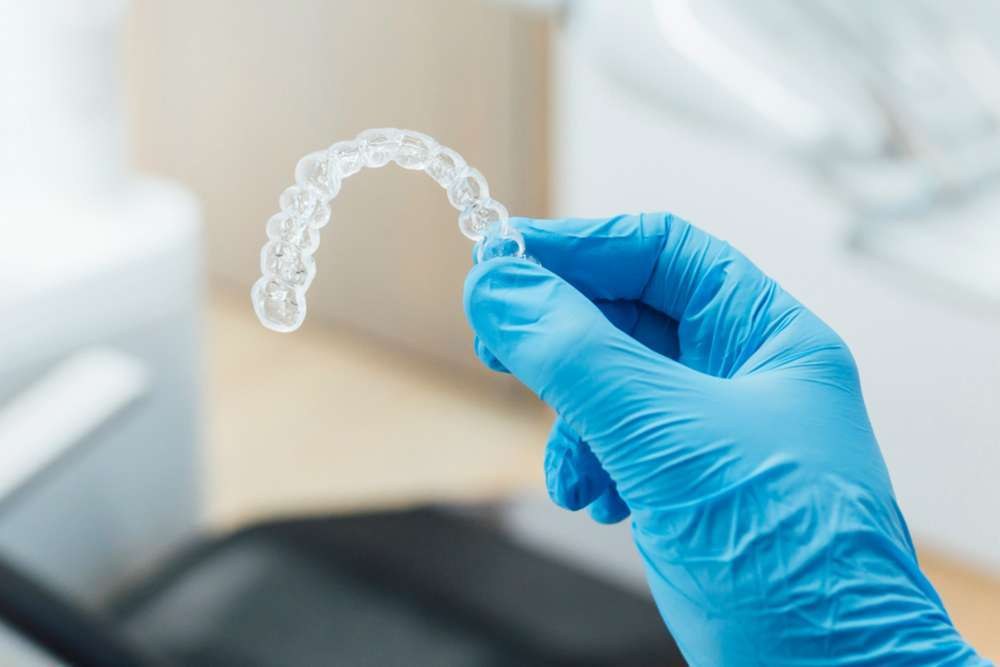
Invisalign and other clear aligners are an excellent option for many people. They also have limits, and it helps to know them before you start.
What the Research Shows About Results
Studies that measure the result against the computer plan find that teeth reach, on average, about half of the planned movement. That is why a second set of aligners, called refinements, is common. It is not a sign that something went wrong. Planning for it from the start is part of good treatment.
What Aligners Do Well
- Mild to moderate crowding or spacing without extractions
- Minor relapse after braces
- Patients with gum concerns who find braces hard to clean around
- Patients who will not accept fixed braces
What Is Harder
- Rotating round teeth, especially canines and premolars
- Pulling teeth down (for example, closing an open bite)
- Pushing teeth deeper into the bite
- Closing extraction spaces, where back teeth can tip forward
- Making room by widening the arch for substantial crowding
Aligners Versus Braces
For simple cases without extractions, a 2025 analysis found no difference in quality between aligners and braces. For cases with extractions, braces did better. A 2020 analysis found that braces finished the bite slightly more precisely overall. Treatment time is similar. Aligners tend to be easier on the gums, and root shortening, a small side effect of any orthodontic treatment, was less with aligners in most comparisons, though differences were under a millimeter.
What Affects Your Result
- Wear time: 20 to 22 hours a day. This matters most.
- Attachments: small tooth-colored bumps that give aligners grip for harder movements.
- Change schedule: your plan sets this and we may adjust it.
- Check-ins: regular visits catch poor fit early.
- Retainers: teeth move back without them, so they are part of the plan, not an extra.
Wondering whether your teeth are a good fit for aligners? Schedule an Invisalign consultation. See also our Invisalign page.
Sources
- Quality and Stability of Orthodontic Treatment Outcomes With Clear Aligners Versus Fixed Appliances: A Systematic Review and Meta-Analysis — Alhafi ZM, Hajeer MY, Alam MK, Jaber ST, European Journal of Orthodontics (2025)
- Has Invisalign Improved? A Prospective Follow-Up Study on the Efficacy of Tooth Movement With Invisalign — Haouili N, Kravitz ND, Vaid NR, Ferguson DJ, Makki L, American Journal of Orthodontics and Dentofacial Orthopedics (2020)
- Treatment Outcome With Orthodontic Aligners and Fixed Appliances: A Systematic Review With Meta-Analyses — Papageorgiou SN, Koletsi D, Iliadi A, Peltomaki T, Eliades T, European Journal of Orthodontics (2020)
- Clinical Effectiveness of Clear Aligner Treatment Compared to Fixed Appliance Treatment: An Overview of Systematic Reviews — Yassir YA, Nabbat SA, McIntyre GT, Bearn DR, Clinical Oral Investigations (2022)
- Space Closure After Premolar Extraction Using Clear Aligners: A Systematic Review With Meta-Analysis — Vicioni-Marques F, Reis CLB, de Almeida APV, et al., Clinical Oral Investigations (2025)
- A Retrospective Study of the Accuracy of Invisalign Progress Assessment With Clear Aligners — Li B, Xu YM, Shi RY, et al., Scientific Reports (2023)
- Essential Attributes of Clear Aligner Therapy in Terms of Appliance Configuration, Hygiene, and Pain Levels During the Pandemic: A Brief Review — Marya A, Venugopal A, Vaid N, Alam MK, Karobari MI, Pain Research and Management (2020)
- A 3D Comparison of Planned Versus Achieved Anterior Tooth Position in Clear Aligner Treatment — Saif BS, Rao C, Wanqing H, et al., Scientific Reports (2026)
- Predictability of Tooth Rotations in Patients Treated With Clear Aligners — D'Antò V, Rongo R, Casaburo SD, et al., Scientific Reports (2024)
- A New Method Assessing Predicted and Achieved Mandibular Tooth Movement in Adults Treated With Clear Aligners Using CBCT and Individual Crown Superimposition — Alwafi AA, Hannam AG, Yen EH, Zou B, Scientific Reports (2023)
- The Impact of Physical Adjunctive Interventions on Outcomes of Clear Aligner Treatment: A Systematic Review of Randomized Controlled Trials — Sirri MR, Namera MO, Salahi Alasbahi MY, PLoS One (2025)
- Three-Dimensional Retrospective Analysis of Root Resorption and Incisive Canal Changes Following Maxillary Incisor Retraction in Class I and Class II Extraction Cases: A Comparison of Clear Aligners and Fixed Appliances — Al-Rokhami RK, Sakran KA, Al-Worafi NA, et al., Scientific Reports (2025)
- External Apical Root Resorption With Clear Aligners Versus Fixed Appliances: A Scoping Review of Comparative Evidence, Treatment-Related Factors, Imaging Modalities and Consistency of Reported Data — Erhan Groza BL, Rusu EP, Păcurar M, et al., Journal of Clinical Medicine (2026)
- Impact of Clear Aligners and Conventional Fixed Orthodontic Appliances on Oral Hygiene and Periodontal Health: A Systematic Review With GRADE Assessment of the Certainty of Evidence — Alhuwaizi MA, Saloom HF, Cobourne M, European Journal of Orthodontics (2026)
- Impact of Reducing Aligners' Wear Schedule From 7-Days to 3-Days on the Predictability of Tooth Movement and Treatment Efficiency: A Randomized Controlled Trial — Brown A, Rifai M, Saadatmand K, et al., Clinical Oral Investigations (2026)
- An Evaluation of the Invisalign Aligner Technique and Consideration of the Force System: A Systematic Review — Caruso S, De Felice ME, Valenti C, et al., Systematic Reviews (2024)
- Effect of Clear Aligner Wear Protocol on the Efficacy of Tooth Movement — Al-Nadawi M, Kravitz ND, Hansa I, et al., The Angle Orthodontist (2021)
- Effects of Composite Attachments on Orthodontic Clear Aligners Therapy: A Systematic Review — Nucera R, Dolci C, Bellocchio AM, et al., Materials (2022)
- Adverse Effects of Removable Orthodontic Aligners: A Systematic Review With Single-Arm Meta-Analysis — Ronchi Lemos C, Aguilar Ventura Fadel M, Polmann H, et al., PLoS One (2026)
Related to This Article
Have a Dental Question of Your Own?
Reach out and we'll help you find the right next step.
Schedule Your Visit Call 212-877-7475