How to Care for Crowns and Bridges at Home
Once the initial healing is behind you, a crown or bridge needs its own simple daily routine to hold up for years — here's what that actually looks like...
By Dr. Boris Zusin · Published September 25, 2026
Once the first few days after a crown or bridge are behind you, day-to-day care is what actually determines how long it lasts. A well-made crown or bridge can hold up for 10–15 years or more — but that depends on keeping the tooth (or teeth) underneath and around it healthy, since a crown or bridge itself can't decay, but the natural tooth structure and gum tissue supporting it still can.
Brushing
Brush twice a day with a soft-bristled brush, paying particular attention to the gumline where the crown or bridge meets your natural tooth — that's the seam where plaque tends to collect and where a cavity can start on the tooth underneath, even though the crown itself is immune to decay. A fluoride toothpaste is fine for daily use; avoid heavily abrasive whitening formulas on the tooth right next to a porcelain crown, since a mismatch in surface wear can eventually make the shade or texture look slightly different between the crown and your natural teeth over time.
Flossing a Crown
Floss around a single crown the same way you would a natural tooth — gently sliding the floss down each side of the crown and along the gumline, rather than snapping it in and out, which can irritate the gum tissue or, rarely, dislodge a crown that isn't fully seated.
Flossing Under a Bridge: The Part That's Different
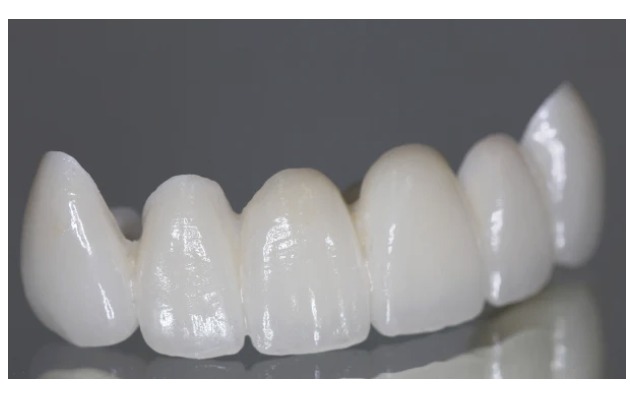
A bridge is different from a crown in one important way: the false tooth (or teeth) in the middle, called the pontic, is fused to the crowns on either side, which means regular floss can't get underneath it the normal way. Cleaning under that pontic is the single most important habit for keeping a bridge healthy long-term, since food and plaque trapped underneath it is a common cause of gum inflammation and, eventually, decay on the abutment teeth holding the bridge up. Two tools make this manageable:
- A floss threader or orthodontic floss — has a stiff end that guides the floss up and under the pontic so you can wipe both the underside of the false tooth and the sides of the abutment teeth.
- Super floss or a similar pre-made bridge-cleaning floss — comes with a built-in stiffened end plus a spongy section specifically designed to clean under a pontic without needing a separate threader each time.
A water flosser (see our guide to using one correctly) is also a genuinely useful addition for bridges specifically, since the water stream reaches under the pontic more easily than string floss for some patients — though it works best as a supplement to threading floss under the bridge at least once a day, not a full replacement for it.
Foods Worth Avoiding
Very hard foods (ice, hard candy, unpopped popcorn kernels) and very sticky foods (caramel, taffy) put real stress on a crown or bridge and its cement, and are a common cause of a crown coming loose or a bridge cracking years down the line. Chewing ice in particular is one of the more common things that damages a well-fitted crown.
Signs Worth a Call
Reach out if a crown or bridge feels loose or shifts at all, if you notice a new gap or a change in how it fits, if a specific spot becomes newly sensitive to hot, cold, or sweets (which can signal decay developing at the margin), or if you notice persistent bad breath or a bad taste localized to one area — often a sign that something is trapped and not being cleaned out effectively. A loose crown or bridge is worth addressing promptly rather than waiting for it to fully come off, since food and bacteria can get underneath in the meantime.
Keep Up With Regular Visits
Routine cleanings and exams let us check the margins of a crown or bridge for early signs of decay or a failing seal — problems that are far easier and less costly to address early than after they've progressed. See our Crown and Bridges page for more on how these restorations are made and fitted.
Related to This Article
Have a Dental Question of Your Own?
Reach out and we'll help you find the right next step.
Schedule Your Visit Call 212-877-7475