Dry Mouth: Why It Matters for Your Teeth
Saliva does more protective work than most people realize — here's what causes chronic dry mouth, and why it raises your risk for cavities and gum disease...
By Dr. Boris Zusin · Published August 1, 2026
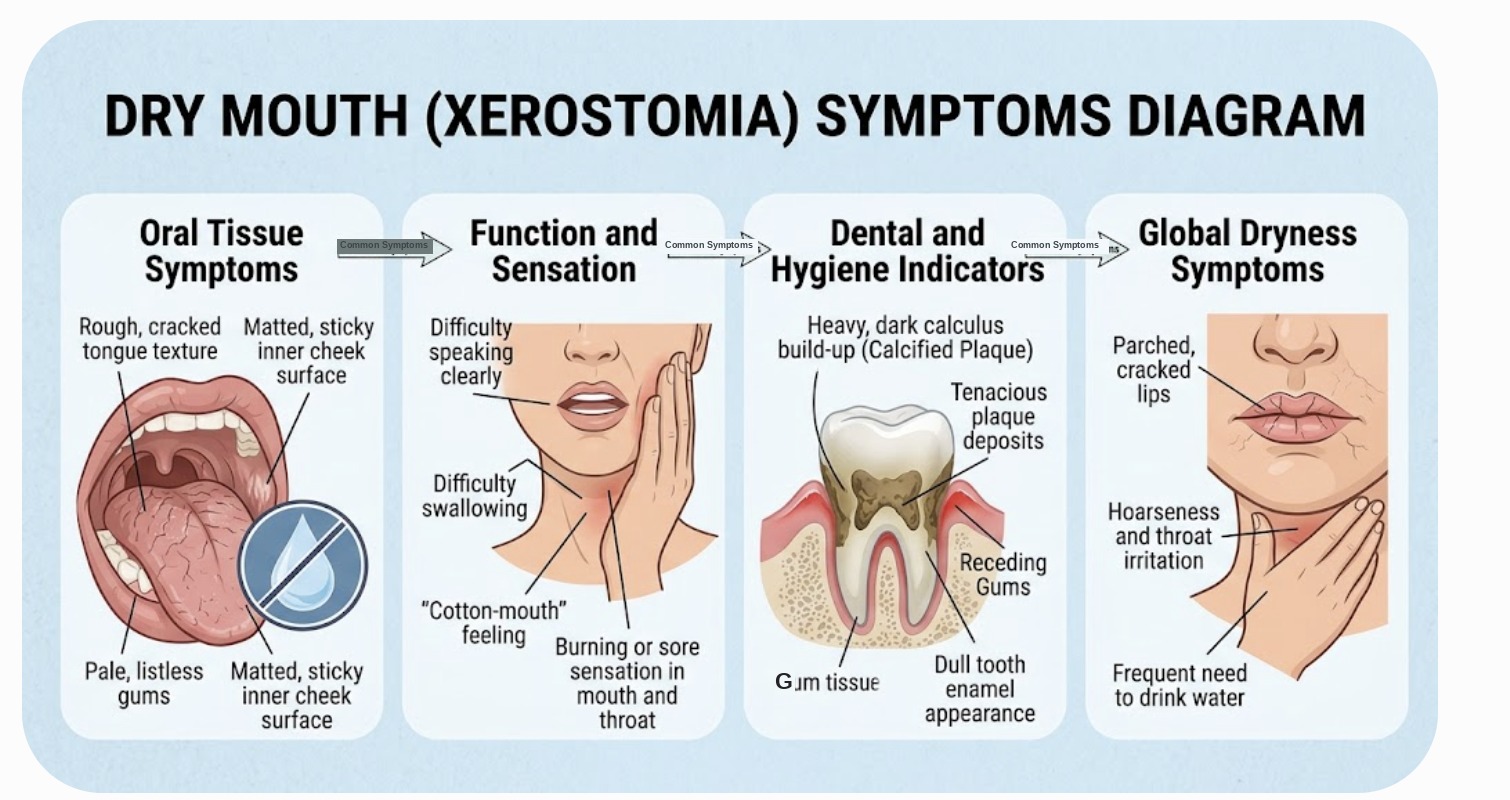
Saliva does more work than most people give it credit for — it's constantly rinsing away food debris, neutralizing the acids that cause cavities, and helping fight off the bacteria that lead to gum disease. When your mouth doesn't produce enough of it, that protection drops off, and it shows up in your dental health over time.
Common Causes
According to Mayo Clinic, dry mouth is often a side effect of certain medications (a very long list of common prescriptions list it as a side effect), radiation therapy for cancer, or simple dehydration and habitual mouth breathing. Less commonly, it can stem from a condition that directly affects the salivary glands.
Why It Raises Your Dental Risk
Without enough saliva to rinse and buffer your mouth, food particles and acid linger longer against your teeth, meaningfully increasing your risk for cavities, especially near the gumline and between teeth. Chronic dryness also makes gum disease and bad breath more likely, since saliva plays a role in controlling the bacteria behind both.
Managing It
Staying well hydrated, using a humidifier at night if you breathe through your mouth while sleeping, chewing sugar-free gum to stimulate saliva flow, and talking to your doctor about whether a medication might be contributing are all reasonable first steps. On our end, we may recommend more frequent cleanings or a prescription-strength fluoride to offset the higher cavity risk.
If dry mouth has been a persistent issue for you, mention it at your next exam and cleaning so we can adjust your preventive care accordingly.
Sources
- Dry Mouth — Symptoms and Causes — Mayo Clinic
Related to This Article
Have a Dental Question of Your Own?
Reach out and we'll help you find the right next step.
Schedule Your Visit Call 212-877-7475