Central vs. Obstructive Sleep Apnea: What's the Difference?
Both conditions cause pauses in breathing during sleep, but the underlying mechanism is completely different — and that difference determines whether an oral appliance can help at all...
By Dr. Boris Zusin · Published August 22, 2026
“Sleep apnea” is often used as a single term, but it actually covers two mechanically distinct conditions: obstructive sleep apnea (OSA) and central sleep apnea (CSA). Both cause repeated pauses in breathing during sleep, but the underlying cause — and what actually treats it — is entirely different.
Obstructive Sleep Apnea: A Mechanical Blockage
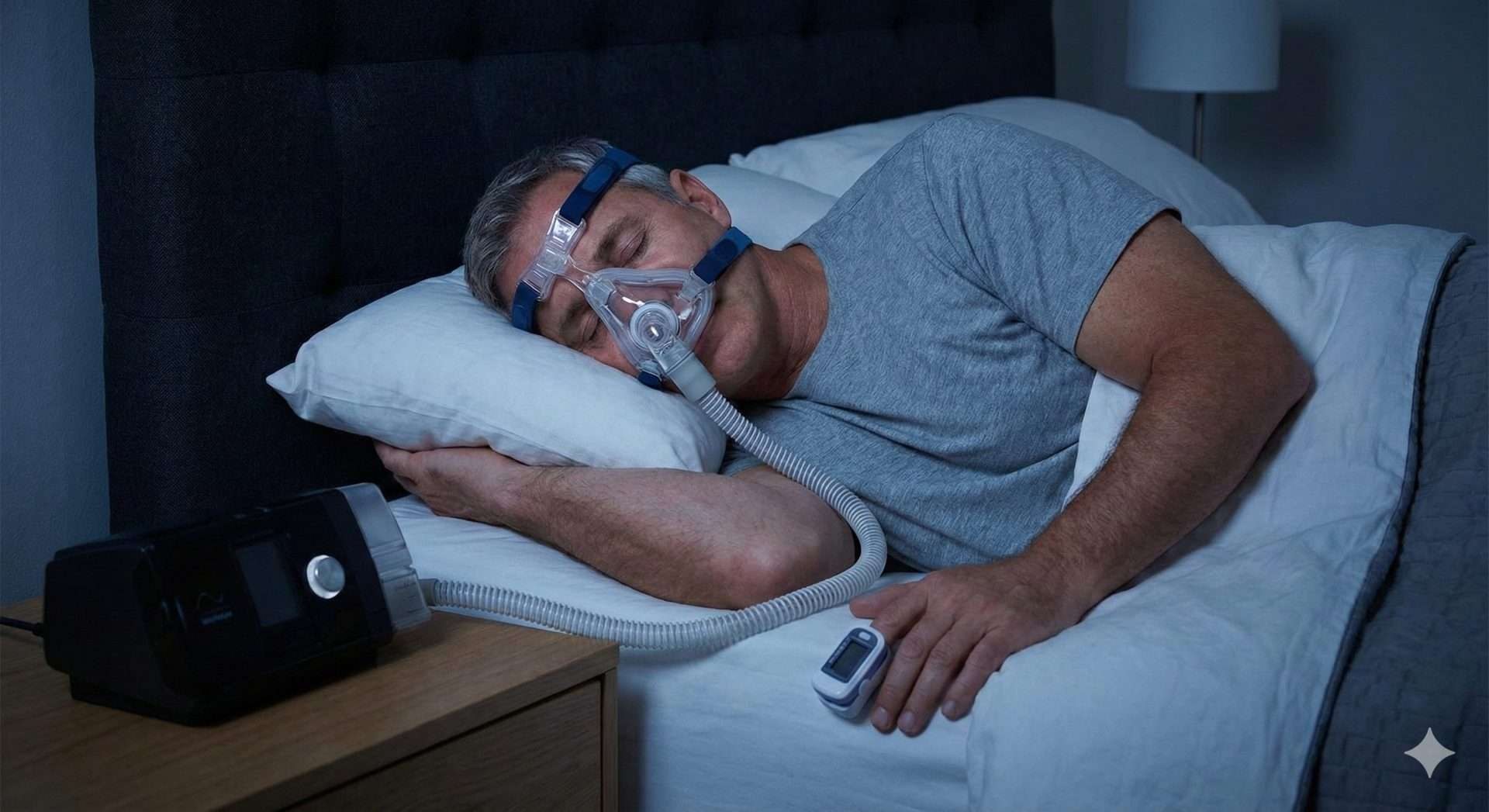
OSA happens when the soft tissue at the back of the throat — the tongue, soft palate, and surrounding structures — relaxes during sleep and physically collapses, blocking the airway despite your body continuing to try to breathe. This is the far more common form of sleep apnea, and it's the one addressed by CPAP and oral appliance therapy, both of which work by keeping that physical airway open.
Central Sleep Apnea: A Signaling Problem
CSA is a fundamentally different issue: the airway itself isn't blocked, but the brain temporarily fails to send the signal to the muscles that trigger a breath. It's a neurological, not mechanical, problem — the effort to breathe simply pauses, rather than being physically obstructed. CSA is less common than OSA and is often associated with specific underlying conditions like heart failure, stroke, or certain medications (particularly opioids).
How the Symptoms Overlap — and How They Differ
Both conditions can cause fragmented sleep, daytime fatigue, and witnessed pauses in breathing, which is part of why they can be hard to tell apart without formal testing. One useful, though not definitive, clue: OSA is very frequently accompanied by loud snoring, since the collapsing tissue that blocks the airway is often the same tissue that vibrates and causes snoring. CSA doesn't reliably involve loud snoring in the same way, since there's no physical obstruction generating the sound.
Why the Distinction Actually Matters
This isn't just a technical detail — it determines what treatment can even work. Oral appliance therapy and CPAP both function by addressing a physical blockage, so they're only appropriate treatments for obstructive sleep apnea. Central sleep apnea requires an entirely different approach, generally directed by a sleep physician or cardiologist, that may include addressing the underlying medical cause (like optimizing heart failure treatment) or specialized ventilation devices designed specifically for central events — not something a dental oral appliance is built to treat.
Only a Sleep Study Can Tell Them Apart
Because the symptoms overlap, a formal sleep study — which tracks not just breathing pauses but the associated chest and abdominal movement — is what actually distinguishes obstructive from central events. This is one more reason a proper diagnostic sleep study matters, rather than assuming symptoms alone point to one type or the other.
If you've been diagnosed with sleep apnea, it's worth confirming with your physician whether it's classified as obstructive, central, or a mix of both (sometimes called complex sleep apnea) — since that classification is what determines whether an oral appliance is even the right category of treatment to discuss with a dentist.
Sources
- Central Sleep Apnea — Cleveland Clinic
- Sleep Apnea — Causes and Risk Factors — NHLBI, National Institutes of Health
Related to This Article
Have a Dental Question of Your Own?
Reach out and we'll help you find the right next step.
Schedule Your Visit Call 212-877-7475