Can Sleep Apnea Be Cured, or Only Managed?
For most patients, sleep apnea is a manageable condition rather than a curable one — but a few specific circumstances can meaningfully change that picture...
By Dr. Boris Zusin · Published July 28, 2026 · Updated July 31, 2026
It's a fair question, and one we hear often: once you're diagnosed with sleep apnea, is it something you fix once and move on from, or something you manage for life? The honest answer is that it depends on what's causing it — for most patients, sleep apnea is a manageable condition rather than a curable one, but there are real exceptions.
Why It's Usually “Managed,” Not “Cured”
Obstructive sleep apnea is caused by the physical anatomy of your airway — the size and position of your tongue, soft palate, jaw, and throat tissue. For most adults, that anatomy doesn't fundamentally change, which is why CPAP and oral appliance therapy are described as ongoing treatments rather than one-time fixes: they work by counteracting the airway collapse each night you use them, not by permanently altering the anatomy that causes it.
Can Weight Loss Cure Sleep Apnea?
Sometimes — but far from guaranteed, and it depends heavily on how much of your OSA is actually driven by excess weight versus fixed jaw and airway anatomy. The best long-term data on this comes from the Sleep AHEAD trial, which followed adults with obesity and type 2 diabetes for 10 years: those in an intensive weight-loss and lifestyle program saw sleep apnea go into remission (AHI under 5 events per hour) in 34.4% of cases, compared with 22.2% on standard care alone — with each kilogram of weight lost associated with roughly a 0.7-events-per-hour improvement in AHI. That means weight loss meaningfully improved the odds of remission, particularly for mild-to-moderate OSA, but it didn't cure the condition outright for the majority of participants, even with a structured, medically supervised program. For patients whose sleep apnea is significantly related to excess weight around the neck and airway, meaningful weight loss can substantially reduce or, in some cases, resolve mild-to-moderate obstructive sleep apnea. This isn't universal — anatomy still plays a role — but it's one of the few paths where sleep apnea can genuinely improve rather than just be managed, and it's worth pursuing alongside — not instead of — whatever treatment your sleep physician has already recommended.
When Surgery Is a Consideration
In select cases — enlarged tonsils, a significantly obstructive nasal structure, or certain jaw anatomy — surgical correction can reduce or resolve the underlying obstruction. Surgery isn't the first-line option for most adults with obstructive sleep apnea and carries its own risks and recovery, so it's typically reserved for cases where anatomy is clearly the primary driver and other treatments haven't worked.
What “Management” Actually Looks Like Day to Day
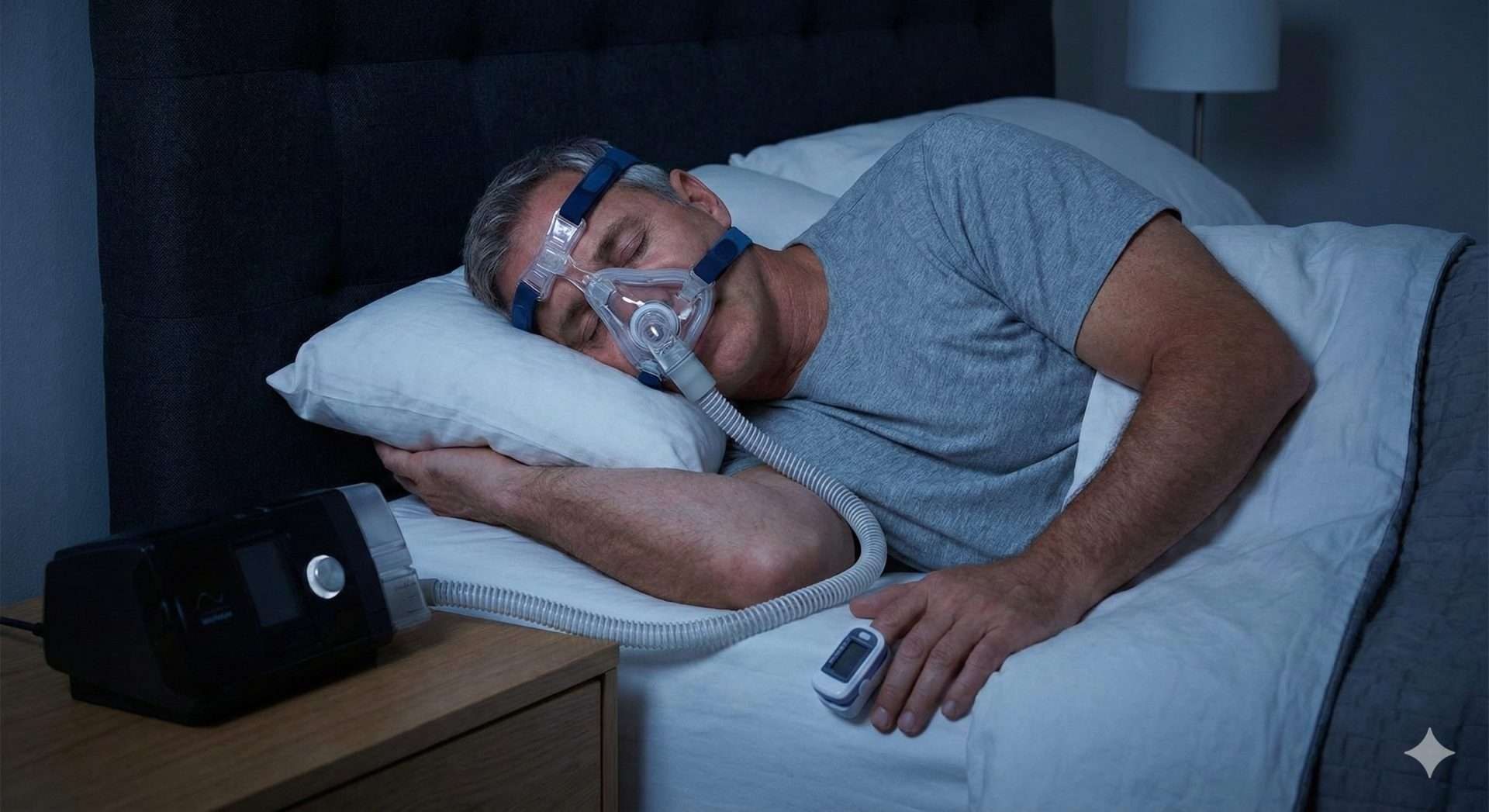
For the majority of patients, effective management means consistent nightly use of CPAP or an oral appliance — the treatment doesn't need to be dramatic or complicated, but it does need to be consistent, since the airway collapse pattern returns as soon as treatment stops. This is exactly why patient comfort and compliance matter so much: a treatment that's easy to use every night, like a well-fitted oral appliance, often outperforms a theoretically more effective treatment that ends up used inconsistently.
The Bottom Line
Don't let the “it's not curable” framing discourage you — well-managed sleep apnea, with consistent nightly treatment, controls the condition just as effectively as a cure would in terms of your day-to-day health and symptoms. The goal isn't necessarily to eliminate the underlying anatomy, it's to reliably prevent the airway collapse that anatomy causes, every night, for as long as you need it.
Sources
- Sleep Apnea — Living With — NHLBI, National Institutes of Health
- Clinical Practice Guideline for the Treatment of Obstructive Sleep Apnea and Snoring with Oral Appliance Therapy (2015) — AASM & American Academy of Dental Sleep Medicine, J Clin Sleep Med
- Weight Loss Is Integral to Obstructive Sleep Apnea Management: Ten-Year Follow-up in Sleep AHEAD — St-Onge MP, Tasali E, American Journal of Respiratory and Critical Care Medicine (2021)
Related to This Article
Have a Dental Question of Your Own?
Reach out and we'll help you find the right next step.
Schedule Your Visit Call 212-877-7475